
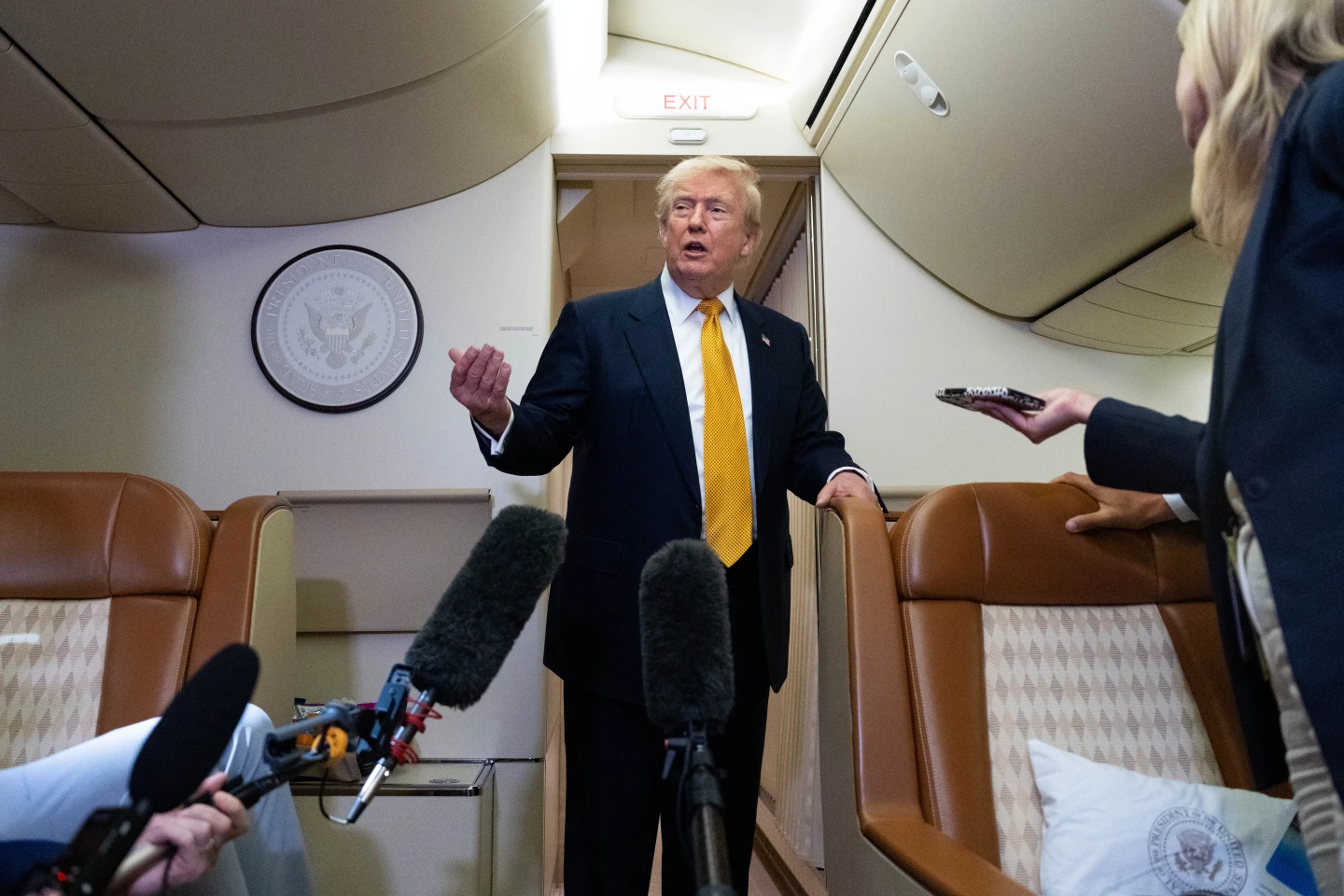
The administration launches a new attempt despite a recent Supreme Court ruling
President Donald Trump has announced two new executive actions aimed at restricting birthright citizenship and limiting “birth tourism” in the United States. The announcement comes shortly after the Supreme Court rejected Trump’s previous attempt to deny automatic citizenship to certain children born in the country.
A narrower approach to birthright citizenship
The new executive order is more limited than Trump’s previous attempt. It seeks to restrict automatic citizenship for specific categories, including children born to adults connected to foreign embassies or organizations, people considered “alien enemies” of the United States, and children whose parents allegedly engaged in fraudulent activity to obtain citizenship.
Trump argues that his new approach can overcome the legal obstacles that prevented his previous order from taking effect. However, it is expected to face additional legal challenges.
The administration also targets “birth tourism”
The second executive action focuses on so-called birth tourism, referring to foreign nationals who travel to the United States with the intention of giving birth so that their children obtain U.S. citizenship.
The administration wants to increase restrictions on visas for foreign visitors who intend to enter the country specifically to give birth. AP notes that obtaining a visa through fraud for this purpose is already prohibited under U.S. law.
The 14th Amendment remains at the center of the dispute
Birthright citizenship is based on the 14th Amendment, adopted in 1868 following the Civil War. The amendment established citizenship for people born or naturalized in the United States, with very limited exceptions.
The Supreme Court recently rejected Trump’s previous attempt to substantially restrict this right. AP reports that the Court’s decision represented a significant obstacle to the administration’s immigration agenda.
Immigration advocates and legal experts argue that an executive order cannot change the constitutional meaning of birthright citizenship. The American Civil Liberties Union has predicted that Trump’s new effort will also face defeat in court.
Birth tourism represents a relatively small share of U.S. births
The Trump administration has portrayed birth tourism as a significant immigration problem. However, AP cites a 2026 estimate from the Migration Policy Institute suggesting that approximately 26,000 births could fall into this category out of roughly 3.5 million births in the United States each year.
This difference has become an important part of the debate between the administration and its critics over the scale of the phenomenon and whether additional restrictions are justified.
International relevance
The controversy demonstrates how immigration policy, constitutional law and executive power remain closely interconnected in the United States. It also has implications for international migration because birthright citizenship influences how migrant families perceive opportunities and legal status in the country.
For the OGU, the article is relevant because it addresses international migration, U.S. immigration policy, constitutional governance and North American regional dynamics. The issue is particularly significant for Mexico and other countries in the Americas, where birthright citizenship is also widely practiced.
Reference: Associated Press. (2026, August 6). Trump again tries to restrict birthright citizenship after Supreme Court ruling. Associated Press article