
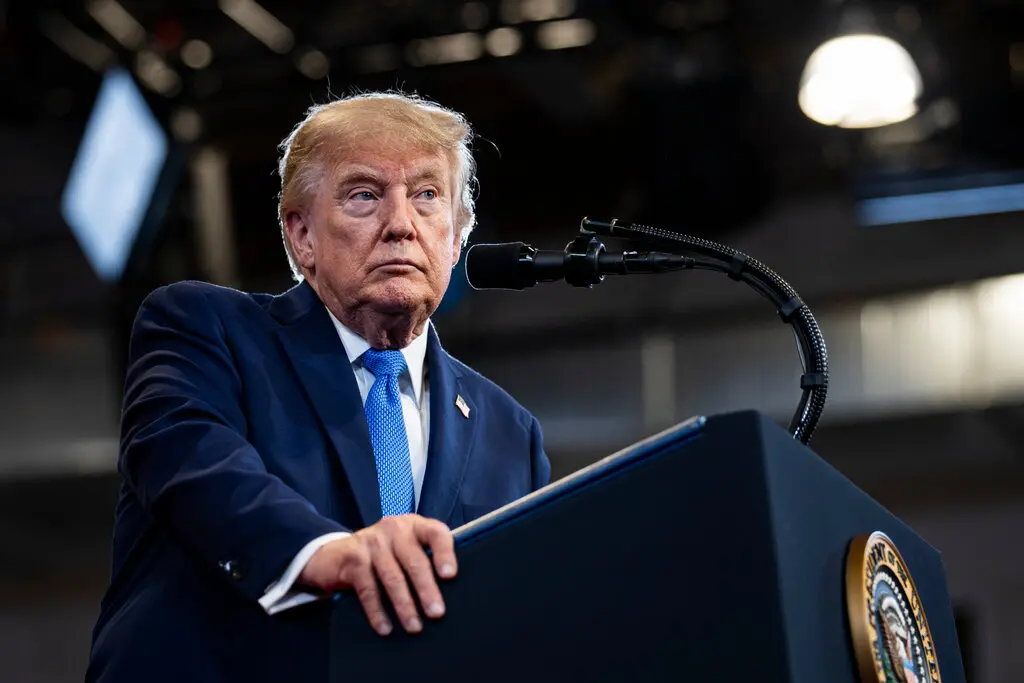
Trump’s influence over Republican candidates
President Donald Trump’s influence over the Republican Party is facing new tests during the 2026 midterm primary season. Several candidates backed by the president have struggled to secure Republican nominations in recent contests.
Specifically, three Trump-endorsed candidates lost Republican primaries held in Florida and Wyoming on August 18. The defeats included Representative Cory Mills in Florida and gubernatorial candidate Megan Degenfelder in Wyoming.
However, the results do not indicate a broad collapse of Trump’s influence within the Republican Party. His endorsed candidates have won the overwhelming majority of their primary contests this cycle, demonstrating that presidential support remains an important political asset.
At the same time, the recent defeats suggest that Trump’s endorsement does not guarantee electoral success. Local political dynamics, candidate controversies and voter preferences continue to influence Republican primary outcomes.
Key primary results and Republican dynamics
In Florida, Trump-backed Representative Byron Donalds won the Republican nomination for governor. Donalds defeated several opponents and will advance to the November general election, demonstrating that presidential support can still provide a significant advantage in competitive Republican contests.
Conversely, Representative Cory Mills lost his Republican primary in Florida’s 7th Congressional District. Mills had received Trump’s endorsement earlier in the year but faced an ethics investigation and allegations of misconduct, which became important factors in the campaign.
Meanwhile, Trump-backed Catalina Lauf also failed to win the Republican nomination in Florida’s 19th District. Conservative radio host Jim Schwartzel won the contest, despite Trump endorsing Lauf shortly before the primary.
In Wyoming, Trump’s preferred candidate for governor, Megan Degenfelder, also lost her primary. Consequently, three defeats in a single election night represented one of the more significant setbacks for Trump’s endorsement record during the current cycle.
Implications for the Republican Party and 2026 elections
The results could influence how Republican candidates evaluate presidential endorsements during the final stages of the midterm campaign. Although Trump remains highly influential, candidates may increasingly depend on local organizations, fundraising networks and individual voter coalitions.
Moreover, the primary results highlight differences between national Republican politics and state-level electoral dynamics. Candidates associated with Trump can benefit from his national political network, but local controversies and electoral conditions can limit that advantage.
The developments are particularly relevant because Republicans are defending their congressional majorities during the 2026 midterms. Therefore, the ability of Trump and the Republican leadership to select competitive candidates could affect the party’s prospects for maintaining control of Congress.
At the same time, Democratic victories in several competitive primaries indicate that both parties are experiencing internal debates about their political direction. In Florida, for example, Democratic socialist Angie Nixon defeated former Army intelligence officer Alexander Vindman in the Senate primary, adding another ideological dimension to the November contests.
International Relevance
The news has high international relevance because the 2026 U.S. midterm elections could influence the political balance in Congress and, consequently, the domestic environment surrounding U.S. foreign policy. Changes in congressional control can affect debates over defense spending, international assistance, trade policy and relations with strategic partners.
For the OGU, the article is particularly relevant because it allows analysis of the relationship between U.S. domestic politics, electoral institutions, party dynamics and international policy-making. The strength of Trump’s influence within the Republican Party may affect the composition of Congress and the political priorities that shape U.S. decisions toward other countries. Therefore, the evolution of the Republican primaries provides an important indicator for understanding possible changes in Washington’s foreign policy after the 2026 midterms.
Reference / Referencia: The New York Times. (2026, August 19). Trump’s primary election and Republican endorsements. Artículo original en The New York Times