
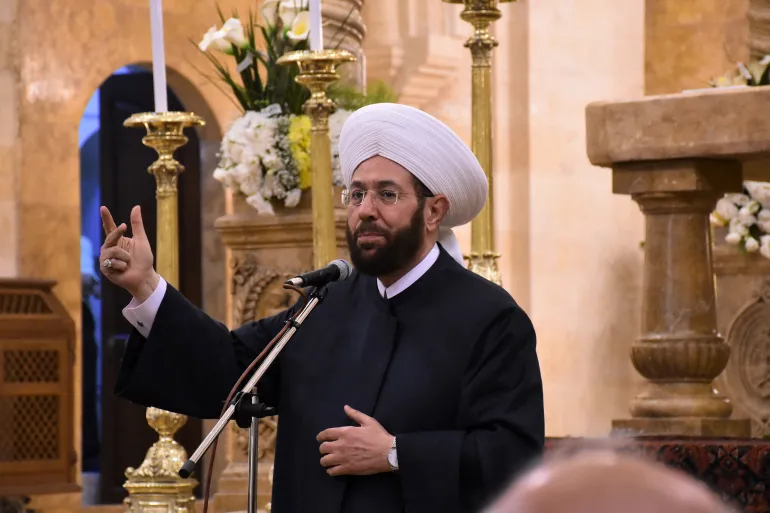
Ahmad Badreddin Hassoun, the former Grand Mufti of Syria under the ousted Assad regime, is facing a court verdict in Damascus where prosecutors have requested the death penalty. Appointed in 2005, Hassoun served as a key religious figurehead who provided moral and political legitimacy to the government during the 2011 uprising. Dubbed by critics as the “barrel-bomb mufti,” he routinely used violent rhetoric against opposition-held areas. Also, endorsed military operations, and welcomed military intervention from Iran and Russia. He was eventually detained at Damascus International Airport in March 2025 while attempting to flee the country following the collapse of the previous government.
The criminal trial, which began in June before a transitional justice court. Since it focuses on severe accusations regarding his complicity in human rights abuses and war crimes. Key charges include inciting violence against civilians, calling for the forced displacement of populations in opposition regions, and using religious platforms to justify regime atrocities. Furthermore, human rights organizations have linked him to approving thousands of secret inmate executions at the infamous Sednaya prison.
In conclusion, the trial of the former Grand Mufti represents a crucial effort by Syria’s post-regime judicial system to hold high-ranking religious officials accountable for enabling state violence. Ultimately, a guilty verdict and potential death sentence would signal that providing ideological and religious justification for war crimes carries the same legal consequences as direct military participation.
Reference
Salhani, J. (2026, August 20). Ahmad Hassoun, Assad’s ‘barrel bomb mufti,’ faces Damascus court verdict. Al Jazeera. https://www.aljazeera.com/news/2026/8/20/ahmad-badreddine-hassoun-assads-barrel-bomb-mufti-faces-court-verdict