
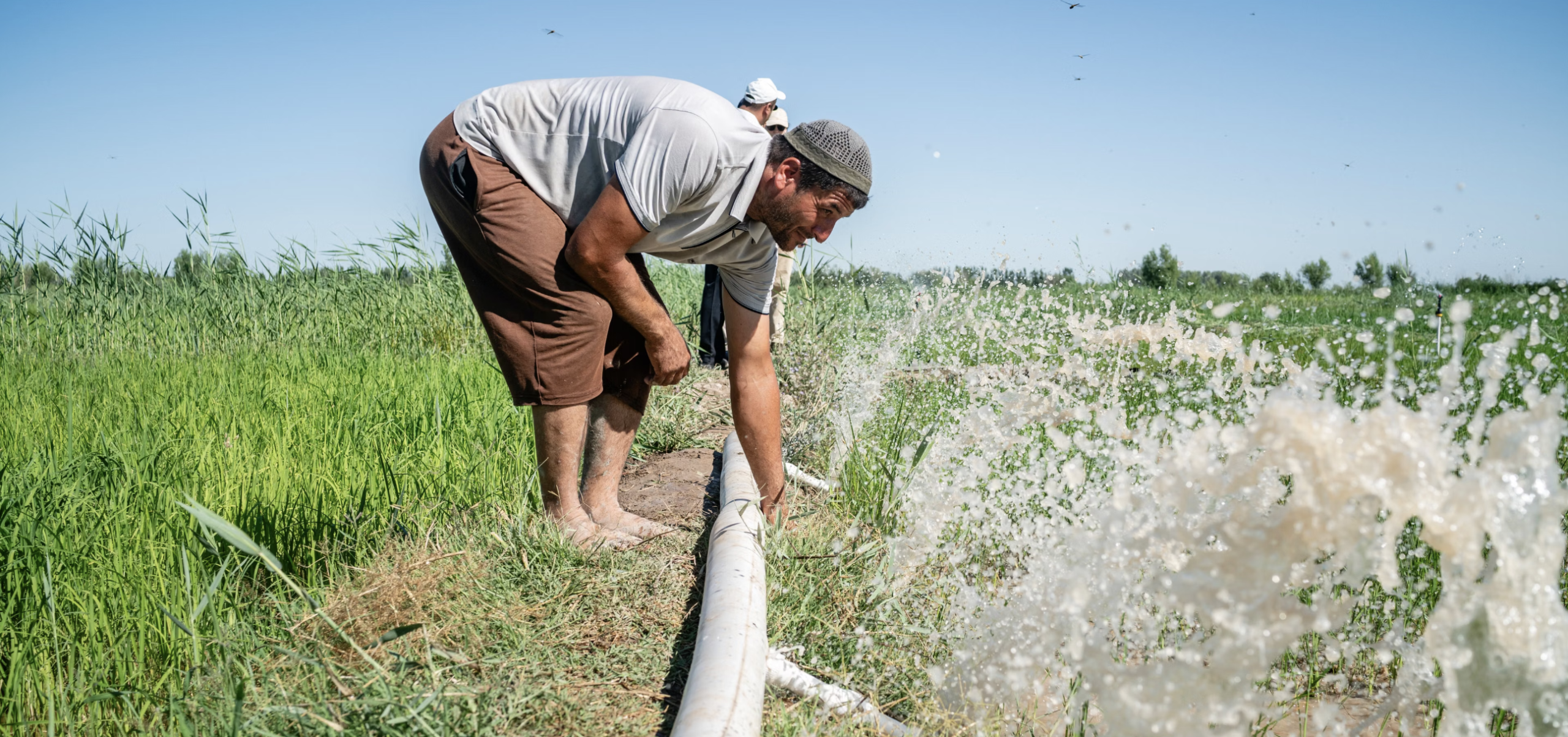
The Amou-Daria, Central Asia’s largest river, is experiencing a significant reduction in flow, endangering rice production in Uzbekistan’s Khorezm region. This river originates in the glaciers of Tajikistan and flows through Afghanistan, Turkmenistan, and Uzbekistan before reaching the Aral Sea. The decline, driven by climate change, increasing aridity, and human pressure on water resources, could reach 10 percent by 2030 according to Uzbekistan’s Ministry of Water Resources.
The Khorezm oasis, a green belt between the Karakoum and Kyzylkoum deserts, depends almost entirely on the Amou-Daria for irrigation. Farmers like Shalkat Soultanov have seen their rice yields drop from 900 to 700 quintals per year. Rice holds a central place in Uzbek cuisine as the main ingredient in plov, the national dish. The official “plov index,” which measures changes in the cost of living, has risen 7 to 10 percent over the past year, outpacing general inflation.
The water crisis is compounded by a Soviet-era environmental legacy. Decades of massive diversions for cotton monoculture have caused the Aral Sea to shrink by over 90 percent, leaving behind a vast salt plain. Soil salinization in Khorezm requires farmers to use up to 30,000 cubic meters of water per hectare of rice, compared to 22,000 cubic meters in other regions.
Uzbekistan annually extracts up to 22 billion cubic meters from the Amou-Daria, with 12 to 14 billion cubic meters lost due to leaky irrigation canals. The government is promoting water-saving technologies and laser land leveling. Some farmers are diversifying into less water-intensive crops like sesame, which requires nearly ten times less water than rice.
Meanwhile, Afghanistan’s Qosh Tepa canal, expected to be completed by 2028, could divert an additional quarter of the river’s flow, reducing water supply to Uzbekistan by another 15 percent. Authorities state that negotiations with Afghan representatives are ongoing.
Reference
Le Monde, “L’affaiblissement de l’Amou-Daria, le plus grand fleuve d’Asie centrale, menace la sécurité alimentaire en Ouzbékistan,” published August 25, 2026. https://www.lemonde.fr/planete/article/2026/08/25/l-affaiblissement-de-l-amou-daria-le-plus-grand-fleuve-d-asie-centrale-menace-la-securite-alimentaire-en-ouzbekistan_6756603_3244.html