
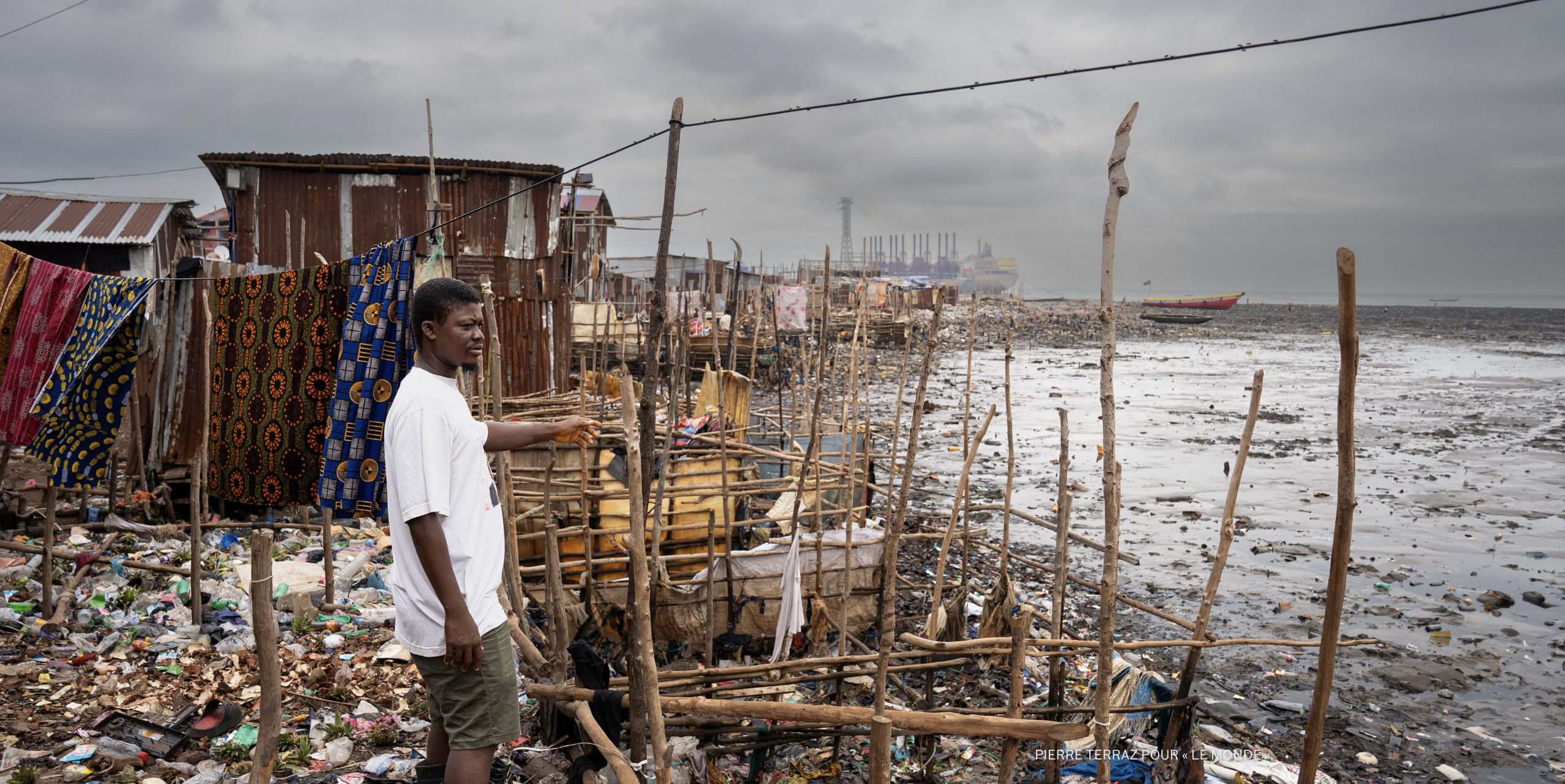
In Freetown, Sierra Leone, residents of coastal slums like Kroo Bay and Susan’s Bay are trapped between the rising Atlantic Ocean and torrents of rain and wastewater that cascade from the capital’s hills. The 2026 rainy season has brought devastating flooding, with high tides pushing seawater up to 50 meters inland during extreme weather events.
Joseph Amara, a Kroo Bay resident, has evacuated his wife and three children due to dangerous conditions. His home regularly floods through the roof and from the ocean. The slum, built on 13 hectares of informal settlement without safety standards, houses between 20,000 and 40,000 people in rusted iron shacks. Since the 1990s, these structures have been constructed without government approval.
Sierra Leone remains one of the world’s poorest nations, with average monthly income around 60 euros and life expectancy at 62 years. Rural exodus has pushed nearly 1.5 million people into Freetown. As a result, the poorest are forced to live in low-lying coastal areas, squeezed between the ocean and the mountainside. Furthermore, waste from the capital clogs drainage canals, causing rapid inundation.
Residents practice “banking,” building artificial embankments from sand and waste during low tides, despite a government ban enacted in August 2024. For instance, young builders like Issa Cissé raise their homes with sandbags. However, scientists estimate sea levels could rise 26 centimeters by 2050, threatening over 2,200 buildings in Freetown.
Local communities organize cleanup efforts through community disaster management committees. In addition, Eugenia Kargbo, Freetown’s heat officer, oversees tree-planting projects, including 270,000 mangroves planted along the coast. Nevertheless, mangrove survival rates remain low due to inappropriate species selection and extreme pollution. Similarly, cleanup workers report threats from residents undermining their efforts.
Fatalities are common; two men drowned in June 2026 after being swept into waste-clogged canals. Residents describe the waters as quicksand, with victims buried under debris. Authorities have identified 322 vulnerable communities and trained 162 disaster committees since 2015.
Reference
Le Monde, “En Sierra Leone, les habitants des bidonvilles piégés par la montée de l’océan,” published August 23, 2026. https://www.lemonde.fr/planete/article/2026/08/23/en-sierra-leone-les-habitants-des-bidonvilles-pieges-par-la-montee-de-l-ocean-on-est-encercles-par-la-mer-et-par-des-torrents-de-pluie-et-d-eaux-usees_6753758_3244.html