
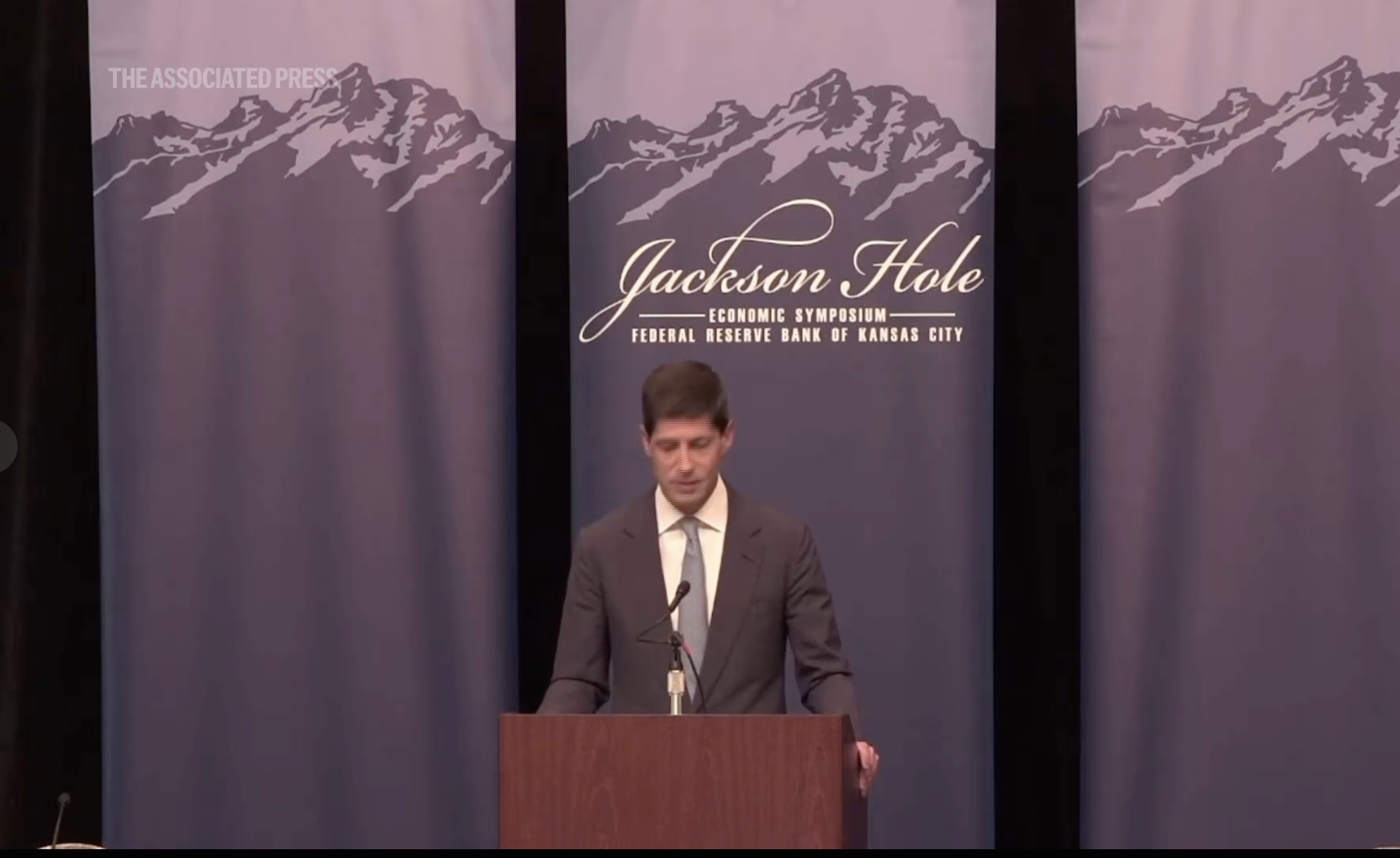
JACKSON HOLE, Wyoming — Federal Reserve Chair Kevin Warsh indicated on Friday that high inflation may force the central bank to raise interest rates in the coming months. Speaking at the annual Jackson Hole economic symposium, Warsh acknowledged that while recent economic reports show price increases cooling slightly, underlying inflationary trends have not meaningfully improved. Consequently, he emphasized that policymakers must see clear evidence of progress toward their two percent target. Therefore, this speech provided a direct signal that the central bank remains prepared to tighten monetary policy further if economic conditions require it.
Economic Indicators and Market Reactions to Interest Rates
Wall Street investors responded attentively to the Fed Chair’s remarks, interpreting them as a renewed commitment to fighting persistent inflation. Following the address, short-term bond yields moved higher, reflecting growing expectations that officials could adjust interest rates upwards at upcoming policy meetings. Warsh noted that robust consumer spending and heavy corporate investment in infrastructure suggest that current interest rates are not overly restrictive. Furthermore, economic data indicates that more than half of tracked goods and services continue to experience elevated price growth.
While Warsh refrained from committing to immediate action at the next policy meeting, market futures adjusted rapidly to reflect a higher probability of monetary tightening. Crucially, the Fed Chair clarified that short-term interest rates remain the primary tool for managing economic stability and guiding price trends. Additionally, Warsh addressed previous market uncertainties by reaffirming standard benchmark measurements for tracking long-term inflation. By avoiding explicit policy commitments, the leadership aims to preserve maximum operational flexibility while signaling a stern stance against ongoing price pressures.
Political Context and Broader Financial Implications
The discussion around monetary policy comes amid broader macroeconomic challenges and political scrutiny regarding economic management. Longer-term Treasury yields have experienced upward momentum in recent weeks, driven by government borrowing demands and heavy private sector capital expenditures. Moreover, analysts point out that maintaining elevated interest rates represents a balanced effort to manage inflation without curtailing underlying economic strength. Therefore, experts conclude that adjusting short-term interest rates will remain the Federal Reserve’s primary mechanism to anchor long-term expectations and achieve sustainable price stability.
Reference
Associated Press. (2026, August 28). Fed Chair Warsh signals rate hikes may be needed with US inflation stubbornly elevated. AP News. https://apnews.com/article/federal-reserve-warsh-interest-trump-inflation-ab896df808df3a5a3fa8b943ac5f3867