
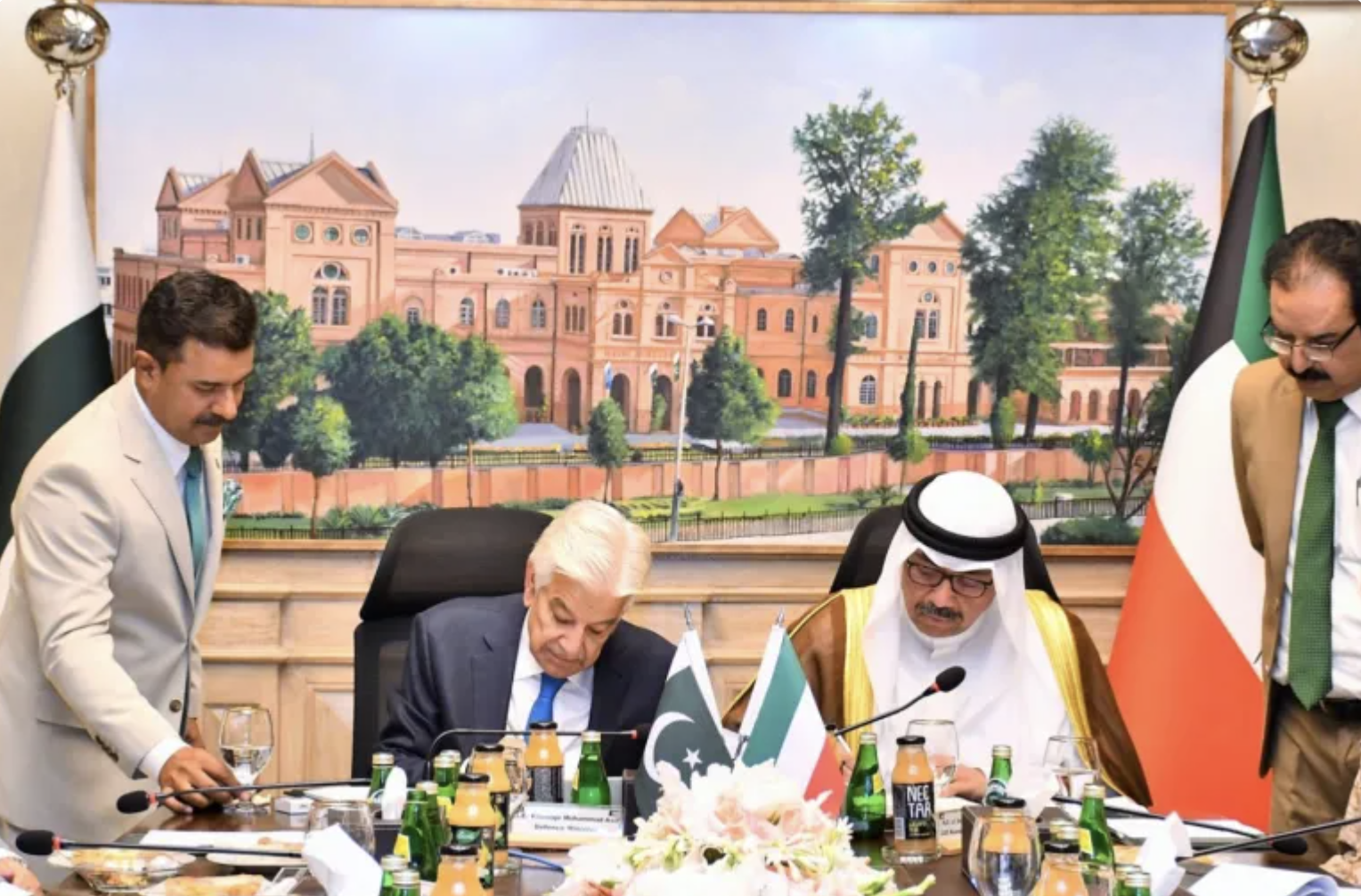
ISLAMABAD, Pakistan — Pakistan and Kuwait signed a major new defence agreement on Thursday to significantly enhance their bilateral military framework. Specifically, Defence Minister Khawaja Asif and his Kuwaiti counterpart, Sheikh Abdullah Ali Abdullah Al-Salem Al-Sabah, signed the “Protocol Agreement-2026” in Rawalpindi. Under this deal, Pakistan’s armed forces will assist in training Kuwait’s military, building its overall defence capacity, and securing its strategic borders. Consequently, this agreement formalizes a structured security partnership that builds upon quiet cooperation dating back to the late 1960s.
Expansion of Military Ties Across the Middle East
This latest bilateral agreement is part of a growing pattern of military pacts between Islamabad and the region. For instance, Pakistan previously signed a mutual defence deal with Saudi Arabia and joined a collective security framework known as the “Mecca Pact” alongside Turkiye. Additionally, Islamabad has deployed thousands of troops and fighter squadrons to Saudi Arabia while deepening training arrangements with Qatar. Therefore, Gulf capitals are actively moving away from informal security arrangements toward binding, highly visible defence agreements with external partners.
Strategic Drivers Behind Gulf Cooperation
Gulf states are increasingly turning to Pakistan due to its unique military capabilities and diplomatic standing. Importantly, Pakistan is the only nuclear-armed country in the Muslim world, which gives it substantial strategic weight. Furthermore, confidence in traditional Western security guarantees has weakened following recent regional conflicts and military escalations. As a result, partnering with Pakistan allows Middle Eastern nations to diversify their defence relationships effectively. Crucially, it provides a powerful layer of deterrence without creating unnecessary diplomatic friction with Washington.
Economic Prospects and Geopolitical Implications
While Pakistan offers extensive military manpower and expertise, its tangible economic returns from these agreements remain a subject of debate among analysts. However, experts suggest the partnership could lead to subsidised energy supplies and expanded work visas for Pakistani labor. Furthermore, these high-profile defence pacts significantly elevate Pakistan’s relevance in broader global affairs and Middle Eastern dynamics. Therefore, analysts conclude that the long-term geopolitical advantages for Islamabad far outweigh potential risks associated with regional instability.
Reference
Hussain, A. (2026, August 28). With Kuwait deal, Pakistan expands defence umbrella across Middle East. Al Jazeera. https://www.aljazeera.com/news/2026/8/28/with-kuwait-deal-pakistan-expands-defence-umbrella-across-middle-east