
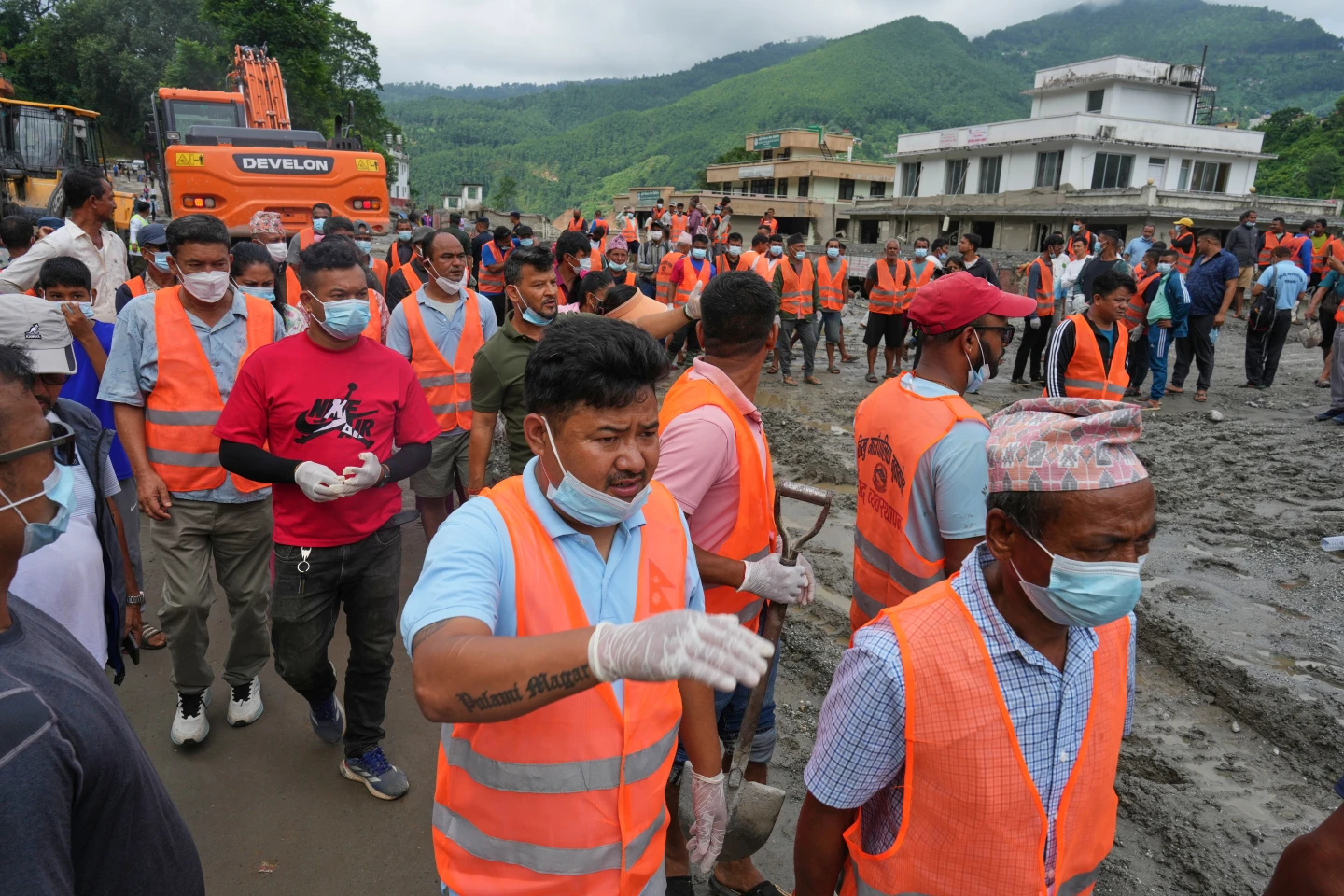
A glacial collapse triggers a humanitarian emergency
Catastrophic flooding has devastated areas of Nepal and China’s Tibet region after a massive glacial collapse triggered powerful torrents across the Himalayas. The disaster has destroyed homes, roads, bridges and critical infrastructure near the Nepal-China border.
According to authorities, the combined death toll in Nepal and China surpassed 900 by August 31. More than 4,700 people remain missing as rescue teams continue searching through heavily damaged areas.
Specifically, the flooding caused extensive destruction along river valleys connecting the Himalayan region with communities in Nepal. Mud, rocks and water buried infrastructure and severely complicated access to affected areas.
Moreover, the disaster has affected both local communities and foreign nationals. Families continue searching for missing relatives while emergency teams attempt to reach isolated areas and determine the full scale of the damage.
Rescue operations face severe logistical challenges
Rescue efforts in Nepal are focusing heavily on workers believed to be trapped inside tunnels at hydropower projects. A private-sector association representing power companies estimates that around 900 workers are unaccounted for across 12 damaged projects in Rasuwa and Nuwakot districts.
Furthermore, at least 500 workers are feared to remain inside large tunnels at several hydropower facilities. Rescuers must remove large quantities of mud and debris while dealing with damaged roads and difficult mountainous terrain.
The flooding has also disrupted Nepal’s electricity infrastructure. Several hydropower facilities were damaged or forced to suspend operations, creating additional economic and logistical pressures for the country.
Meanwhile, rescue operations in Tibet face similar obstacles. Roads and border infrastructure have been submerged or destroyed, limiting access to affected communities and complicating the delivery of emergency assistance.
Climate risks and regional infrastructure
The disaster has intensified concerns about the vulnerability of Himalayan communities to extreme environmental events. Scientists have linked the growing instability of glaciers and high-altitude environments to rising temperatures, although the precise causes of individual events require detailed investigation.
The Himalayan region contains extensive glacier systems that provide water resources for millions of people across South Asia. Therefore, changes in glaciers and mountain ecosystems can create risks extending far beyond individual communities.
Moreover, the destruction of hydropower facilities highlights the vulnerability of critical infrastructure in mountainous areas. Nepal has invested heavily in hydropower development, making these facilities strategically important for electricity generation and economic growth.
Consequently, the disaster may encourage governments to strengthen early-warning systems, geological monitoring and infrastructure standards. It could also increase international cooperation on disaster preparedness, climate adaptation and transboundary water management.
International Relevance
The news has a high international relevance because the disaster affects a strategically important region shared by Nepal and China and demonstrates the growing challenges associated with climate-related risks in the Himalayas. The destruction of infrastructure and the large number of missing people also show how environmental disasters can generate humanitarian, economic and cross-border consequences simultaneously.
For the OGU, the note is particularly relevant because it allows analysis of the relationship between climate change, disaster management, hydropower infrastructure, water security and international cooperation. The location of the disaster near the Nepal-China border also highlights the importance of transboundary coordination when environmental emergencies affect interconnected river systems and critical infrastructure. Furthermore, the event demonstrates how climate and environmental risks can increasingly influence economic development and regional stability in South Asia.
Reference / Referencia: Associated Press. (2026, August 31). Hundreds of workers feared stuck in hydropower tunnels as Nepal flood deaths cross 900. Original article on AP News.A glacial collapse triggers a humanitarian emergency
Catastrophic flooding has devastated areas of Nepal and China’s Tibet region after a massive glacial collapse triggered powerful torrents across the Himalayas. The disaster has destroyed homes, roads, bridges and critical infrastructure near the Nepal-China border.
According to authorities, the combined death toll in Nepal and China surpassed 900 by August 31. More than 4,700 people remain missing as rescue teams continue searching through heavily damaged areas.
Specifically, the flooding caused extensive destruction along river valleys connecting the Himalayan region with communities in Nepal. Mud, rocks and water buried infrastructure and severely complicated access to affected areas.
Moreover, the disaster has affected both local communities and foreign nationals. Families continue searching for missing relatives while emergency teams attempt to reach isolated areas and determine the full scale of the damage.
Rescue operations face severe logistical challenges
Rescue efforts in Nepal are focusing heavily on workers believed to be trapped inside tunnels at hydropower projects. A private-sector association representing power companies estimates that around 900 workers are unaccounted for across 12 damaged projects in Rasuwa and Nuwakot districts.
Furthermore, at least 500 workers are feared to remain inside large tunnels at several hydropower facilities. Rescuers must remove large quantities of mud and debris while dealing with damaged roads and difficult mountainous terrain.
The flooding has also disrupted Nepal’s electricity infrastructure. Several hydropower facilities were damaged or forced to suspend operations, creating additional economic and logistical pressures for the country.
Meanwhile, rescue operations in Tibet face similar obstacles. Roads and border infrastructure have been submerged or destroyed, limiting access to affected communities and complicating the delivery of emergency assistance.
Climate risks and regional infrastructure
The disaster has intensified concerns about the vulnerability of Himalayan communities to extreme environmental events. Scientists have linked the growing instability of glaciers and high-altitude environments to rising temperatures, although the precise causes of individual events require detailed investigation.
The Himalayan region contains extensive glacier systems that provide water resources for millions of people across South Asia. Therefore, changes in glaciers and mountain ecosystems can create risks extending far beyond individual communities.
Moreover, the destruction of hydropower facilities highlights the vulnerability of critical infrastructure in mountainous areas. Nepal has invested heavily in hydropower development, making these facilities strategically important for electricity generation and economic growth.
Consequently, the disaster may encourage governments to strengthen early-warning systems, geological monitoring and infrastructure standards. It could also increase international cooperation on disaster preparedness, climate adaptation and transboundary water management.
International Relevance
The news has a high international relevance because the disaster affects a strategically important region shared by Nepal and China and demonstrates the growing challenges associated with climate-related risks in the Himalayas. The destruction of infrastructure and the large number of missing people also show how environmental disasters can generate humanitarian, economic and cross-border consequences simultaneously.
For the OGU, the note is particularly relevant because it allows analysis of the relationship between climate change, disaster management, hydropower infrastructure, water security and international cooperation. The location of the disaster near the Nepal-China border also highlights the importance of transboundary coordination when environmental emergencies affect interconnected river systems and critical infrastructure. Furthermore, the event demonstrates how climate and environmental risks can increasingly influence economic development and regional stability in South Asia.
Reference / Referencia: Associated Press. (2026, August 31). Hundreds of workers feared stuck in hydropower tunnels as Nepal flood deaths cross 900. https://apnews.com/article/nepal-tibet-china-flash-floods-744fe6e15ae7751e15efcd6dff70170c?.