
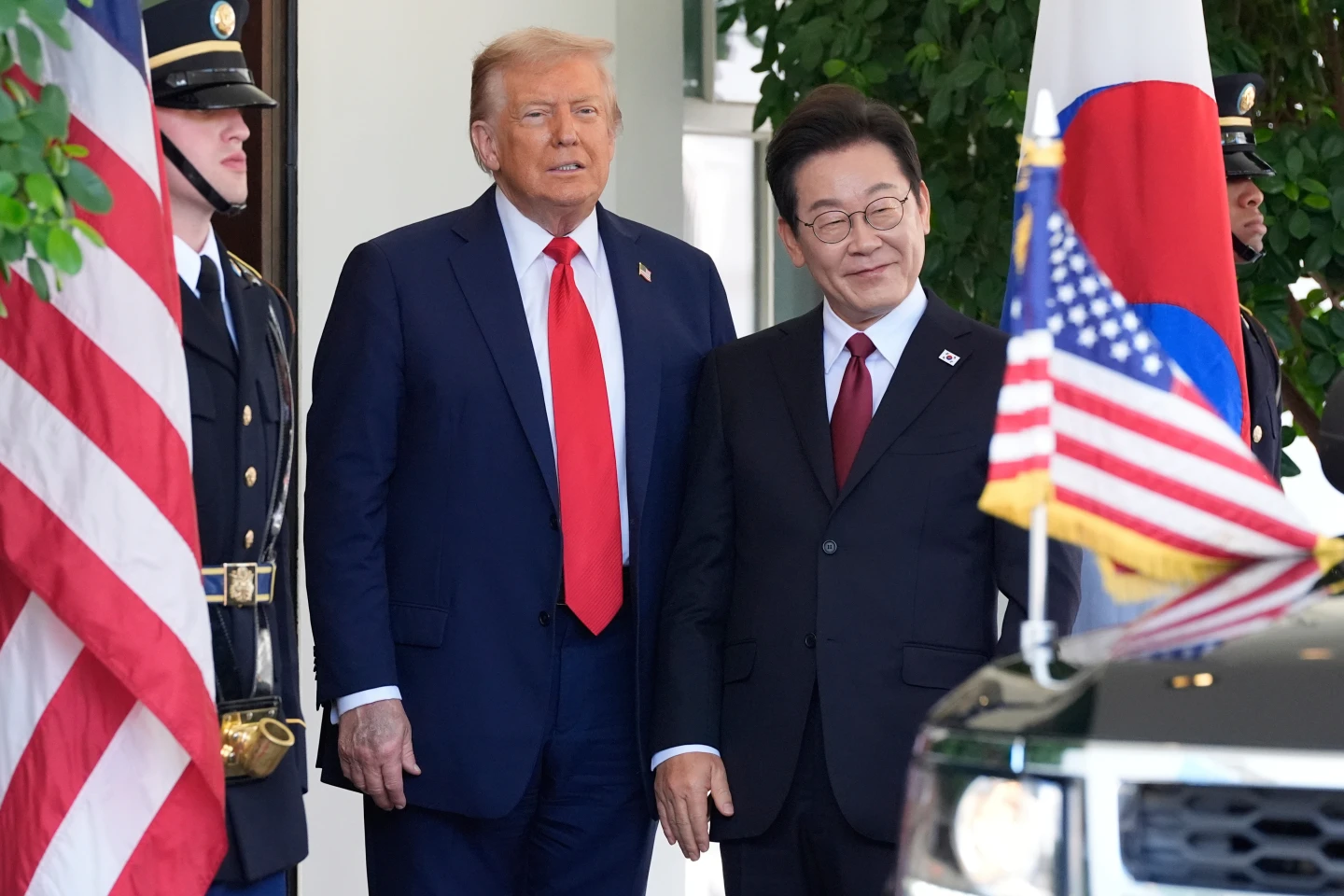
South Korea’s new president Lee Jae Myung prepares to host leaders from 20 countries at the Asia-Pacific Economic Cooperation (APEC) summit in Gyeongju. The meeting will be marking a crucial test of his “pragmatic diplomacy.” Only five months into office, Lee faces significant foreign policy challenges as he balances relations with Washington, Tokyo, and Beijing, while managing renewed tensions with North Korea.
A Join Declaration and US-China Tensions
The Gyeongju summit, the first APEC gathering in South Korea in two decades, takes place under the shadow of a high-stakes Trump–Xi meeting. The results of their discussion could heavily influence global trade and regional stability. While Trump may skip APEC’s main session, Lee aims to unite the 21 member nations to endorse a “Gyeongju Declaration” supporting free trade and multilateralism. A goal undermined in 2018 by the U.S.-China trade discord.
South Korea’s national security director Wi Sung-lac confirmed that “many issues have been resolved” and that Seoul is working to mediate between the two superpowers. Despite the optimism, analysts warn that enduring U.S.-China rivalry could once again prevent meaningful consensus.
US and Japan
Seoul is struggling to finalize a trade deal with Washington ahead of the summit. According to Trade Minister Kim Jung-Kwan, both countries remain “sharply divided” over the $350 billion U.S. investment package. Particularly regarding how much should be provided as direct subsidies to avoid Trump’s tariffs.
Meanwhile, relations with Japan face new uncertainty following the rise of Prime Minister Sanae Takaichi, whose right-wing stance on wartime history threatens to reignite historical tensions. Although trilateral cooperation among Seoul, Tokyo, and Washington has improved, Trump’s “America First” policy could strain this alliance. Experts like Kim Tae-hyung believe both countries will still deepen cooperation to face Trump’s unilateral trade policies and questions about U.S. security commitments.
A Push to Reopen with North Korea
Lee supports efforts to restore U.S.-North Korea diplomacy, seeing it as a potential path to reconciliation and humanitarian aid projects for the North. Trump, en route to Asia, said he remains open to meeting Kim Jong Un, recalling their “great relationship.” However, Pyongyang has shown little response, insisting that the U.S. drop denuclearization demands before any dialogue.
Deputy national security director Oh Hyunjoo stated that a Trump–Kim meeting during APEC is unlikely but noted that contingency plans exist in case of a sudden encounter. Their last meeting in 2019 was arranged spontaneously via a tweet, showing how unpredictable such diplomacy can be.
China-Korean Relations
Chinese President Xi Jinping’s visit, his first to South Korea in 11 years, highlights Seoul’s delicate balancing act between Washington and Beijing. Observers expect Lee to strengthen economic ties with China, South Korea’s largest trading partner, while maintaining a firm alliance with the U.S.
According to Jeonghun Min of the National Diplomatic Academy, Seoul’s current approach is to “reinforce cooperation with the U.S. while managing relations with China and other powers on that foundation.” The presence of major global leaders at APEC gives Lee a rare opportunity to showcase his pragmatic diplomacy and position South Korea as a key bridge between rival powers in the region.
Reference
Kim, H., & Tong-Hyung, K. (2025, October 28). South Korea’s president faces high-stakes diplomacy at APEC summit | AP News. AP News. https://apnews.com/article/south-korea-apec-lee-trump-us-xi-dfc921a73af1e1c36bdcc79949ddebf7