
The Cost of Economic Decoupling
Currently, Washington and Beijing are finding that complete economic decoupling is proving ruinously expensive. Specifically, bilateral trade of goods and services plummeted by 25.1 percent last year to approximately 494.6 billion dollars. Furthermore, American goods exports to China dramatically dropped by 26 percent amid ongoing trade tensions. Consequently, despite maintaining effective tariff rates near 30 percent, both global superpowers actively seek to limit further mutual economic damage. Ultimately, this shared financial reality frequently forces both nations to recover quickly from the brink of total diplomatic rupture.
Strategic Leverage and Rare Earths
Meanwhile, China retains immense strategic leverage through its complete dominance over critical global mineral supply chains. For instance, Beijing currently controls roughly 70 percent of rare earth mining and about 90 percent of processing capacity. In addition, the American administration tacitly admits its extreme vulnerability and urgent need for secure access to these critical minerals. Indeed, earlier reciprocal deals saw President Donald Trump lower tariffs after Xi Jinping suspended specific rare earth export restrictions. Therefore, Washington has noticeably refrained from threatening massive new technology bans before the latest highly anticipated presidential summit.
Evolving Diplomatic Relations
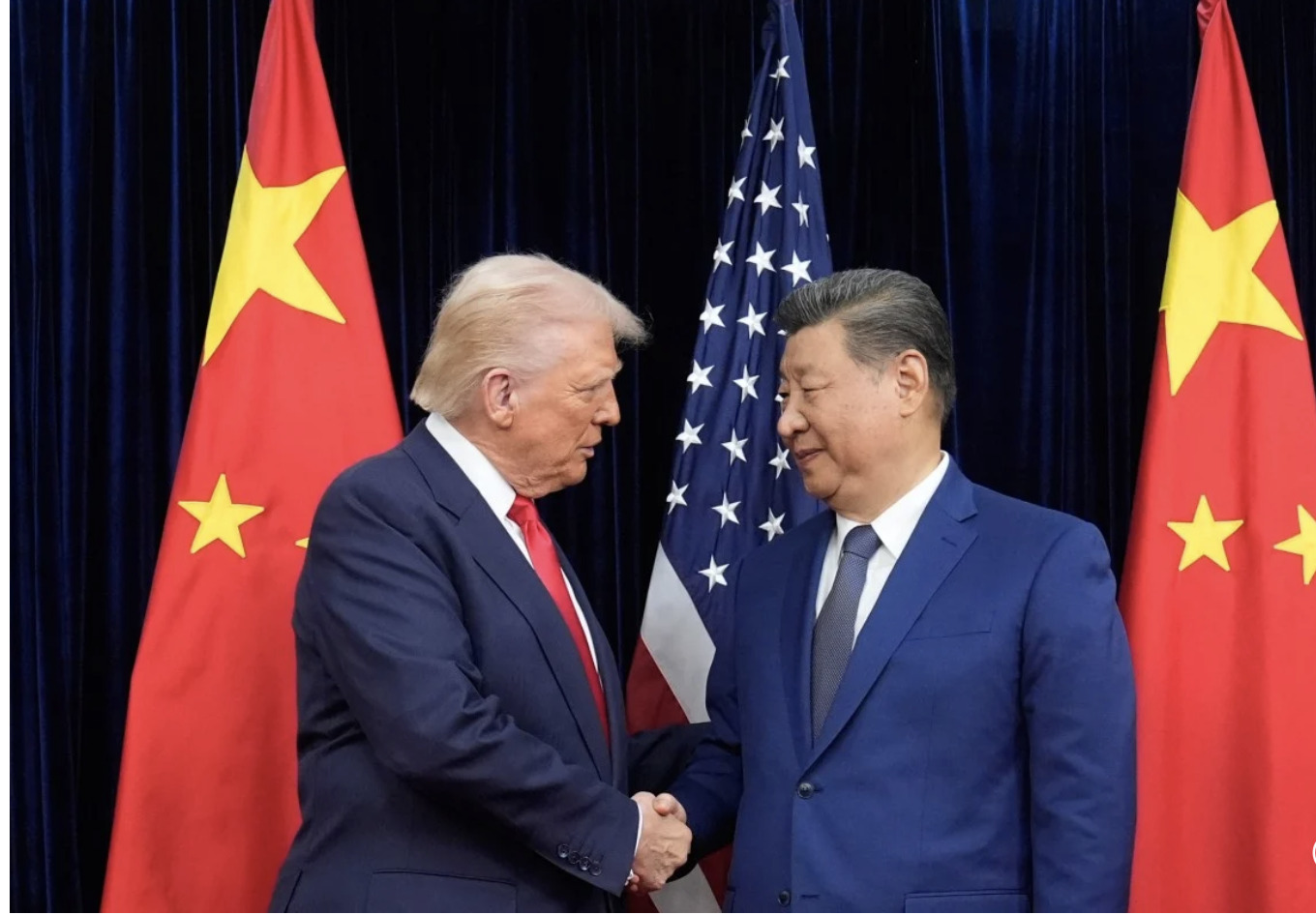
Moreover, recent American policy documents signal a noticeable shift toward diplomatic stability rather than massive confrontation. In fact, the November 2025 National Security Strategy officially declined to explicitly name China as a direct competitor. Instead, U.S. Trade Representative Jamieson Greer emphasized maintaining a genuinely mutually advantageous economic relationship with Beijing. Similarly, both presidents previously agreed in May to pursue a framework of constructive strategic stability. Ultimately, while neither nation expects core grievances to disappear, they successfully limit their retaliatory export control measures.
Military Dialogue and Taiwan Tensions
On the other hand, Taiwan remains an incredibly sensitive flashpoint threatening broader regional security and stability. For example, the People’s Liberation Army continues conducting large-scale naval exercises and flying thousands of military sorties near the island. However, recent command-level meetings between top military leaders signal that crucial communication channels are actively rebuilding. Additionally, government officials expect suspended arms-control talks between the two nuclear-armed giants to resume soon. In conclusion, sustained consultation helps both superpowers manage their deep differences and avoid the catastrophic costs of outright enmity.
Reference
Lo, A. (2026, September 26). As I see it | China and the US can make nice, if not peace. South China Morning Post. https://www.scmp.com/opinion/china-opinion/article/3368480/china-and-us-can-make-nice-if-not-peace