
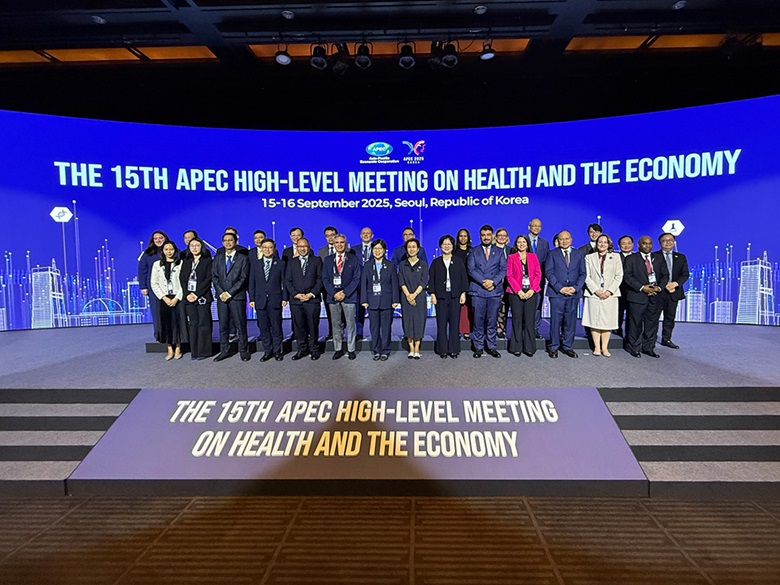
Seoul, Republic of Korea | 16 September 2025
The 2025 APEC High-Level Meeting on Health and the Economy was held in Seoul, Republic of Korea, under the theme “Connect, Innovate, Prosper: Building a Healthy, Smart and Aging-Responsive Society.” The meeting brought together APEC economies to address the growing links between health systems, demographic change, and economic growth in the Asia-Pacific region.
Strengthening Health Systems and Economic Resilience
During the meeting, Ministers reaffirmed their commitment to resilient and sustainable health systems. This commitment aligns with the Putrajaya Vision 2040 and the Aotearoa Plan of Action. Health was recognized as a key foundation for economic growth, social stability, and innovation across the region.
Moreover, Ministers highlighted the need for coordinated regional action. These efforts aim to strengthen health systems, address demographic challenges, and support long-term economic development.
Responding to Aging and Demographic Change
Ministers acknowledged the region’s rapid population aging and declining birth rates. As a result, they emphasized policies that promote healthy and active aging. These policies focus on improving access to quality health services and enabling older people to participate meaningfully in society and the economy.
In addition, cross-sectoral approaches were encouraged. Cooperation across health, employment, finance, and digital innovation was seen as essential to building aging-responsive societies.
Digital Health, AI, and Innovation
Digital health and artificial intelligence were identified as major drivers of health system transformation. Ministers recognized their potential to improve early detection, diagnosis, treatment, and patient-centered care.
Furthermore, they supported stronger regional cooperation on digital health. This includes capacity building, workforce digital literacy, and health data interoperability, while ensuring privacy and ICT security. Continued collaboration on digital health tools was encouraged to expand access and reduce digital divides.
Community-Based Care and Supply Chain Resilience
Ministers emphasized the importance of integrated, community-based primary health and care services. Such systems are essential to support people, especially vulnerable populations, to age within their communities.
At the same time, resilient healthcare supply chains were highlighted as critical. Regional cooperation was encouraged to prevent disruptions, improve transparency, and ensure access to essential medical products during future health emergencies.
Mental Health, Cancer Control, and Environmental Challenges
The meeting recognized mental health as a core component of population well-being and economic resilience. Ministers supported expanding community-based mental health services and reducing stigma.
They also reaffirmed commitments to comprehensive cancer control across the life course. Additionally, the health impacts of extreme weather events and natural disasters were addressed, with a focus on preparedness, information sharing, and protecting vulnerable populations.
Regional Cooperation and Next Steps
Finally, Ministers underscored the importance of continued regional collaboration through the APEC Health Working Group and related fora. They welcomed engagement with regional and international partners and looked forward to further discussions at the next High-Level Meeting on Health and the Economy.
Reference
Asia-Pacific Economic Cooperation. (2025). Joint ministerial statement: 15th High-Level Meeting on Health and the Economy. https://www.apec.org