
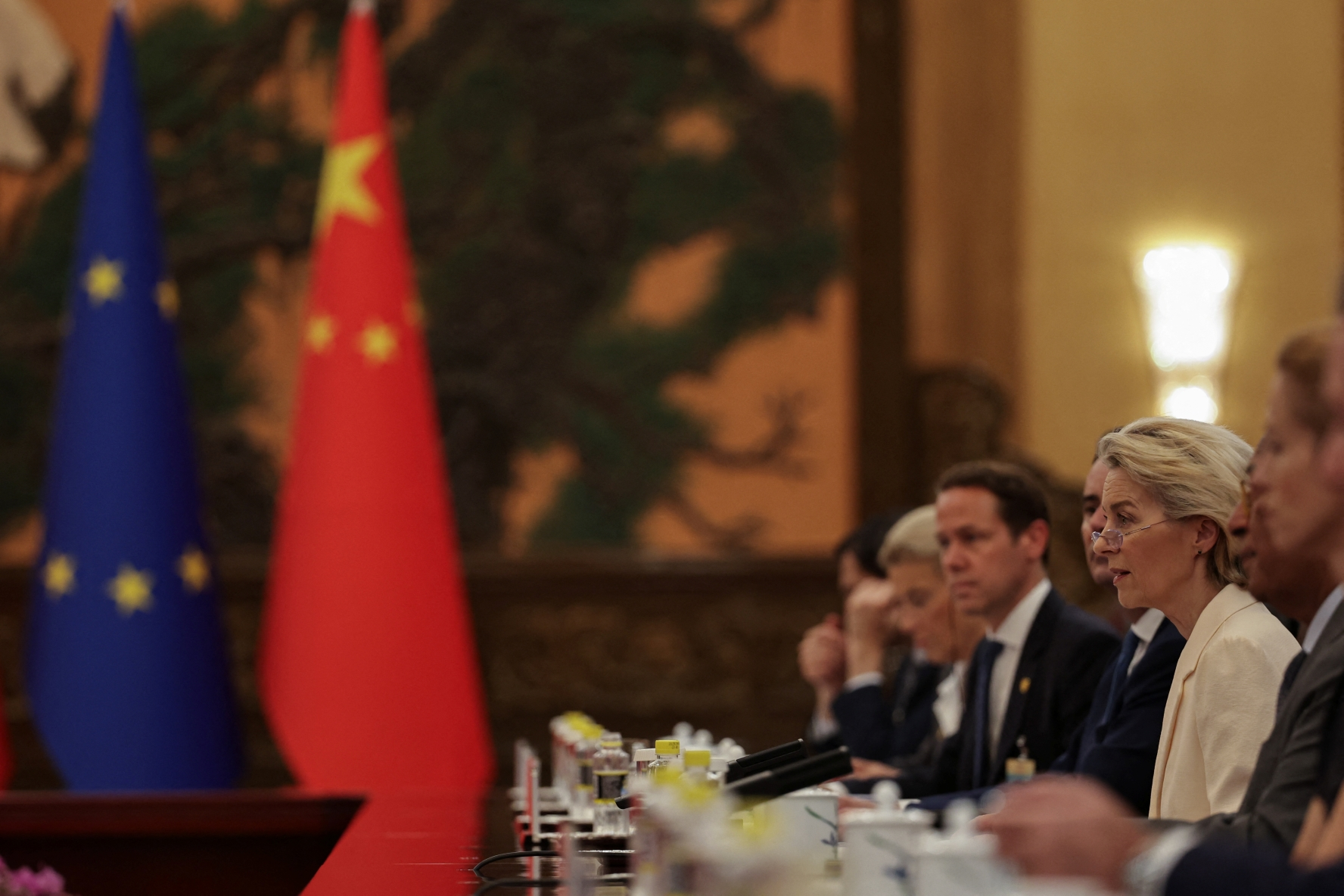
Transatlantic Divisions Undermine a Unified China Strategy
Both the United States and Europe are trapped in an unsettled China policy that neither decisively counters Beijing nor restores earlier commerce and cooperation. Although transatlantic relations have deteriorated, especially after recent diplomatic crises, the United States and the European Union struggle to find common ground on how best to address China’s rise.
Moreover, rising political tensions have led some European governments to view China as a way to diversify away from U.S. influence rather than as a strategic competitor, which further complicates joint policy cohesion. Consequently, transatlantic cooperation on economic security and other areas remain narrow, and it is unclear whether available tools can meaningfully influence China’s economic behavior.
Significantly, domestic politics on both sides have hindered progress: the U.S. government’s recent focus has shifted from competition toward managing relations with Beijing, while many European leaders prioritize regional issues over confronting China directly.
Furthermore, European debates over economic costs and divisive issues, such as trade disputes with the United States, have at times overshadowed efforts to collectively counter China’s influence. Even when European tools like protective tariffs are deployed, analysts caution that such measures alone might fail to induce behavioral change in China and could inadvertently weaken European firms’ competitiveness.
Limited Cooperation and Strategic Challenges
Transitioning to the next major point, only unified actions among major economies could make economic security measures impactful against China’s global strategies. Early signs of multilateral efforts, such as Mexico’s implementation of high tariffs on certain Asian imports, offered some hope, yet these gains have already eroded due to policy reversals elsewhere. Meanwhile, planned diplomatic engagements, including visits by European and U.S. leaders to Beijing, risk further dimming prospects for coordinated pressure on contentious issues.
On high-technology controls and export policies, recent shifts suggest the United States may be moving away from strict export restrictions toward encouragement of sales, potentially weakening existing barriers. Thus, cooperative defense and supply chain strategies, such as securing critical minerals and strengthening industrial bases, emerge as the most feasible areas for transatlantic collaboration.
Nevertheless, Europe faces a strategic dilemma: deepening defense ties with the United States may secure resources and capabilities but could also intensify dependency amid fragile political relations. Ultimately, the fractured nature of the alliance, compounded by external powers’ strategic interests, suggests that overcoming division is essential for any credible competition with China.
Source:
Czin, J. A. (2026, enero 30). Can an alliance divided against itself compete with China? Brookings Institution. https://www.brookings.edu/articles/can-an-alliance-divided-against-itself-compete-with-china/