
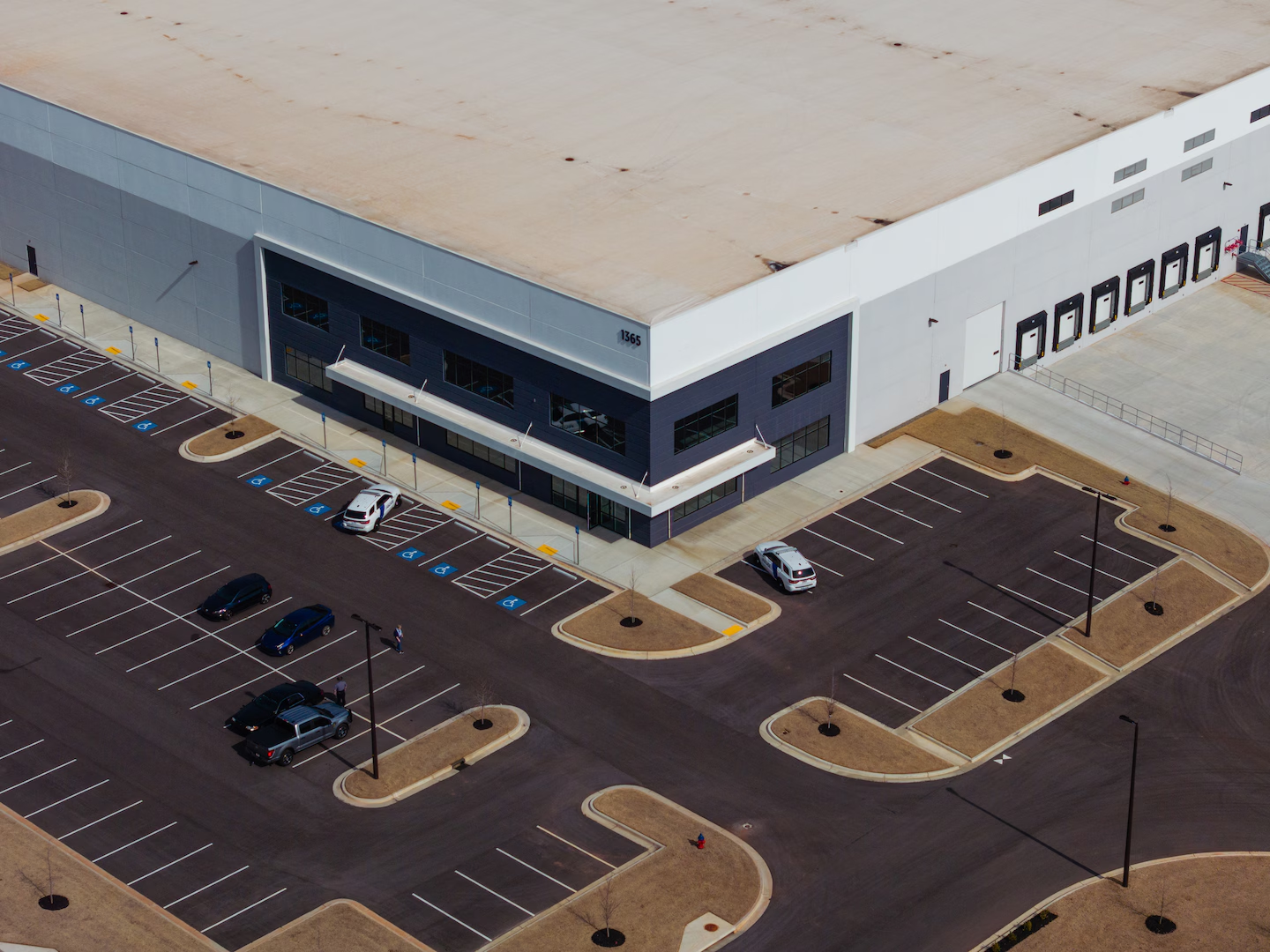
Trump’s administration has an expansive and costly plan to dramatically expand immigrant detention capacity through US Immigration and Customs Enforcement (ICE). According to agency documents released by New Hampshire Gov. Kelly Ayotte, ICE expects to spend $38.3 billion. The budget is to purchase and re-purpose industrial warehouses across the country into large-scale immigrant detention centers. The initiative represents one of the most ambitious of the detention systems in recent history and signals a major investment in accelerating arrests and deportations.
Under the plan, ICE would convert 16 warehouses into regional processing centers, each capable of holding between 1,000 and 1,500 detainees for short stays of three to seven days. An additional eight massive facilities would house 7,000 to 10,000 people at a time, detaining individuals for about 60 days before deportation. Altogether, the system — including 10 existing facilities the federal government intends to acquire — would allow ICE to detain up to 92,600 individuals simultaneously. The agency argues that the expansion is necessary due to increased hiring of agents and an anticipated rise in arrests.
The proposal highlights both the scale and the logistical complexity of the project. ICE has already spent hundreds of millions of dollars acquiring properties in multiple states. Now it is seeking contractors to transform vacant industrial buildings into detention centers complete with dormitories, courtrooms, recreation areas and cafeterias. Private prison contractor Geo Group has expressed interest but warned that converting warehouses into large, secure detention operations would be operationally challenging.
Local Resistance vs Economic Promises
The effort has sparked concern among state and local officials. Some question whether local infrastructure, particularly water and wastewater systems, can handle facilities housing thousands of detainees. ICE maintains that site capacities are sufficient, though it acknowledges that upgrades may be required. Additional controversies have emerged over transparency, with conflicting statements about whether governors were properly briefed. Some proposed deals have collapsed following public backlash or local government intervention, revealing tensions between federal authority and local oversight.
Supporters within DHS frame the projects as economic investments that will generate construction and operational jobs. Critics, however, see the initiative as an unprecedented expansion of mass detention, raising humanitarian, environmental and governance concerns. Overall, this presents a detailed look at a high-cost, large-scale federal strategy to centralize and intensify immigration enforcement infrastructure nationwide.
Reference
MacMillan, D., & O’Conell, J. (2026, February 13). ICE plans to spend $38.3 billion turning warehouses into detention centers. The Washington Post. https://www.washingtonpost.com/business/2026/02/13/ice-detention-center-expansion/