
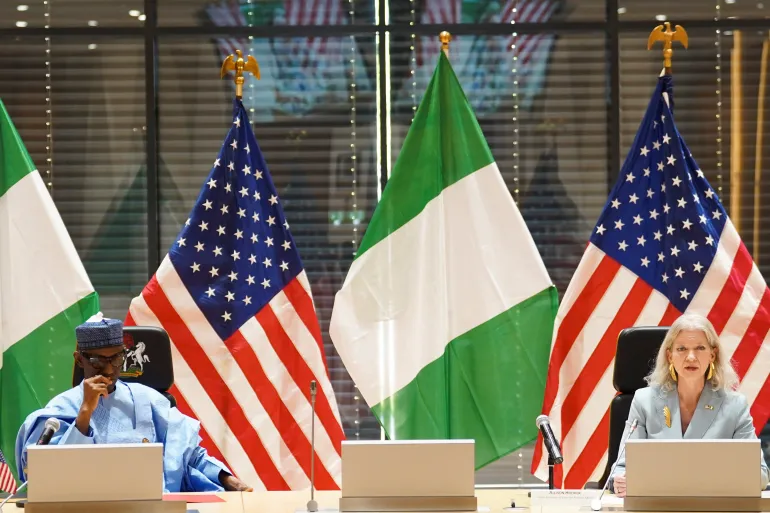
A Shift in Transatlantic Diplomacy
The diplomatic relationship between Nigeria and the United States has undergone a significant transformation following a series of high-level security dialogues held this February 2026. Initially marked by aggressive rhetoric and threats of sanctions from the Trump administration, the bilateral tone has shifted toward a more cooperative stance. Consequently, this evolution raises critical questions about whether Nigeria’s strategic maneuvers have successfully disarmed initial American hostility regarding regional security management.
Origins and the Rhetoric of Disengagement
Originally, the US administration’s approach toward Nigeria was characterized by “America First” principles, which prioritized immediate security results over long-term institutional support. In late 2025, the relationship faced severe strain due to disagreements over counter-terrorism strategies and military procurement conditions. Furthermore, the threat of cutting off security assistance was frequently used as a leverage tool by Washington. However, the Nigerian government responded not with confrontation, but with a calculated diplomatic charm offensive designed to highlight its indispensable role in African stability.
Structure of the New Security Framework
The current cooperation is organized around a dual-track framework that balances military hardware acquisition with intelligence-sharing protocols. Specifically, the Nigerian delegation emphasized the necessity of advanced aerial surveillance technology to combat regional insurgencies effectively. Moreover, the discussions transitioned from unilateral demands to a “hand-holding” approach, where joint training exercises and localized security initiatives are now the priority. This structural shift suggests a recognition by the US that a stable Nigeria is the primary bulwark against the expansion of extremist groups in the Sahel.
Innovation in Diplomatic Engagement
In contrast to traditional diplomatic channels, Nigeria utilized a mix of personal diplomacy and economic incentives to reshape its image in Washington. For instance, by aligning its security needs with American defense manufacturing interests, Nigeria managed to turn a potential strategic liability into a mutually beneficial partnership. Therefore, the narrative of “disarming” the US administration refers to the successful neutralization of punitive measures through pragmatic engagement. This innovation in negotiation has allowed Nigeria to maintain its sovereignty while securing the military support essential for its internal stability.
Synthesis of Regional Stability and Future Outlook
The successful recalibration of this partnership relies on the continuous alignment of interests regarding maritime security in the Gulf of Guinea and counter-insurgency operations. This synergy is intended to prevent a security vacuum that could be exploited by other global powers seeking influence in West Africa. Simultaneously, there is a clear intent to monitor human rights benchmarks, which remains a sensitive but managed component of the dialogue. Ultimately, the transition from threats to cooperation provides a stable roadmap for US-Nigeria relations, positioning this alliance as a cornerstone of regional security in the 2026 geopolitical landscape.
Source
Al Jazeera. (2026, February 19). From US threats to holding hands: Did Nigeria disarm Trump on security? Al Jazeera News. https://www.aljazeera.com/news/2026/2/19/from-us-threats-to-holding-hands-did-nigeria-disarm-trump-on-security