
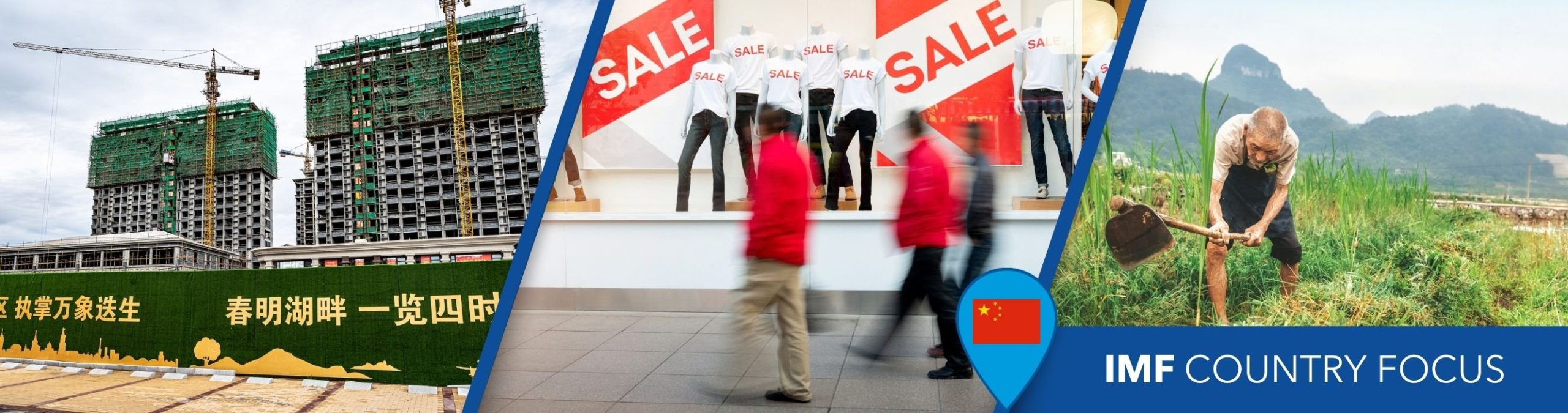
China’s economy has demonstrated resilience despite multiple shocks, supported by strong exports and fiscal stimulus. Growth reached 5 percent in 2025, and projections place expansion at 4.5 percent this year, an upward revision from earlier expectations. This performance reinforces China’s role as a major contributor to global growth.
Yet structural challenges are mounting. Domestic demand remains subdued, largely because a prolonged property downturn and a limited social safety net have weakened consumer confidence. Deflationary pressures have intensified, and growth has become increasingly dependent on external demand. Relying on ever-rising exports, however, cannot sustain long-term expansion. Policymakers have acknowledged these constraints. In 2025, they adopted a more expansionary fiscal stance, introduced targeted social subsidies, reduced overinvestment in certain industries and eased monetary policy. The 15th Five-Year Plan (2026–30) places consumption at the center of future growth strategy, with gradual increases in retirement age aimed to counteract demographic headwinds.

Fiscal stimulus
Stronger macroeconomic expansion remains essential. A comprehensive policy package centered on additional fiscal stimulus, complemented by further monetary easing and greater exchange rate flexibility. This would help lift inflation to healthier levels and strengthen domestic demand. Reducing reliance on exports would make growth more balanced and sustainable.
At the same time, policymakers must shift the composition of fiscal spending. Scaling back public investment and industry-specific support would allow market forces to allocate resources more efficiently and improve productivity. Redirecting budget resources toward social spending and stabilizing the property sector—particularly by assisting buyers of unfinished housing—would rebuild confidence and support household balance sheets.
Improved social protection
Strengthening social protection stands out as a critical step toward raising consumption. Expanding healthcare coverage, pensions, unemployment benefits and social assistance would reduce precautionary savings and encourage households to spend more. Research indicates that doubling rural social spending could increase consumption by up to 2.4 percentage points of GDP over five years.
Reforming the hukou system would further support domestic demand. Granting urban status to rural migrants and easing residency restrictions would expand access to benefits and lower saving rates. Potentially lifting the consumption-to-GDP ratio by 0.6 percentage points.

Finally, introducing more progressive labor taxes and strengthening capital taxation would reduce inequality and increase disposable income. Especially for lower-income households, who tend to spend a larger share of their earnings.
Together, these measures could raise the consumption-to-GDP ratio by roughly 4 percentage points over five years. By unlocking the potential of its vast domestic market, China could reduce vulnerability to external shocks and reinforce its position as a stable engine of global growth.
Reference
Garcia-Macia, D., Jain-Chandra, S., Kothari, S., & Xu, Y. (2026, February 18). How China’s Economy Can Pivot to Consumption-led Growth. IMF COUNTRY FOCUS. https://www.imf.org/en/news/articles/2026/02/18/cf-how-chinas-economy-can-pivot-to-consumption-led-growth