
A New Chapter in Bilateral Relations
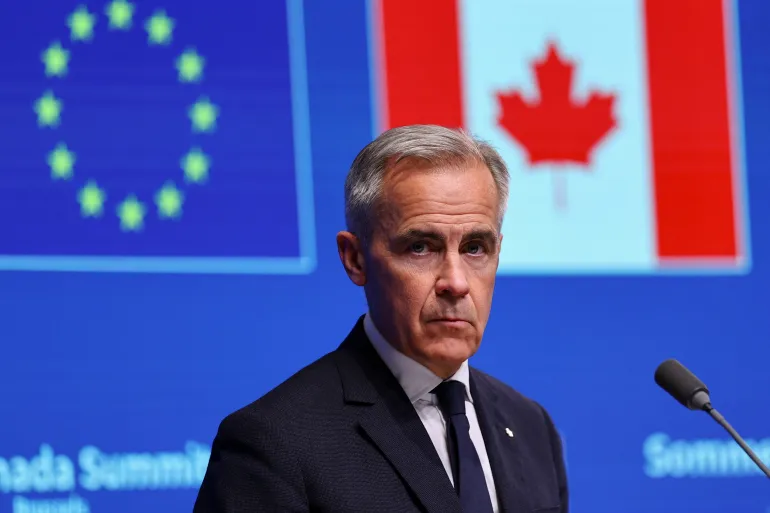
In February 2026, Canadian Prime Minister Mark Carney embarked on a high-stakes official visit to India, signaling a decisive end to a period of severe diplomatic friction. This trip, Carney’s first to the subcontinent since taking office in March 2025, serves as a formal “reset” after years of strained ties following the 2023 assassination allegations that previously brought bilateral relations to a historic low. Consequently, the visit is framed not merely as a symbolic gesture but as a strategic necessity for both nations to consolidate economic and security ties amidst an increasingly volatile global trade environment. By prioritizing Mumbai’s financial hub and New Delhi’s political center, Carney aims to replace “crisis management” with a forward-looking partnership focused on tangible outcomes.
Origins and the Economic Imperative for Rapprochement
Originally, the partnership between Canada and the People’s Republic of India was anchored in strong people-to-people ties, yet it was frequently derailed by domestic political sensitivities in both nations. By early 2026, however, the geopolitical landscape shifted, with both Ottawa and New Delhi facing external pressures, including the uncertainty of U.S. tariff policies and the need for resilient supply chains. The Al Jazeera report suggests that the origin of this rapprochement lies in a shared desire to diversify trade away from over-reliance on traditional Western markets. Furthermore, the 2025 G20 summit in South Africa served as the catalyst for this visit, where Carney and Prime Minister Narendra Modi agreed to resume negotiations for a Comprehensive Economic Partnership Agreement (CEPA) with the goal of doubling bilateral trade to $70 billion by 2030.
Structure of the Strategic Partnership and Nuclear Cooperation
The structure of the renewed Canada-India partnership is organized around several key pillars: energy security, critical minerals, and advanced technology. Specifically, one of the most significant items on the agenda is the finalization of a long-term uranium supply agreement, which is essential for the expansion of India’s nuclear energy sector under its new regulatory reforms. Moreover, the discussions are designed to integrate Canadian pension funds more deeply into Indian infrastructure and green energy projects, providing long-horizon capital for India’s development. This structured cooperation also extends to defense and artificial intelligence, reflecting a “multi-sectoral synergy” that seeks to insulate the economic relationship from future political turbulence by embedding it in institutional and commercial frameworks.
Synthesis of Indo-Pacific Strategy and Global Governance
The successful consolidation of Canada-India ties relies on a synergy between Canada’s renewed Indo-Pacific Strategy and India’s ambition as a leading global power. This objective is essential for Canada to secure its position as a reliable provider of energy and critical minerals to Asia’s fastest-growing major economy. Simultaneously, there is a clear intent to leverage the 1.8 million-strong Indian diaspora in Canada as a bridge for talent and cultural exchange, which the Carney administration views as a unique competitive advantage. Ultimately, the February 2026 visit provides a stable roadmap for a “transaction-driven” partnership that prioritizes economic complementarity over ideological differences, signaling a maturing of diplomatic relations between two key democratic anchors in the Indo-Pacific region.
Reference
Al Jazeera. (2026, February 27). Canadian PM Carney heads to India on significant trip to consolidate ties. Al Jazeera News. https://www.aljazeera.com/economy/2026/2/27/canadian-pm-carney-heads-to-india-on-significant-trip-to-consolidate-ties