
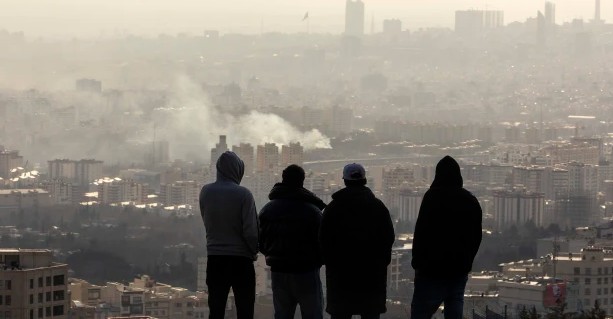
A New Conflict Pulling the United States Back Into the Middle East
In the article “What’s Next for the War in Iran?”, published by the Council on Foreign Relations, CFR President Michael Froman examines the implications of the latest military escalation involving the United States, Israel, and Iran. The analysis highlights how the Middle East continues to draw Washington back into conflict despite repeated attempts by U.S. administrations to shift strategic focus toward other regions.
Froman notes that U.S. policymakers have long tried to reduce military involvement in the Middle East, first through the Obama administration’s pivot toward Asia and more recently through calls to prioritize the Western Hemisphere. Yet the region repeatedly reasserts its strategic importance through crises that demand U.S. attention. The ongoing war with Iran represents the latest example of this recurring dynamic.
The conflict escalated rapidly following extensive military strikes across Iran, which targeted thousands of sites and resulted in the deaths of senior figures within the Iranian regime, including Supreme Leader Ayatollah Ali Khamenei. Iran has retaliated with attacks against military, civilian, and infrastructure targets across multiple countries, demonstrating that the conflict is already producing broader regional repercussions.
Strategic Objectives and the Debate Over Regime Change
A key uncertainty surrounding the conflict concerns the objectives of the United States and its allies. According to Froman’s discussion with Under Secretary of War for Policy Elbridge Colby, the U.S. military campaign aims primarily to degrade Iran’s ability to project power in the region.
These objectives include weakening Iran’s nuclear program, missile capabilities, drone operations, and naval forces. While Israel appears more openly supportive of regime change in Tehran, the United States has officially framed its goals in narrower strategic terms focused on military capability rather than political transformation.
Nevertheless, the distinction between these goals remains blurred. Statements from political leaders suggest that regime change could become an implicit outcome of the conflict, even if it is not formally articulated as a primary objective.
Uncertainty Over Iran’s Political Future
Another major issue raised in the analysis concerns the future leadership of Iran. With the country’s long-standing supreme leader reportedly killed, the structure of the Iranian regime faces a potentially destabilizing transition.
Several possible outcomes are discussed. One scenario involves the succession of Mojtaba Khamenei, the son of the late supreme leader, possibly sharing power with elements of the security establishment. Other possibilities include the emergence of another clerical leader, the growing dominance of the Islamic Revolutionary Guard Corps, or even broader political fragmentation within the country.
There is also speculation about the potential role of Reza Pahlavi, the exiled crown prince and son of the former Iranian shah. However, Froman emphasizes that the ultimate outcome remains highly uncertain given Iran’s complex political system and entrenched power networks.
Experts cited in the analysis stress that leadership change alone does not guarantee political transformation. As Suzanne Maloney of the Brookings Institution notes, the durability of Iran’s political system has often been underestimated, and its future trajectory will significantly shape regional stability.
Military Risks and the Possibility of Prolonged Conflict
Although Iran’s military capabilities have been weakened by recent strikes, the country still retains significant capacity to retaliate. Its remaining missile arsenal and network of regional partners continue to pose a threat to U.S. forces and allies across the Middle East.
Tens of thousands of American troops stationed throughout the region remain within range of Iranian missile systems. While Iran’s rate of missile launches declined significantly after several days of fighting, analysts caution that Tehran may still respond in unexpected ways at a later stage of the conflict.
Froman underscores the broader strategic lesson often cited by military leaders: wars rarely end when one side declares victory. As former U.S. Defense Secretary Jim Mattis famously observed, the enemy ultimately determines when a conflict is truly over.
Global Economic Risks and Technological Shifts in Warfare
Beyond the immediate military dimension, the war also carries significant global economic implications. The Strait of Hormuz, through which roughly 20 percent of global oil and liquefied natural gas supplies pass, represents a critical chokepoint vulnerable to disruption.
Although Iran has not mined the strait, attacks on shipping and the declaration of a closure have already reduced tanker traffic dramatically. Even without direct blockades, the threat of conflict has caused a sharp decline in maritime activity and increased volatility in energy markets.
At the same time, the conflict highlights emerging trends in modern warfare. One major challenge facing the United States and its allies is the cost imbalance between expensive missile interceptors and relatively cheap drones. Two technologies may help address this problem: interceptor drones capable of destroying incoming drones and directed-energy systems such as laser-based defenses.
These innovations could significantly alter the economics of air and missile defense in future conflicts.
The Hardest Question: Iran’s Future After the War
Froman concludes that while military objectives may be achievable, the broader political outcome of the conflict remains far less certain. The success of the operation will ultimately be judged not only by battlefield results but by whether it produces a more stable Middle East and a less hostile Iranian government.
However, achieving such an outcome is far from guaranteed. Even if the military campaign weakens Iran’s capabilities, the political transition that follows could lead to prolonged instability rather than lasting peace.
In the end, the most difficult question concerns the future of the Iranian people. A successful military operation does not necessarily translate into political freedom, economic recovery, or long-term stability. The ultimate impact of the war will depend on how Iran’s internal political transformation unfolds in the years ahead.
Referencia
Froman, M. (2026, March 6). What’s next for the war in Iran? Council on Foreign Relations. https://www.cfr.org/article/whats-next-war-iran