
The Militarization of Global Health Governance
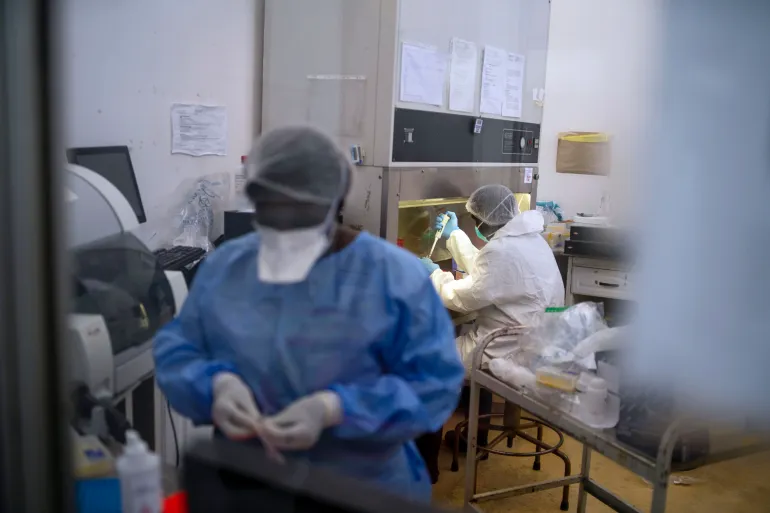
In a critical analysis published in March 2026, Al Jazeera examines how the renewed United States strategy toward the African continent has mutated into what experts term “biomedical imperialism.” Under the pretext of global health security and the prevention of future pandemics, Washington has deployed a network of laboratories and research centers that operate with minimal sovereign oversight from the host states. Consequently, this dynamic is not perceived simply as humanitarian aid, but as a geopolitical tool designed to secure exclusive access to African genetic data and biological resources, consolidating a new form of 21st-century extractivism. This securitization of health reflects a broader trend where biological surveillance becomes indistinguishable from military intelligence.
Origins and the Geopolitical Race for Bio-data
Originally, health cooperation between the U.S. and Africa focused on crisis response programs such as HIV/AIDS or Ebola. However, following the COVID-19 pandemic and the intensifying competition with the People’s Republic of China, the focus has shifted toward creating a permanent infrastructure for biological surveillance. The report suggests that the origin of this “new scramble for Africa” lies in the need for Western pharmaceutical companies to outsource high-risk clinical trials and harvest vast genomic databases from diverse populations. Furthermore, this expansion is justified through a national security rhetoric that links public health with biodefense, effectively blurring the lines between medical science and strategic defense operations.
Structure of the Biomedical Monopoly and Dependency
The structure of this imperialist system is organized through opaque bilateral agreements that prioritize the intellectual property of U.S. corporations over local public health needs. Specifically, while the laboratories are located on African soil, the technology and patents resulting from the research are rarely shared with regional scientists or governments. Moreover, the Al Jazeera article highlights that this model creates a “structural dependency,” where African nations act as data providers and test subjects but remain unable to produce their own essential vaccines or medicines. This scheme perpetuates a hierarchy where the Global North dictates health priorities, often ignoring endemic regional diseases in favor of those that pose a threat to Western markets.
Synthesis of Bio-sovereignty and Resistance Strategies
The overcoming of this biomedical imperialism relies on a renewed synergy among African nations to reclaim their “bio-sovereignty.” This objective is essential to ensure that scientific research on the continent is ethical, transparent, and, above all, beneficial to local populations. Simultaneously, there is a clear intent by the African Union to strengthen its own Africa Centres for Disease Control and Prevention (Africa CDC) to reduce reliance on American agencies. Ultimately, the 2026 analysis provides a critical roadmap for understanding that global health is a political battlefield, signaling that without equitable governance, medicine will continue to be used as an instrument of control and geopolitical domination.
Reference:
Al Jazeera. (2026, March 13). US’s new scramble for Africa is biomedical imperialism. Al Jazeera News. https://www.aljazeera.com/opinions/2026/3/13/uss-new-scramble-for-africa-is-biomedical-imperialism