
The Narratives of Responsibility
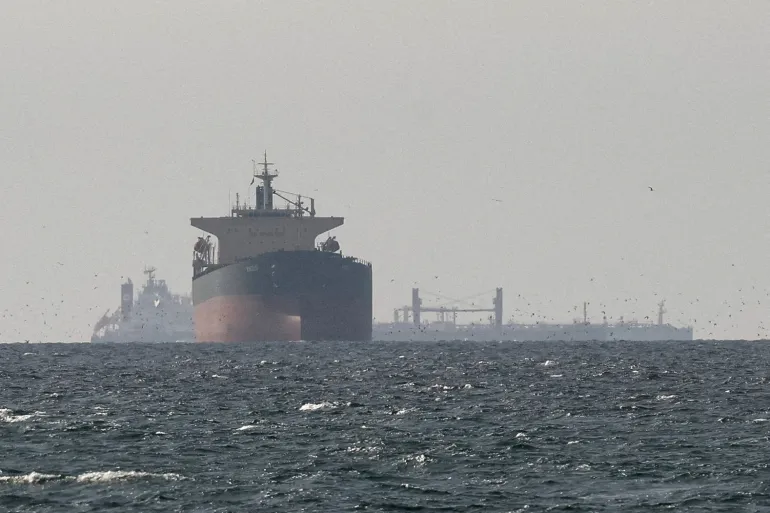
On March 17, 2026, the Iranian Foreign Ministry issued a formal statement blaming the “reckless military aggression” of the United States and Israel for the total paralysis of the Strait of Hormuz. Iranian Foreign Minister Abbas Araghchi asserted that the current energy crisis—which has kept oil prices above $100 a barrel—is a direct consequence of the February 28 strikes on Iranian soil. Consequently, Tehran is attempting to shift the international “blame” for the global recession away from its own naval blockade and toward the coalition’s decision to launch “Operation Epic Fury.” Araghchi argued that the Strait remains “open to global shipping” in principle, but is “effectively closed” to the U.S. and its allies as a matter of national survival.
Origins and the “Guardian of the Strait” Doctrine
Originally, Iran positioned itself as the “guardian” of maritime safety in the Persian Gulf. However, the origin of the current blockade lies in the 2026 collapse of regional deterrence. The report indicates that the Iranian leadership, now under the guidance of Ayatollah Mojtaba Khamenei (following the death of his father in the war’s opening days), has adopted a “Zero-Transit” policy for any vessel flying the flag of the U.S. or its strategic partners. Furthermore, Tehran alleges that the U.S. is conducting “false flag” operations in the Gulf to justify a permanent naval occupation. This rhetorical pivot allows Iran to present its mining of the shipping lanes not as an act of piracy, but as a “security measure” against foreign invaders.
Structure of Selective Navigation and Coercion
The structure of the crisis is organized around a system of “Selective Navigation,” where Iran allows ships from “neutral” or “friendly” nations—specifically China and Russia—to pass through the Strait under IRGC escort. This creates a structured division in the global economy: while U.S.-aligned tankers are stuck in the Gulf, others continue to move, albeit at high risk and insurance cost. Moreover, the Al Jazeera report highlights that Iran is using this leverage to demand an immediate cessation of all strikes and the payment of “reparations” for damaged infrastructure. This “hostage-taking” of the global energy supply is designed to break the unity of the U.S.-led coalition by making the war too expensive for European and Asian consumers to support.
Synthesis of Economic Survival and Multipolarity
The successful maintenance of the blockade relies on a synergy between Iran’s remaining anti-ship missile batteries and the global market’s extreme sensitivity to supply shocks. This objective is essential for Tehran to stay in the war; as long as the Strait is closed, they possess a “veto” over the global economy. Simultaneously, there is a clear intent to force China to intervene as a mediator, hoping that Beijing’s need for energy will compel it to pressure Washington into a ceasefire. Ultimately, the March 2026 tensions provide a volatile roadmap for the future of maritime law, signaling that in a multipolar world, “Freedom of Navigation” is a fragile concept that can be suspended by any state willing to weaponize its geography.
Reference
Al Jazeera. (2026, March 17). Iran blames US, Israel for Hormuz tensions as crisis risks energy supplies. Al Jazeera News. https://www.aljazeera.com/news/2026/3/17/iran-blames-us-israel-for-hormuz-tensions-as-crisis-risks-energy-supplies