
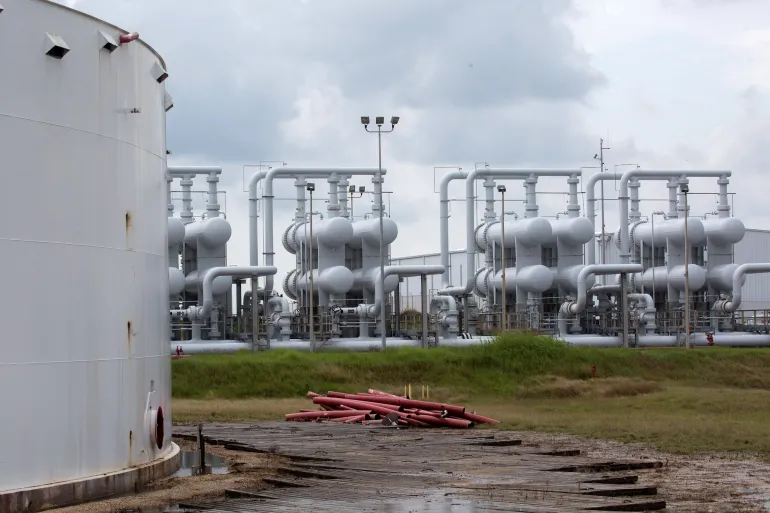
The Mobilization of Emergency Energy Stocks
On March 23, 2026, the International Energy Agency (IEA) confirmed the release of 400 million barrels of oil from strategic reserves to combat the “largest supply disruption in history.” Since the outbreak of the U.S.-Israeli war on Iran on February 28, the closure of the Strait of Hormuz has stranded roughly 20% of the world’s oil and LNG. Consequently, Brent crude has surged past $100 a barrel, forcing major economies to tap into their Strategic Petroleum Reserves (SPR) to prevent a systemic collapse. This unprecedented coordinated release—more than double the 2022 record—is intended to stabilize prices, though analysts warn that without a reopening of the Strait, even these massive reserves are a finite solution to an indefinite crisis.
Origins and the Architecture of Energy Security
Originally, the concept of a Strategic Petroleum Reserve was born from the 1973 oil crisis, leading to the creation of the IEA in 1974. The origin of the current stockpiling frenzy lies in the “Pre-War Tension” of 2025, where nations like China and the U.S. began aggressively filling their caverns in anticipation of Middle East volatility. For IEA member states, the standing requirement is to hold at least 90 days of net oil imports. However, the 2026 conflict has revealed a stark divide: while Western nations use their reserves to protect market stability, emerging powers like China have utilized the past two years to build a buffer that exceeds standard requirements, aiming for total self-sufficiency during a prolonged maritime blockade.
Structure of Global Reserves and Distribution
The structure of global oil reserves is organized into three primary categories: government-owned public stocks, obligated industry stocks, and commercial inventories. Specifically, the March 2026 data indicates the following distribution among the world’s largest holders:
- United States: Holds approximately 415 million barrels in its SPR, roughly 58% of its total 714-million-barrel capacity.
- China: Though not an IEA member, Beijing is estimated to hold between 1.3 and 1.6 billion barrels—the world’s largest stockpile—giving it 3–4 months of total demand coverage.
- Japan and South Korea: Maintain high-density reserves focused on both crude and refined products, essential for their island-nation logistics. Moreover, the report highlights that 72% of the current IEA release consists of crude oil, while 28% is refined product (gasoline and diesel), designed to keep transport sectors functional as refineries struggle with crude shortages.