
The Transition from Border Skirmishes to Social Engineering
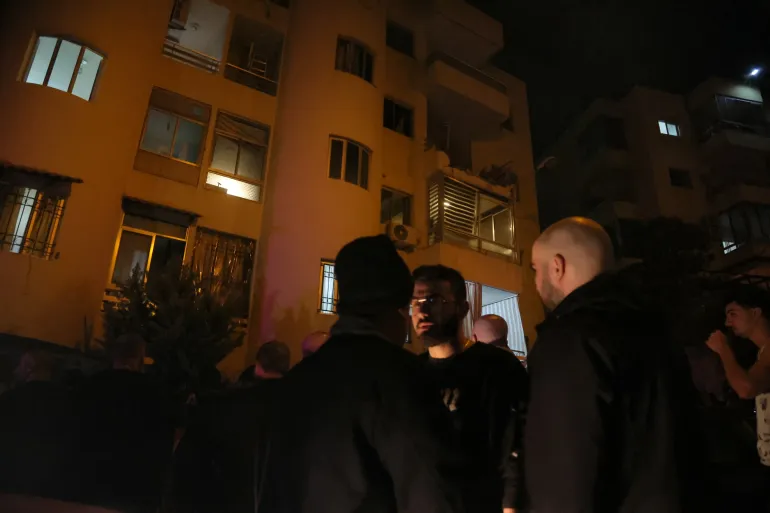
By April 2026, the Israeli military strategy toward Lebanon has transitioned from a campaign of containment to one of active social destabilization. The report highlights that recent strikes are no longer targeting military infrastructure alone; they are being calibrated to exacerbate existing sectarian tensions between Lebanon’s Christian, Sunni, and Shia populations. Consequently, the air campaign is being used as a tool of Psychological Operations (PSYOPs), aimed at turning the Lebanese public against Hezbollah by framing the group as the sole architect of the nation’s destruction. This suggests that the “battlefield” has expanded from the southern border to the very fabric of Lebanese social cohesion.
Origins and the “Hezbollah Trap”
Originally, Lebanon’s involvement in the regional conflict was viewed as a secondary front to the Iran war. However, the origin of the current “rift strategy” lies in the internal Lebanese debate over sovereignty and the cost of the “Resistance Axis.” For 2026, this debate has reached a breaking point as the blockade of the Strait of Hormuz (Article #80) has already crippled Lebanon’s energy imports. Furthermore, the report emphasizes that Israeli planners are capitalizing on the “fatigue” of the Lebanese state, using precision strikes in Christian and Druze heartlands to signal that no community is safe as long as Hezbollah maintains its autonomous military status.
The Structure of Targeted Displacement
The structure of the conflict is organized around a “forced migration” model. Specifically, by targeting infrastructure in Shia-majority areas, the military is forcing hundreds of thousands of internally displaced persons (IDPs) into areas controlled by other sects that are already facing resource scarcity. This creates a “Pressure Cooker” effect where the lack of food, water, and shelter leads to localized civil unrest and street-level clashes between Lebanese factions. Moreover, the article highlights the “Institutional Friction” within the Lebanese Armed Forces (LAF), which finds itself caught between its mandate to protect the border and the impossible task of policing a disintegrating internal peace.
Synthesis of State Fragility and the Proxy War Paradox
The successful defense of Lebanon now faces a paradox where the “military strength” of Hezbollah has become the primary “political weakness” of the Lebanese state. This objective is essential to understand because it signals that in 2026, victory is not defined by taking territory, but by inducing a State Failure that renders the enemy’s military assets politically unusable. Simultaneously, there is a clear intent among regional mediators to prevent a total civil war, yet the “rift” may already be too deep to bridge without a massive international intervention. Ultimately, the Al Jazeera report provides a stable warning: when a nation becomes a proxy battlefield, the first casualty is not the soldier, but the social contract.
Reference
Al Jazeera. (2026, April 7). Creating a rift: Part of game plan as Israeli attacks deepen Lebanon fissures. Al Jazeera Features. https://www.aljazeera.com/features/2026/4/7/creating-rift-part-of-game-plan-israeli-attacks-deepen-lebanon-fissures