
The Transition from Economic Asset to Existential Liability
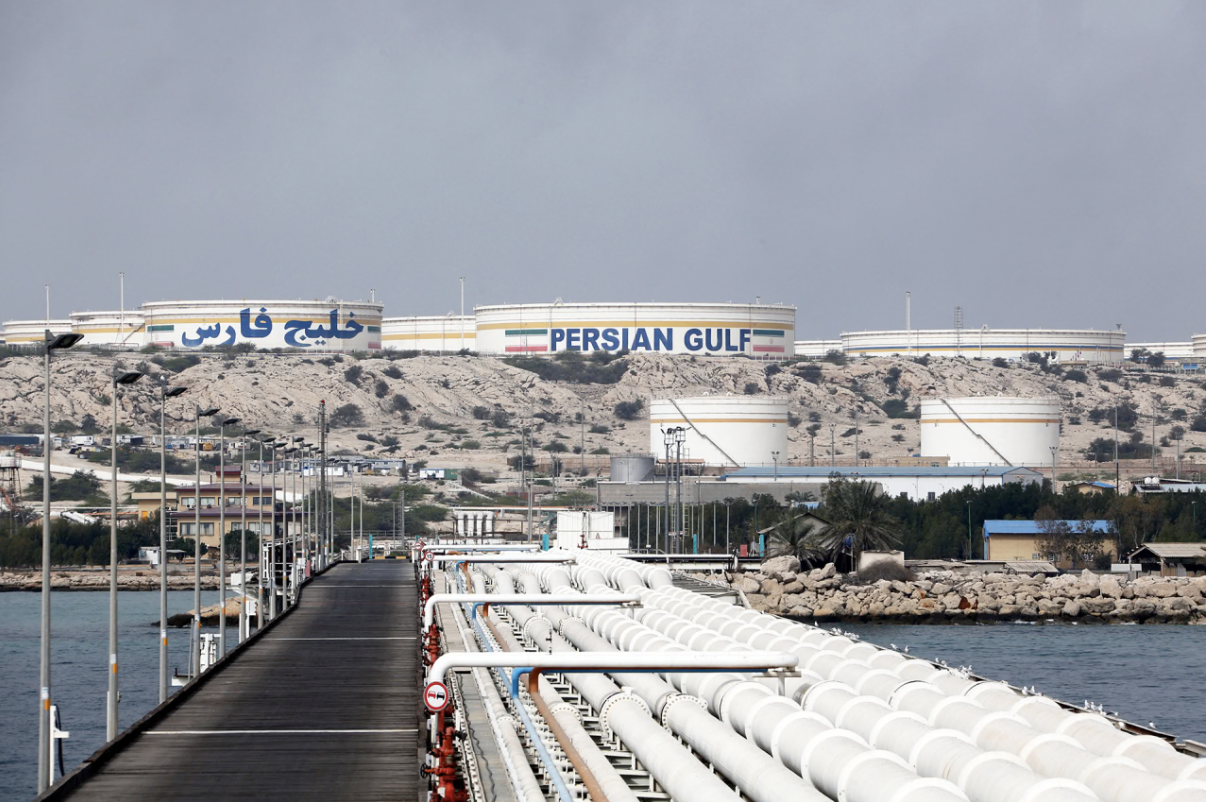
By April 2026, Kharg Island has transitioned from being a symbol of Iran’s energy prowess to a primary target in the U.S. “Infrastructure Siege” strategy. Handling roughly 90% of Iran’s crude oil exports, the island is the single most important node in the nation’s financial survival. Consequently, as the U.S. shifts toward “coercive infrastructure destruction,” Kharg is no longer viewed as a “civilian” site but as the “center of gravity” for the Iranian state’s ability to fund its military and regional proxies. This suggests that the destruction of this one terminal would be equivalent to a total national economic decapitation.
Origins and the “Sanctions-Proof” Infrastructure
Originally, the terminal on Kharg Island was built to withstand the rigors of the Iran-Iraq War, with hardened facilities and advanced loading docks. However, the origin of its current vulnerability lies in the Extreme Concentration of infrastructure. Unlike other oil-producing nations that have multiple export points, Iran’s geography forces almost all its “Lifeblood” through this one island in the northern Persian Gulf. For 2026, this has become a fatal flaw, as modern precision-guided munitions and cyber-sabotage can target specific “pumping manifolds” and storage tanks with 100% accuracy, rendering the entire island useless without destroying it entirely.
The Structure of Global Oil Contagion
The structure of a potential strike on Kharg is organized around the “Contagion Effect” on global markets. Specifically, the CFR identifies that a total shutdown of Kharg would immediately remove 1.5 to 2 million barrels of oil per day from the world market. Even with the current 14-day “bombing suspension” (Article #92), the mere threat of a strike on Kharg has baked a “war premium” into oil prices. Moreover, the article highlights the “Institutional Friction” in Washington: while the Treasury Department fears a strike would send global inflation into a tailspin, the Pentagon argues that taking out Kharg is the only way to end the war without a full-scale ground invasion.
Synthesis of Energy Security and the “Targeting” Paradox
The successful defense of Kharg now faces a paradox: the more the U.S. threatens the island, the more China—Iran’s primary customer—is forced to intervene. This objective is essential to understand because it signals that Kharg Island is not just an Iranian target; it is a Chinese Energy Securitytarget. Simultaneously, there is a clear intent among Iranian “Passive Defense” units to move some export capacity to the Jask Terminal outside the Strait of Hormuz, but Jask remains under-equipped to handle the volume required for national survival. Ultimately, the CFR report provides a stable warning: the fate of the “Stone Age” deadline (Article #87) effectively rests on the fate of Kharg Island.
Reference
Council on Foreign Relations. (2026, April 7). Kharg Island: Iran’s oil lifeline and a tempting U.S. target.CFR World Analysis. https://www.cfr.org/articles/kharg-island-irans-oil-lifeline-and-a-tempting-u-s-target