
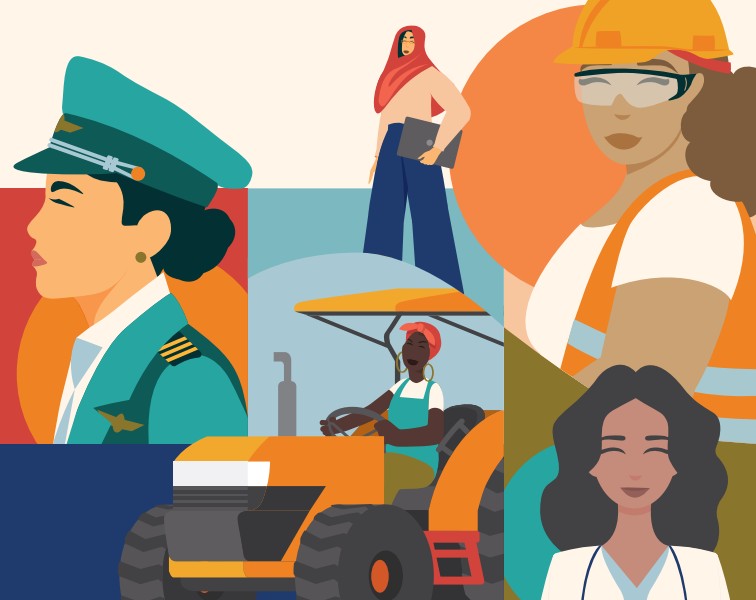
World Bank. Benchmarking Laws for Jobs and Inclusive Growth
The Women, Business and the Law 2026 report analyzes how laws and regulations affect women’s economic opportunities worldwide. Published by the World Bank, it evaluates legal frameworks across countries to determine whether women have equal access to jobs, entrepreneurship, and economic participation.
The report emphasizes that legal equality is a key driver of inclusive growth, yet many countries still maintain discriminatory laws that limit women’s economic potential.
Legal barriers and economic participation
A central finding of the report is that, despite progress, women still face significant legal barriers in many regions. These include restrictions related to employment, mobility, pay, marriage, and parenthood.
Such legal inequalities directly impact women’s ability to enter and remain in the workforce. The report shows that countries with more gender-equal laws tend to have higher female labor force participation and stronger economic performance.
Areas of measurement and methodology
The report evaluates countries across multiple indicators, including mobility, workplace conditions, pay, marriage, parenthood, entrepreneurship, assets, and pensions.
These indicators provide a comprehensive framework to assess how laws affect women throughout their economic life cycle. By benchmarking countries, the report allows comparisons and highlights where reforms are most needed.
Progress and remaining gaps
While there has been gradual improvement in legal equality, progress remains uneven. Some countries have implemented reforms that promote gender equality, such as equal pay laws and protections against workplace discrimination.
However, many nations still lag behind, particularly in areas like parental leave policies, access to credit, and legal protections against gender-based discrimination.
Impact on inclusive growth
The report argues that improving legal equality is not only a social objective but also an economic necessity. When women have equal access to opportunities, economies benefit from increased productivity, higher income levels, and more diversified labor markets.
Closing gender gaps can significantly boost global GDP and contribute to more sustainable and inclusive development.
Policy recommendations
The report recommends that governments prioritize legal reforms that eliminate discrimination and promote equal opportunities. This includes strengthening enforcement mechanisms, improving access to justice, and aligning national laws with international standards.
It also highlights the importance of complementary policies, such as education and childcare support, to ensure that legal equality translates into real economic outcomes.
Conclusion
Women, Business and the Law 2026 concludes that legal equality remains incomplete worldwide. Although progress has been made, substantial reforms are still required to ensure that women can fully participate in the economy.
Advancing gender-equal laws is essential for achieving inclusive growth, reducing poverty, and unlocking the full potential of the global workforce.
Reference
World Bank. (2026). Women, business and the law 2026: Benchmarking laws for jobs and inclusive growth. World Bank. https://wbl.worldbank.org/en/wbl