
The Transition from Immediate Relief to Long-Term Structural Recovery
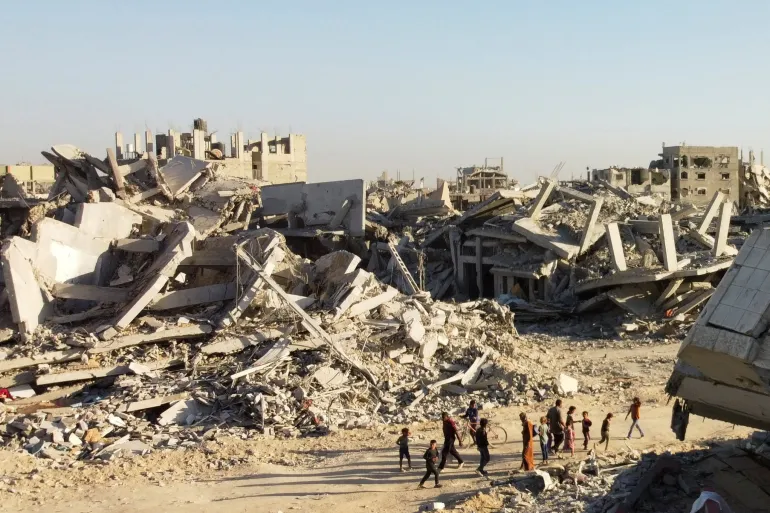
By April 20, 2026, the international discourse on Gaza has transitioned from emergency humanitarian aid to the immense challenge of long-term structural reconstruction. The Al Jazeera report highlights a comprehensive new assessment indicating that more than $71 billion will be required over the next decade to restore basic infrastructure and economic viability. Consequently, the focus has shifted toward the logistics of a multi-year recovery plan that must address the total destruction of housing, healthcare facilities, and the water-energy grid. This suggests that the scale of the damage has reached a point where traditional aid models are insufficient, requiring a historic and sustained commitment from the global community.
Origins and the “Infrastructure Void” of 2026
Originally, reconstruction estimates focused on repairing specific sectors such as schools or hospitals damaged during previous escalations. However, the origin of the current $71 billion figure lies in the unprecedented level of urbanization-level destruction witnessed over the past two years of intense conflict. For 2026, the report emphasizes that Gaza is currently operating in an infrastructure void where over 80% of residential units are uninhabitable and the local economy has contracted to near-zero productivity. Furthermore, the report stresses that the economic shock caused by the broader regional war on Iran has made the mobilization of this capital significantly more difficult, as traditional donor nations prioritize their own energy and military expenditures.
The Structure of the Recovery Roadmap
The structure of the proposed decade-long recovery is organized around three layers of operational and political friction. First is the logistical barrier, as the continued blockade and security restrictions on “dual-use” materials make the importation of cement, steel, and heavy machinery nearly impossible at the required scale. Second is the funding dilemma, as the international community debates whether the $71 billion should come from sovereign grants, private investment, or “war reparations” from those responsible for the destruction. Finally, the article highlights the institutional friction regarding governance, questioning which authority will manage such a massive influx of capital without a stable, recognized political framework in place for the territory.
Synthesis of the “Uninhabitability” Crisis and Regional Stability
The successful implementation of a recovery plan now faces a paradox where the “uninhabitability” of the territory may lead to permanent displacement before the first brick is laid. This represents the reconstruction paradox in political science, where the speed of funding cannot match the speed of human crisis. There is a clear intent in the Al Jazeera report to warn that without a massive, immediate injection of capital, Gaza will remain a source of regional instability for generations. Ultimately, it is clear that for 2026, the $71 billion estimate is more than just a financial figure; it is a measure of the total collapse of the urban social contract in one of the world’s most densely populated areas.
Reference
Al Jazeera. (2026, April 20). Report finds Gaza needs more than $71bn in next decade for recovery. Al Jazeera News. https://www.aljazeera.com/news/2026/4/20/report-finds-gaza-needs-more-than-71bn-in-next-decade-for-recovery