
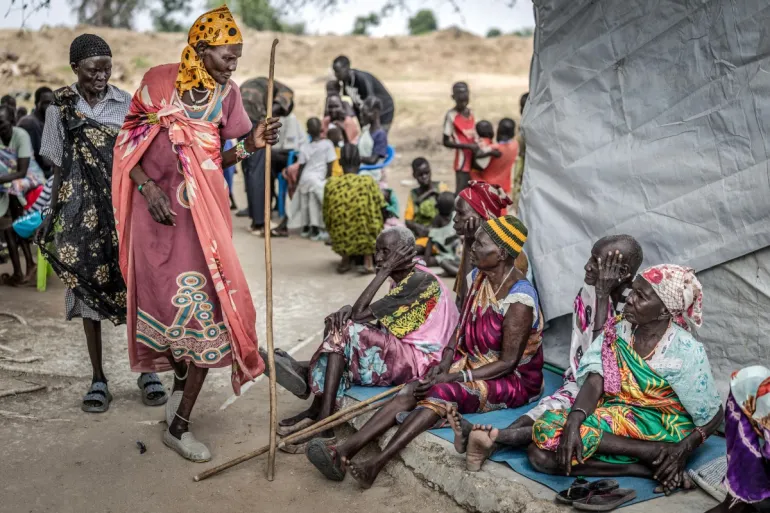
The Transition from Chronic Malnutrition to Imminent Famine
By mid-April 2026, the humanitarian situation in South Sudan has transitioned from persistent food insecurity to the precipice of a full-scale famine. The United Nations has issued a stark warning that the intensification of fighting between rival political factions, combined with the collapse of the 2018 peace deal’s security arrangements, has completely severed supply lines to the most vulnerable regions. Consequently, the focus of the international community has shifted toward emergency airlift operations, as traditional road transport has become impossible due to active combat zones and the deliberate targeting of aid convoys. This suggests that South Sudan is entering its most critical survival phase since independence, as the agricultural cycle is completely disrupted by the ongoing violence.
Origins and the Triple Crisis of 2026
Originally, South Sudan’s hunger crisis was attributed to cyclical flooding and localized communal violence. However, the origin of the current famine threat lies in a triple crisis: the failure of the transitional government to integrate military forces, the total economic paralysis caused by the decline in oil revenue, and the massive influx of refugees from the neighboring Sudanese conflict. For 2026, the report emphasizes that the state’s inability to provide even basic security has led to a total abandonment of farmland during the peak planting season. Furthermore, the global diversion of humanitarian aid toward the Middle East has left South Sudan with less than 20% of its required funding, creating a “forgotten catastrophe” on the world stage.
The Structure of the Humanitarian Gridlock
The structure of the crisis in South Sudan is organized around three layers of operational and political friction. First is the weaponization of hunger, where the report highlights that armed groups are using the denial of food as a strategic tool to control populations and clear strategic territories. Second is the logistical collapse, as the destruction of river ports and the insecurity of the Nile corridor have made the most cost-effective methods of aid delivery unviable. Finally, the article highlights the institutional friction within the UN itself, as officials struggle to balance the need for neutrality with the necessity of condemning the state-sponsored violence that is actively preventing the distribution of life-saving supplies.
Synthesis of the Sovereign Failure and Regional Instability
The successful prevention of a mass-mortality event now faces a paradox where the “sovereignty” of the South Sudanese government is the primary obstacle to saving its people. This represents the sovereign failure dilemma in international relations, where the state acts not as a protector but as a predator on its own population. There is a clear intent in the Al Jazeera report to show that South Sudan’s crisis is no longer a “natural disaster” but a purely political one. Ultimately, it is clear that for 2026, South Sudan represents the breaking point of the international humanitarian system—a scenario where the scale of human need has far outpaced the world’s political will to intervene.
Reference
Al Jazeera. (2026, April 17). UN warns South Sudan at risk of full-scale famine as fighting intensifies. Al Jazeera News. https://www.aljazeera.com/news/2026/4/17/un-warns-south-sudan-at-risk-of-full-scale-famine-as-fighting-intensifies