
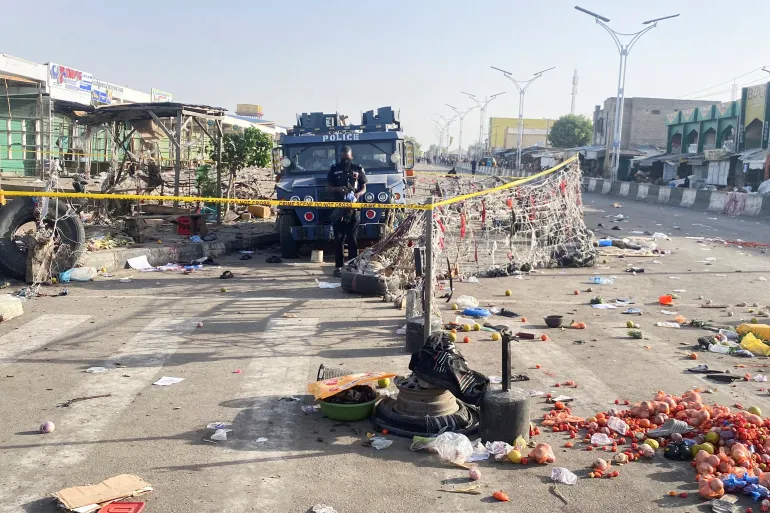
The Transition from Communal Conflict to Systemic Instability
By April 20, 2026, the security environment in Northern Nigeria has transitioned from a series of isolated banditry incidents into a state of systemic regional instability. The Al Jazeera opinion piece argues that the traditional labels of religious extremism or farmer-herder clashes are no longer sufficient to describe the reality on the ground. Consequently, the focus has shifted toward the emergence of a complex war economy where criminal gangs, insurgent splinter groups, and local self-defense militias have created a patchwork of competing sovereignties. This suggests that the Nigerian state is facing a fundamental challenge to its territorial integrity, as large swaths of the north operate under the de facto control of non-state actors who provide their own forms of “justice” and “taxation.”
Origins and the Socio-Economic Collapse
Originally, the instability was largely confined to the northeast and the struggle against Boko Haram. However, the origin of the current nationwide crisis lies in the total socio-economic collapse of the rural north, exacerbated by extreme climate change and the failure of federal agricultural policies. For 2026, this has resulted in a “livelihood crisis” where joining an armed group has become the only viable economic path for thousands of young people. The report emphasizes that the global focus on the Middle East has allowed the situation in Nigeria to fester, as international security assistance is diverted elsewhere, leaving the Nigerian military overstretched across multiple fronts with diminishing resources.
The Structure of the Shadow Economy
The structure of what is really happening is organized around three layers of institutional and economic friction. First is the kidnapping-for-summit industry, which has evolved from opportunistic crimes into a sophisticated financial system that sustains the logistics of armed groups. Second is the collapse of local governance; as traditional rulers and local government officials flee to the cities, the administrative vacuum is filled by “warlords” who negotiate directly with mining and agricultural interests. Finally, the article highlights the institutional friction between the federal government in Abuja and the northern state governors, who are increasingly at odds over the creation of regional police forces and the use of private security contractors to protect vital infrastructure.
Synthesis of the Failed State Narrative and Regional Fallout
The successful containment of this violence now faces a paradox where “military-first” solutions are actually fueling the recruitment of more insurgents. This represents the fragile state dilemma in political science, where the state’s attempt to project power through force often alienates the very population it needs to secure. There is a clear intent in the Al Jazeera piece to show that Northern Nigeria is reaching a tipping point that could trigger a massive refugee crisis across West Africa. Ultimately, it is clear that for 2026, what is happening in the north is not just a “security problem” but a total breakdown of the social contract between the Nigerian state and its most populous region.
Reference
Al Jazeera. (2026, April 20). What is really happening in Northern Nigeria. Al Jazeera Opinions. https://www.aljazeera.com/opinions/2026/4/20/what-is-really-happening-in-northern-nigeria