
The Transition from Military Occupation to Cultural Confrontation
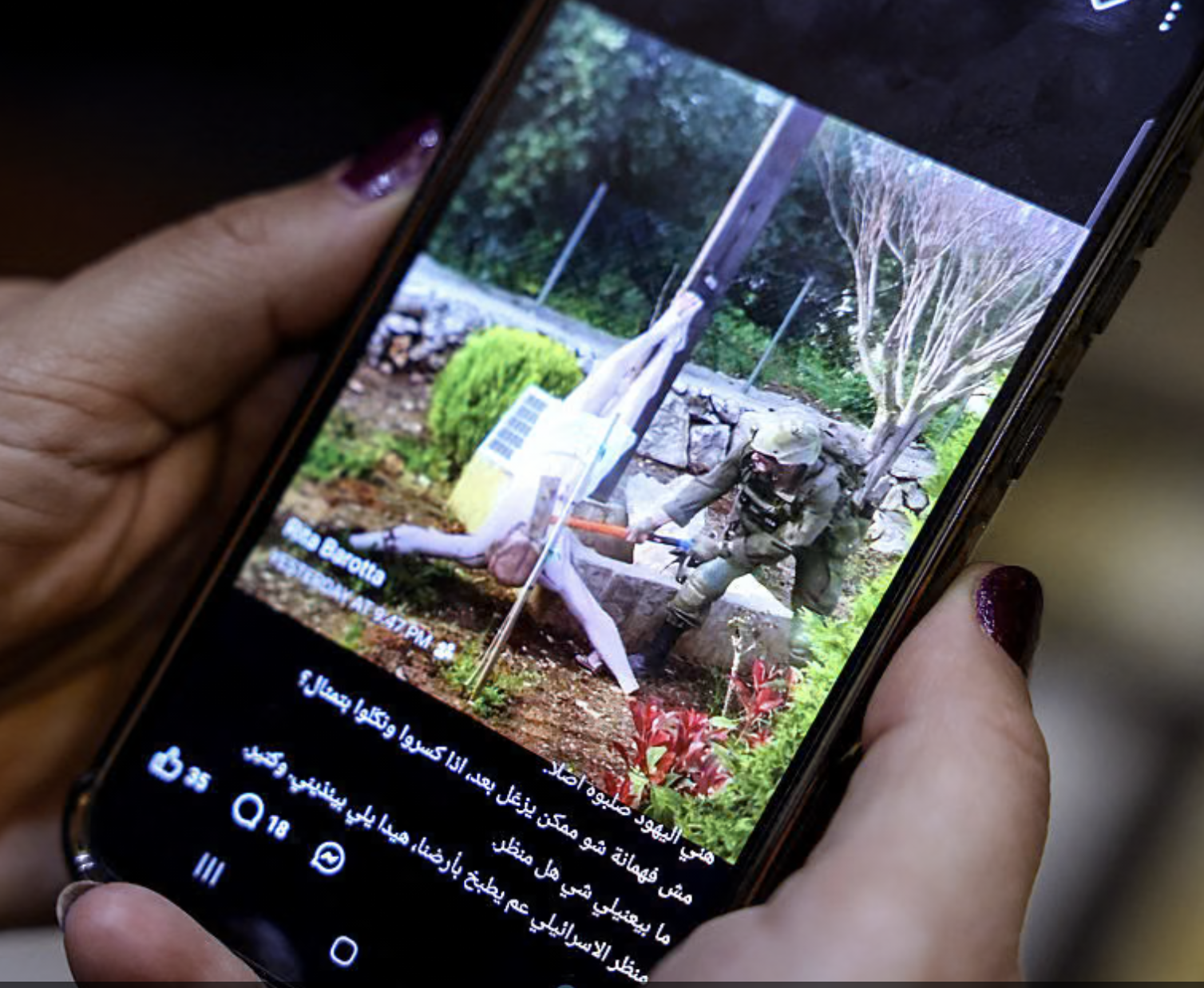
By April 20, 2026, the military operations in Southern Lebanon have transitioned from a focused campaign against insurgent infrastructure to a broader, more volatile cultural and religious confrontation. The Al Jazeera report details a growing international outcry following a viral video of an Israeli soldier destroying a statue of Jesus in a Lebanese border village. Consequently, the focus of the regional conflict has shifted from territorial control to the sensitive domain of religious symbolism, as Christian communities throughout the Levant and globally condemn the act. This suggests that the war is increasingly being framed through a sectarian lens, complicating the diplomatic efforts of Western nations that have traditionally balanced support for Israeli security with the protection of religious minorities in the Middle East.
Origins and the Escalation of the “Northern Front”
Originally, the “Northern Front” was defined by tactical exchanges of rocket fire and limited border incursions. However, the origin of the current outcry lies in the deepening ground invasion and the subsequent occupation of historically diverse Lebanese villages. For 2026, the destruction of the icon represents a failure of military discipline that has far-reaching political consequences, particularly for the Israeli government’s relationship with the Holy See and its Christian allies in the United States and Europe. The report emphasizes that this incident has provided a powerful narrative tool for Lebanese political factions to unify different religious sects against the external military presence, transforming a military event into a significant psychological and diplomatic setback.
The Structure of the “Symbolic Warfare”
The structure of this controversy is organized around three layers of political and social friction. First is the institutional barrier; while the Israeli military leadership has issued a statement promising an investigation, the outcry highlights a perceived culture of impunity that critics argue encourages such behavior. Second is the regional sectarian variable, as the report notes that the destruction of a Christian icon in a predominantly Shia-governed region has paradoxically strengthened cross-sectarian solidarity within Lebanon. Finally, the article highlights the international friction, where the incident is being utilized at the United Nations to argue for more stringent protections of cultural and religious heritage sites during active combat, further isolating the combatants on the global stage.
Synthesis of the Sacralization of Conflict and Diplomatic Cost
The successful management of the ground campaign now faces a paradox where “tactical gains” are being overshadowed by “symbolic losses.” This represents the sacralization of conflict in political science, where the damage to a religious icon can mobilize international opposition more effectively than the destruction of military hardware. There is a clear intent in the Al Jazeera report to show that the war has entered a dangerous phase where religious identities are being directly targeted, either through intent or negligence. Ultimately, it is clear that for 2026, the “statue incident” is a pivotal moment that proves that in the modern information age, the conduct of a single soldier can redefine the strategic narrative of an entire regional war.
Reference
Al Jazeera. (2026, April 20). Outcry grows over Israeli soldier smashing Jesus statue in Lebanon. Al Jazeera News. https://www.aljazeera.com/news/2026/4/20/outcry-grows-over-israeli-soldier-smashing-jesus-statue-in-lebanon