
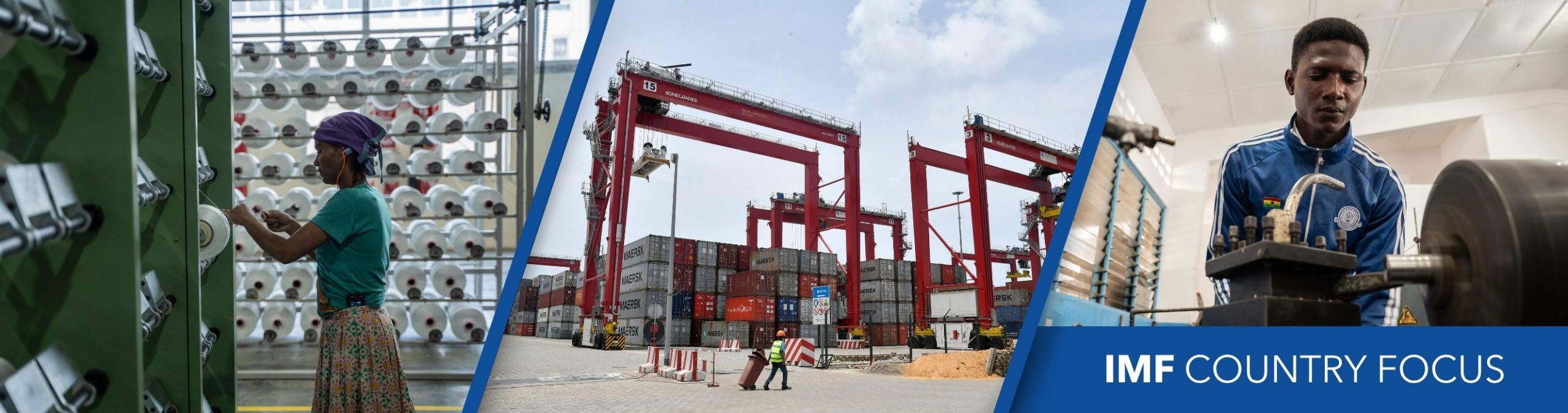
A New Growth Model for Africa
Sub-Saharan Africa needs a new growth model as global conditions become more difficult and policy space continues to shrink. According to the IMF, the region must move from a state-led growth model toward one based more on private investment, productivity and job creation. This shift is especially important because the region has a fast-growing young labor force that will require better employment opportunities in the coming years
Weak Income Convergence
The IMF warns that, at current growth rates, per capita income in sub-Saharan Africa would take roughly half a century to double. Although some countries such as Benin, Côte d’Ivoire, Ethiopia, Rwanda and Uganda have performed better, overall growth in the region remains too weak to close the income gap with other emerging and developing economies. Over the past three years, real GDP per capita grew by about 1.4 percent annually, compared with 3.4 percent in emerging markets and developing economies overall.
Private Investment and Productivity
The article argues that past growth episodes often depended on commodity booms or inefficient public investment, which did not create lasting gains in productivity. With debt levels high, borrowing costs elevated and aid declining, governments can no longer act as the main engine of growth. Instead, the IMF calls for reforms that improve governance, business regulation and market openness, allowing private investment to play a stronger role in economic development.
Reform Priorities
The IMF identifies governance, business regulation and market openness as the main areas where sub-Saharan Africa lags behind other developing regions. Reforms in state-owned enterprises, especially in energy and transport, are also considered essential because unreliable and expensive services limit business activity and household welfare. In addition, the IMF highlights that digital tools, reduced bureaucracy and more transparent institutions can help create a better environment for firms and investors.
International Relevance
Overall, the IMF’s analysis shows that Africa’s growth challenge is not only a regional issue, but also a global development concern. If well-designed structural reforms are implemented, output could rise by around 20 percent within a decade. This would support investment, productivity, labor force participation and better living standards. For this reason, the growth reset proposed by the IMF is relevant for international discussions on development, employment, governance and long-term economic resilience.
Reference: IMF. (2026, May 21). Africa needs a growth reset. https://www.imf.org/en/news/articles/2026/05/21/cf-africa-needs-a-growth-reset