
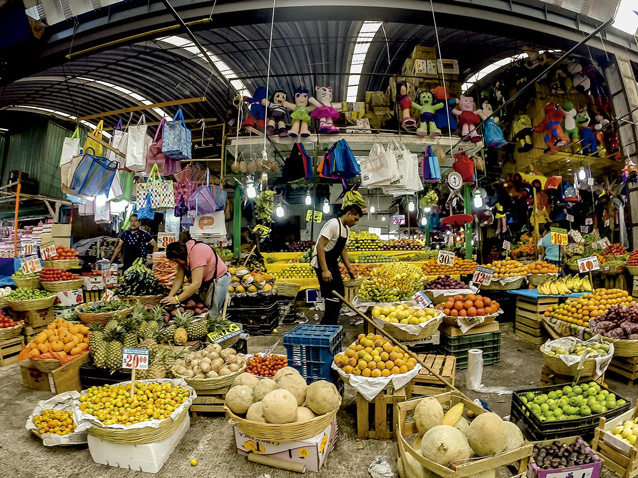
Mexicans are facing significant financial strain and are being forced to cut back on consumption as the prices of basic food staples (such as tomatoes, potatoes, beef, and chillies) surge. This crisis is being driven by a combination of international supply shocks, domestic logistical issues, and widespread organized crime.
Shipping disruptions in the Strait of Hormuz caused by the war have caused global fuel and fertilizer prices to spike. Mexico imports 70% of its fertilizer in which prices for primary agricultural ingredients like urea and phosphate have jumped by 47% to 57% between January and March, which experts warn will negatively affect long-term harvest cycles. This inflation coincides with an economic contraction (Mexico’s GDP fell by 0.8% in Q1) and a precarious labor market, where informal labor sits at 54.8%. Also, a 17% U.S. tariff on Mexican tomatoes has forced large producers to scale back planting. Concurrently, U.S. buyers are paying higher prices for Mexican produce, incentivizing farmers to export their goods rather than sell them domestically. Beef and pork prices for example, have risen sharply due to a screwworm outbreak disrupting cross-border trade, combined with the expiration of tariff exemptions on imports from Argentina and Brazil.
Within national territory, Mexican farmers and truck drivers have staged major protests and roadblocks, demanding lower fuel costs and better security, which has introduced significant logistical delays.E xtortion, highway robberies, and protection rackets by criminal groups affect have every step of the supply chain—from farmers to local corner stores—significantly inflating transport and operational costs.
Despite being an oil producer, Mexico imports over half of its gasoline and 75% of its natural gas from the U.S. While the government has reduced fuel taxes to curb energy costs, economists warn these subsidies will drain public finances and threaten funding for social welfare programs. The government’s voluntary anti-inflation pact (PACIC), which caps the price of 24 essential items, is largely failing to help those who need it most. The capped items are primarily available in modern supermarket chains (like Walmart or Soriana) where low-income, vulnerable populations rarely shop.
We can see then that the effect of the repercussions of Strait of Hormuz, has a national repercussion on Mexican soil. The basic goods are rising their costs, making it difficult for the producers to keep up with it. Not only it influences the cost, but on the socioeconomic impact, in which families in Mexico, specifically those in multidimensional poverty, struggle to keep up to meet nutritional requirements, making difficult to produce and buy goods.
Reference
Flores, C. (2026, May 23). Rising global costs threaten Mexico’s production costs and food stability. Al Jazeera. https://www.aljazeera.com/economy/2026/5/23/rising-global-costs-threaten-mexicos-production-costs-and-food-stability