
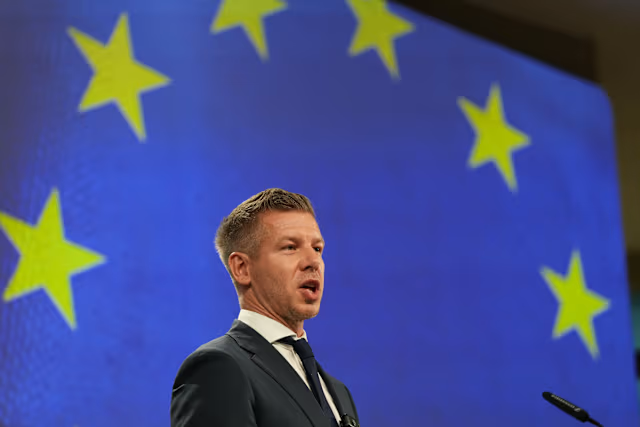
The European Union has announced it will unlock 16.4 billion euros (approximately 19 billion dollars) in frozen funding for Hungary. Which marks a major political victory for the country’s newly elected Prime Minister, Peter Magyar. European Commission President Ursula von der Leyen confirmed the decision in Brussels. Highlighting a swift shift in Hungary’s political direction just weeks after Magyar’s party assumed power with a large parliamentary majority. Under the previous administration of Viktor Orban, the EU had frozen roughly 18 billion euros earmarked for Budapest. This due to severe concerns regarding corruption, democratic backsliding, and the systemic mistreatment of LGBTQ issues.
The breakthrough comes as a direct response to a rapid series of long-overdue institutional reforms implemented by Prime Minister Magyar. In a decisive break from the previous administration’s foreign policy, Hungary’s parliament voted to drop Orban’s plans to withdraw from the International Criminal Court. Additionally, indicating a notable shift in domestic social policy. Hungarian police announced they would not block the capital’s upcoming Pride parade, a stark contrast to the previous year when the event was banned under Orban’s rule. The EU plans to release the funds in structured phases, starting with 10 billion euros from the Next Generation EU COVID recovery fund and 4.2 billion euros in cohesion funds. While holding back the remaining 2.2 billion euros until the pledged reforms are fully finalized.
Prime Minister Magyar, who won the April election largely on his promise to secure this frozen financial backing, described the agreement as a historic day for the nation. Emphasizing that the incoming money accounts for roughly 13 percent of Hungary’s national budget. The Hungarian government now faces a strict deadline until the end of August to present an updated economic plan to the European Union. In short, detailing how the recovery funds will be utilized. Magyar stated that the unlocked capital will be brought home immediately to stimulate the domestic economy, rebuild state infrastructure, modernize public services, and drastically boost the competitiveness of Hungarian small and medium-sized enterprises. If Budapest successfully satisfies all remaining procedural steps within the timeline. EU officials expect the first direct financial disbursements to reach Hungary before the end of the year.
In conclusion, the European Union’s decision to unlock 16.4 billion euros for Hungary marks a monumental victory for Prime Minister Peter Magyar. And a swift reversal of the diplomatic gridlock seen under the previous administration. By initiating critical judicial reforms, dropping plans to exit the International Criminal Court, and showing greater tolerance for social events like Pride, Magyar’s government has successfully signaled a new, pro-EU direction. Ultimately, while this phased release of capital will inject vital funds into Hungary’s national budget to modernize its domestic economy. The strict August deadline ensures that Budapest must remain committed to its promised democratic reforms to secure the remainder of the funds.
Reference
Mohamed, E. (2026, May 29). EU to release billions in frozen funds for Hungary amid Magyar reforms. Al Jazeera. https://www.aljazeera.com/news/2026/5/29/eu-to-release-billions-in-frozen-funds-for-hungary-amid-magyar-reforms