
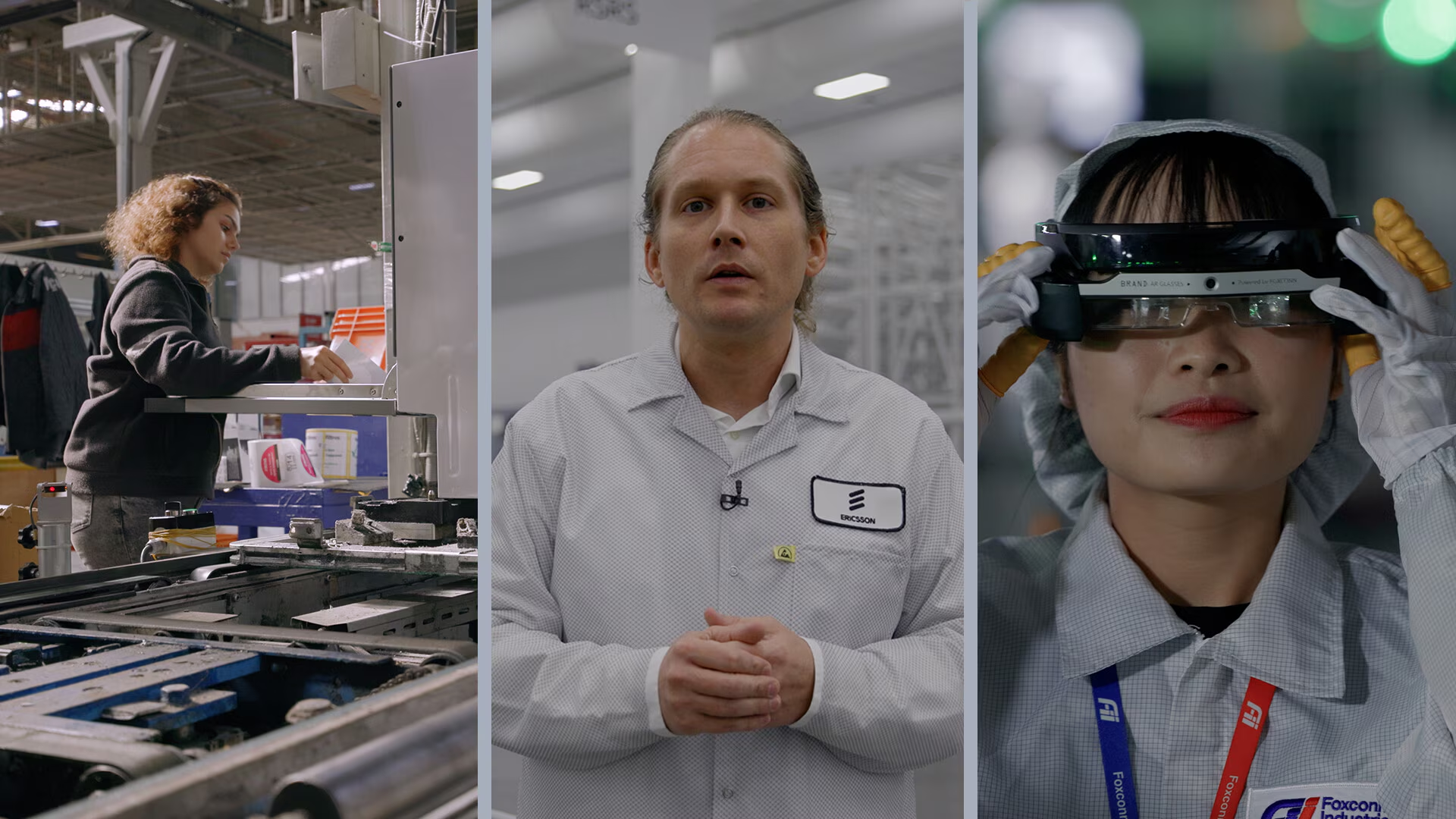
A New Paradigm in Production
The image of the traditional factory floor is changing rapidly across the globe. According to a report by the World Economic Forum, modern manufacturing facilities are undergoing a profound digital evolution. Specifically, three advanced industrial lighthouses located in Viet Nam, Türkiye, and the United States demonstrate this shift. These pioneering production sites are part of the Global Lighthouse Network. Consequently, they serve as institutional models by showing the international community how advanced technology transforms traditional operations.
The Central Integration of Artificial Intelligence
At the core of this transformation is the deployment of industrial robots guided by artificial intelligence. In addition, these smart machines manage complex manufacturing tasks with minimal human intervention. For instance, a single production line that once required dozens of on-site workers now runs efficiently with only two operatives. Therefore, the implementation of autonomous algorithms moves AI from isolated pilot projects into a core operating capability. This technological shift allows leading corporate networks to continuously optimize physical output and reduce human error.
Prioritizing Environmental Sustainability
Environmental sustainability is also becoming embedded directly into modern operational strategies. To achieve this, advanced industrial lighthouses utilize innovative resource management systems to reduce their carbon footprints. For example, some facilities are powered entirely by clean renewable energy. Furthermore, other production sites use harvested rainwater and stored ice to operate on a fraction of traditional resources. As a result, embedding eco-friendly practices into the supply chain strengthens corporate resilience and significantly lowers resource consumption costs.
The Evolution of Corporate Labor Dynamics
This technological wave is fundamentally rewriting the relationship between human labor and automation. Consequently, industrial workers are adapting to complex roles by learning entirely new technical skills. These redesigned positions focus heavily on human-machine collaboration rather than intensive manual tasks. Moreover, international experts emphasize that technology is not simply replacing humans. Instead, it forces manufacturing corporations to put people at the center of transformation by investing heavily in cognitive workforce development.
Scaling Challenges and Market Volatility
Despite these clear operational gains, scaling digital transformations across broad corporate networks presents substantial institutional challenges. Many global manufacturing firms struggle to transition beyond local smart pilots into widespread enterprise adoption. However, this shift is vital because operations must remain competitive amid high market volatility and geopolitical disruption. Therefore, international manufacturing organizations must align their technology integration with strong cultural adjustments to avoid falling into a permanent operational slowdown.
International Relevance
The operational milestones achieved by these advanced industrial lighthouses carry immense implications for global governance, international economics, and sustainable development. As transnational supply chains face persistent geopolitical fragmentation, these technology-driven sites offer a clear blueprint for boosting international productivity and macroeconomic resilience. Furthermore, the massive scaling of artificial intelligence and automated systems within factories directly impacts international labor standards and global tech diplomacy. By showing that extreme automation can coexist with rigorous carbon emission reductions, these facilities help advance multilateral climate goals and accelerate the transition toward a net-zero global economy.
Reference: World Economic Forum. (2026, June 19). Watch: What happens inside the world’s most advanced factories? https://www.weforum.org/stories/2026/06/what-happens-inside-the-worlds-most-advanced-factories/