
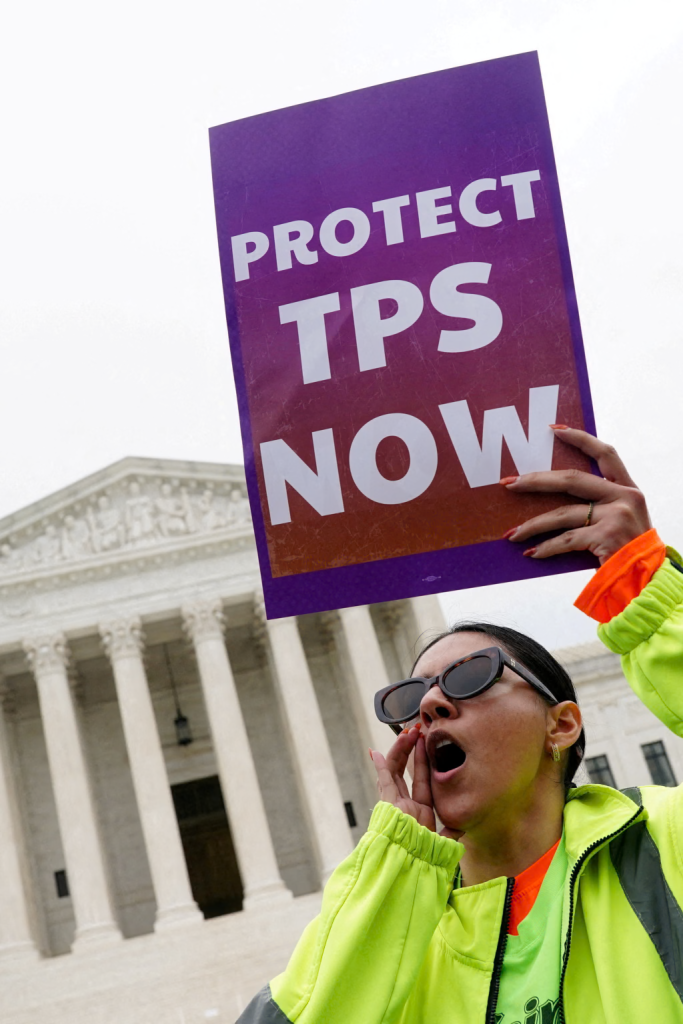
The recent Supreme Court immigration rulings have fundamentally transformed the legal landscape for United States border enforcement. Specifically, the court issued key conservative decisions that severely limit asylum applications for those outside the country. Because of this, the administration can now reject migrants directly at the border, consolidating its current strict posture. Legal analysts are debating the long-term human rights impact of these sweeping judicial changes.
Restrictions on asylum and mass deportations
Primarily, the court ruled that migrants cannot claim asylum unless they are physically inside the country. According to judicial documents, authorities can return individuals immediately. In fact, this resolution allows the government to remove work rights for hundreds of thousands of Haitians and Syrians.
Moreover, this measure affects over 350,000 individuals currently at risk of deportation. Consequently, the administration labeled the ruling as a major victory. As a result, both Democrats and some Republicans have publicly denounced the severity of these new measures.
Legal challenges and border crises
On the other hand, the court will soon face other cases of immense political relevance. For example, the potential annulment of birthright citizenship will be the next major trial. Furthermore, forecasting models suggest the government could face unexpected legal hurdles in that instance.
Crucially, eight additional cases remain pending resolution during this judicial term. Secondly, civil organizations are mobilizing resources to combat current expulsion policies.
Impact on national management
Additionally, the court also intervened in gun control and corporate responsibility topics this week. Surprisingly, they struck down state laws restricting gun carry on private property based on “historical tradition.”
Conversely, the administration continues to prioritize border security over other domestic agendas. For instance, the deployment of resources following recent natural disasters reflects a highly centralized government focus. In conclusion, the recent Supreme Court immigration rulings consolidate a permanent shift in how the nation manages its internal and foreign policy.
Reference The Economist. (2026, June 29). Supreme Court bolstered Donald Trump’s immigration crackdown. US Section.