
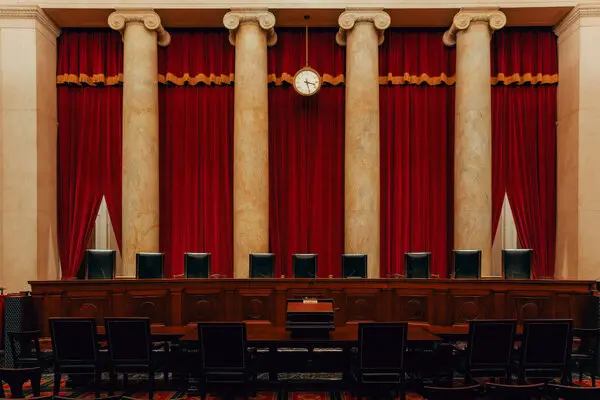
In a major constitutional ruling, the US Supreme Court has blocked Donald Trump’s executive effort to dismantle birthright citizenship. Striking down an order issued on the first day of his second term. The administration had attempted to deny citizenship to children born on US soil to undocumented immigrants or foreign nationals on temporary visas. Arguing that these parents lacked a permanent domicile and therefore their children were not fully subject to US jurisdiction. The high court explicitly rejected this interpretation in the class-action case Trump v. Barbara. Declaring that the move violated the clear text and historic purpose of the 14th Amendment’s Citizenship Clause.
The majority opinion, authored by Chief Justice John Roberts and joined by Justices Sotomayor, Kagan, Jackson, and Barrett, rooted the decision in centuries of legal tradition. It traced birthright citizenship from English common law through the Civil War era. Emphasizing that the 14th Amendment was explicitly ratified in 1868 to overturn the racist Dred Scott decision by establishing a universalist standard of soil over bloodline. The court also reaffirmed its own 128-year-old precedent, United States v. Wong Kim Ark which protected the citizenship of children born to immigrant parents.
Justice Jackson noted that the amendment’s historical objective serves as a permanent barrier against defining American identity through ancestry. Conversely, Justices Thomas, Alito, and Gorsuch dissented, with Thomas authoring a lengthy opinion. Asserting that the amendment was intended strictly for those with sole allegiance to the nation, rather than temporary foreign visitors. Justice Kavanaugh partially concurred with the judgment, suggesting that while the executive order was unconstitutional, Congress holds the statutory power to enact restrictions.
In response to the defeat, Trump labeled the ruling unfortunate and immediately pivoted his strategy toward Capitol Hill. Demanding that Congress pass new federal statutes to create citizenship exceptions for children of non-permanent residents. However, analysts point out that actual changes to birthright citizenship face massive political and procedural hurdles. Passing a new federal statute would require overcoming a highly resistant 60-vote filibuster in the Senate. Whereas a formal constitutional amendment would require an even more difficult two-thirds majority in both legislative chambers or across state legislatures.
In conclusion, the Supreme Court’s ruling reinforces a foundational pillar of American civil rights. Ultimately, delivering a decisive blow to executive overreach on immigration policy while shifting the battleground over national identity to a deeply divided Congress.
Reference
Campbell, L. (2026, June 30). What to know about the US supreme court ruling on birthright citizenship. The Guardian; The Guardian. https://www.theguardian.com/us-news/2026/jun/30/birthright-citizenship-explained-supreme-court