
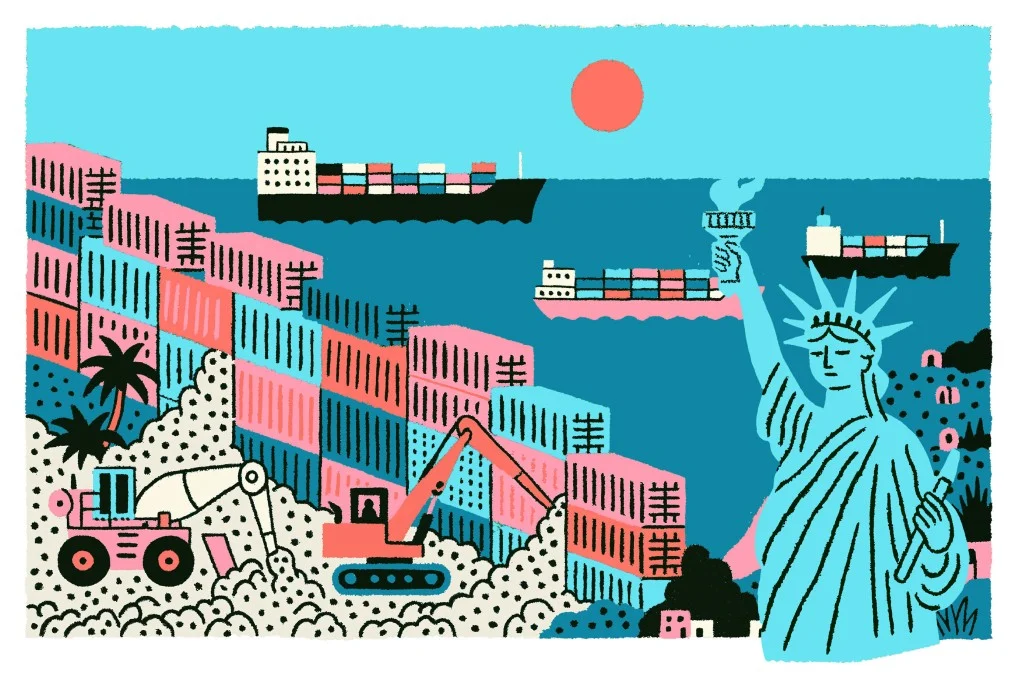
As global supply chains navigate structural shifts, the long-term Trump tariffs economic impact is triggering intense debate among trade experts. What began as a bold strategy to rebuild domestic manufacturing has evolved into a complex web of global trade barriers. Many trade economists are now asking a critical question: has the United States inadvertently boxed itself into an economic corner?
Understanding the Trump Tariffs Economic Impact
To evaluate the current state of global trade, we must examine how these import taxes affected domestic markets. Initial policies aimed to shield American steel, aluminum, and manufacturing from foreign competition. However, the macro-level data paints a much more complicated picture for businesses.
According to independent trade research, instead of reshoring supply lines overnight, these import duties primarily raised costs for domestic producers who rely on imported components.
American companies heavily dependent on global inputs faced immediate supply shocks. Margins shrank across agricultural, automotive, and technology sectors. Consequently, the Trump tariffs economic impact manifested less as a manufacturing revival and more as a structural tax on supply chains.
Global Retaliation: Has the US Economy Been Boxed In?
Protectionist policies rarely exist in a vacuum. As the US erected trade walls, major trading partners quickly built walls of their own. The European Union, Canada, and China rapidly implemented retaliatory duties, specifically targeting vulnerable American export sectors.
This structural pushback effectively restricted market access for American farmers and auto manufacturers. By trying to insulate the domestic market, the nation faced a web of reciprocal penalties. As a result, the economy found itself increasingly isolated from traditional, low-friction trade partnerships.
The Fragile Alternative to Open Trade
Today, global commerce operates under a fragile truce rather than a system of open exchange. Companies no longer look for the cheapest global supplier. Instead, they must prioritize political stability and tariff mitigation.
This shift forces businesses to spend vital capital on supply chain restructuring rather than innovation. Navigating custom regulations, seeking exemptions, and moving production to third-party countries consumes massive corporate resources.
The Road Ahead for Global Supply Chains
Breaking free from these economic walls is far from simple. Even with shifting political administrations, completely dismantling established tariff structures remains politically difficult. The trade barriers erected years ago have set a new baseline for international commerce.
For long-term growth, businesses must adapt to this era of managed trade. While complete economic isolation is unlikely, the era of frictionless global logistics has ended. The true challenge moving forward is learning to grow within the boundaries of a much tighter economic box.
South China Morning Post. (2025). Trump built walls out of tariffs. On liberation day, has the US been boxed in? South China Morning Post. https://www.scmp.com/economy/global-economy/article/3360146/trump-built-walls-out-tariffs-liberation-day-has-us-been-boxed