
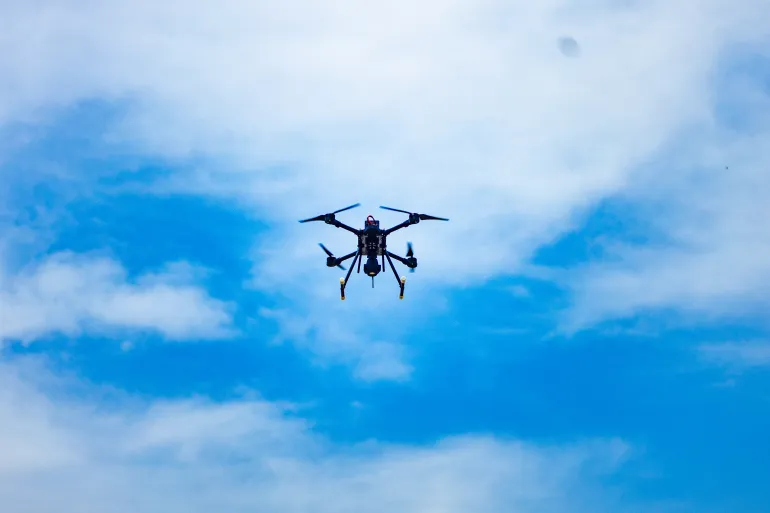
For decades, African nations have relied heavily on foreign suppliers for critical defense technologies. Patrolling borders with Turkish drones, monitoring cities with Chinese surveillance systems, and structuring air forces around Russian fighter jets. However, a growing domestic push aims to challenge this deep foreign dependency. At the forefront of this effort is Terra Industries, a startup founded in 2024 and operating out of Abuja and Accra. Instead of simply assembling imported parts, the firm designs and manufactures unmanned aerial vehicles (UAVs). Autonomous surveillance towers, and ground vehicles using over 70 percent locally sourced inputs. The company’s platforms, including the “Iroko” and “Archer” drones, already secure billions of dollars in critical infrastructure across eight African countries and Canada. Monitoring energy, mining, and maritime assets.
The rapid rise of this domestic capability is backed by a massive influx of global venture capital. The startup recently closed a 34 million dollar seed funding round in less than two weeks. Securing backing from prominent defense and advanced manufacturing investors including 8VC, Lux Capital, and Valor Equity Partners. This financial and technological expansion comes at a critical time as drones become central to regional conflicts. In the Sahel, insurgent groups like the al-Qaeda-affiliated JNIM have dramatically increased their use of inexpensive commercial drones for offensive operations. In response, local manufacturers have developed high-speed interceptors like the “Kama” drone. Designed to neutralize hostile UAVs in cost-constrained environments where traditional air defense systems are impractical. To meet this rising regional demand, the startup is constructing a second facility in Ghana, projected to become the largest drone manufacturing hub on the continent by 2028.
However, translating domestic manufacturing capacity into true defense sovereignty presents steep institutional challenges. Security and policy analysts point out that local production alone does not equate to sovereignty. Genuine autonomy requires robust state institutions capable of managing complex procurement processes. Ensuring accountability and protecting intellectual property. Furthermore, critics caution that arming the state through private, venture-backed capital without transparent civil society oversight risks. Merely trading a dependency on foreign nations for a new dependency on unaccountable domestic corporations.
In conclusion, while the rapid growth of Nigeria’s drone industry demonstrates that highly sophisticated defense technology can be successfully designed and built within Africa. It highlights the complex path to achieving genuine national autonomy. Local manufacturing successfully addresses immediate logistical and tactical security needs on the battlefield and around critical infrastructure. Ultimately, however, true defense sovereignty will depend not just on technological innovation or factory output. But on the parallel development of democratic institutions, regulatory frameworks, and public oversight mechanisms capable of governing these emerging domestic industries.
Reference
Jazeera, A. (2026, July 13). Can Nigeria’s drone industry deliver Africa’s defence sovereignty? Al Jazeera. https://www.aljazeera.com/news/2026/7/13/can-nigerias-drone-industry-deliver-africas-defence-sovereignty