
As European heavy industries search for reliable alternatives to pipeline gas, the expanding Germany Algeria energy partnership represents a vital geopolitical shift. Shifting away from past reliance on Eastern European energy grids, Berlin has rolled out the red carpet for North African leadership. This evolving economic alliance is moving rapidly beyond temporary liquefied natural gas (LNG) deliveries to focus on green hydrogen corridors and rare earth metals.
Beyond Temporary Liquid Fuel Shipments
To understand the core drivers behind this bilateral outreach, economists must look at recent European trade figures. In March 2026, the European Council enacted a total ban on Russian fossil gas imports. This historic restriction created an immediate supply deficit that Western European nations are racing to fill.
According to regional energy trade statistics, Algeria now provides 20 percent of the total pipeline gas imports flowing directly into the European Union.
The arrival of the Sonatrach tanker Tessala at Germany’s Wilhelmshaven terminal marked a major milestone in this relationship. This delivery represented the first direct Algerian LNG shipment to German shores. Consequently, the Germany Algeria energy partnership is expanding rapidly into an essential pillar of Western Europe’s industrial strategy
The Push for the Southern Hydrogen Corridor
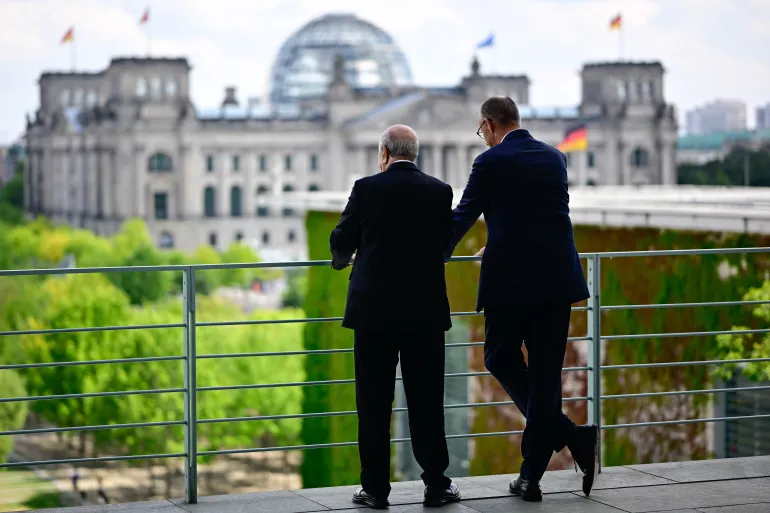
However, this strategic alignment extends far beyond fossil fuel logistics. During a high-level bilateral forum in Berlin, Chancellor Friedrich Merz and President Abdelmadjid Tebboune signed 30 sweeping economic agreements. These deals span critical growth sectors, including pharmaceutical production, car manufacturing, and advanced technologies.
The centerpiece of this long-term vision is the Southern Hydrogen Corridor (SoutH2). This ambitious 3,300-kilometer dedicated pipeline project connects North African production hubs through Italy and Austria directly to German industrial complexes. As a result, the region is preparing to transform into a major exporter of sustainable industrial power.
Commercial Commitments and the Road Ahead
For multi-market manufacturing firms, this evolving trade network introduces significant long-term opportunities. Access to Algeria’s extensive, unmined rare earth element deposits provides German automakers with a vital alternative supply chain independent of traditional market monopolies.
Nevertheless, finalizing these massive infrastructure networks requires binding legal and financial commitments. While political support is strong, German industrial conglomerates have not yet signed binding offtake contracts for Algerian hydrogen. Private corporations must weigh these major investments against ongoing regional security risks.
A realignment of the Mediterranean Energy Map
Overcoming decades of fragmented infrastructure links will naturally take time. Yet, the high-level agreements signed in Berlin establish a permanent shift in Euro-African commerce. The economic barriers that once limited direct trans-Mediterranean trade are being dismantled.
Moving forward, international energy firms must develop highly adaptive regional operating models. Success in this evolving market requires balancing local investments with complex international regulations. Ultimately, the companies that commit early to this North African infrastructure shift will secure a significant competitive advantage in the green energy transition.
Taibi, A. (2026, July 17). Beyond LNG: Berlin’s red-carpet diplomacy signals a bigger bet on Algeria. Al Jazeera. https://www.aljazeera.com/economy/2026/7/17/beyond-lng-berlins-red-carpet-diplomacy-signals-a-bigger-bet-on-algeria