
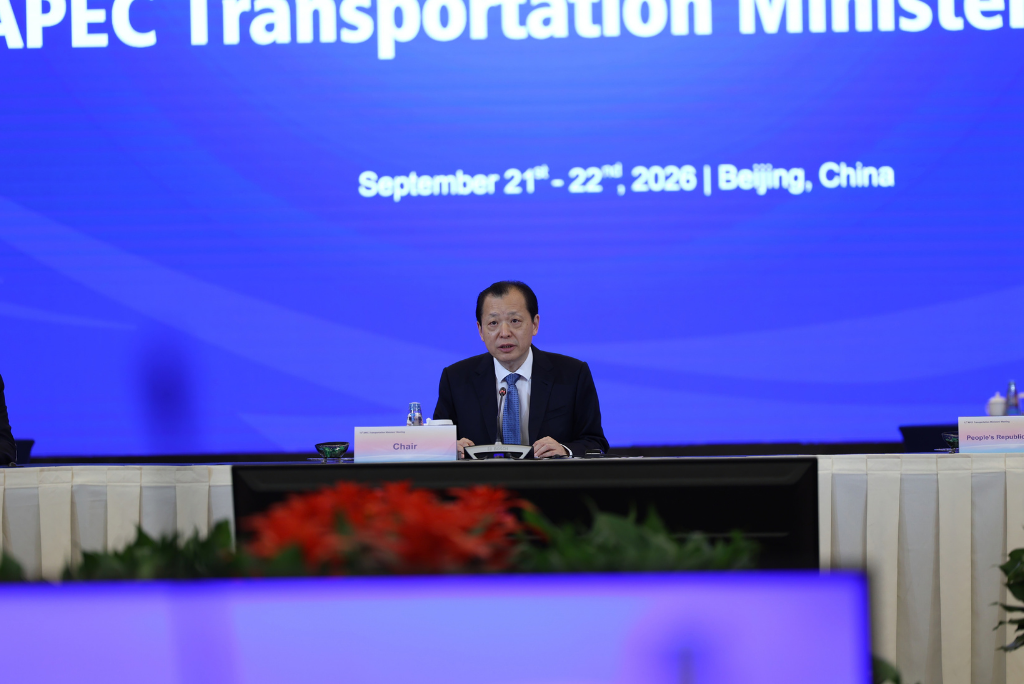
The Asia-Pacific Economic Cooperation (APEC) is strengthening regional transportation systems. The goal is to address new challenges affecting trade and supply chains. Specifically, APEC transport ministers discussed measures to improve regional connectivity and resilience.
The meeting took place in Beijing and was chaired by China’s Transport Minister Liu Wei. He highlighted recent progress in Asia-Pacific transportation connectivity. According to APEC research, rail networks grew by 9% between 2015 and 2025. Meanwhile, airport connectivity increased by 3.8% during the same period. Maritime connectivity also increased by 12%.
These improvements have supported regional trade and talent exchanges. However, logistics networks now face new pressures from trade uncertainty. Reduced shipping capacity has also increased freight costs across the region. Furthermore, disruptions at a single logistics chokepoint can significantly increase shipping expenses.
In response, ministers called for stronger and more resilient transportation infrastructure. They proposed greater financing and more public-private partnerships. In addition, they highlighted the importance of diversifying maritime and air connections. This approach could reduce dependence on individual transportation routes.
Digital innovation is another key element of the strategy. Ministers highlighted several technologies that can modernize transportation systems. For instance, intelligent traffic signals can improve traffic management. Autonomous electric public transportation can also support more efficient mobility. Moreover, predictive maintenance can reduce costs and improve emergency responses.
Digitalization can also promote greater economic inclusion. Specifically, new technologies can improve transportation access for rural communities. They can also help smaller businesses join formal supply chains. Therefore, digital innovation can support both efficiency and broader economic participation.
Interoperability is another important issue for regional cooperation. Ministers discussed greater mutual recognition of technical standards. In addition, they emphasized closer coordination on data regulations. Common standards could make transportation systems safer across different markets.
However, greater digitalization also creates new risks. Modern transportation systems increasingly depend on digital platforms and connected networks. Consequently, cybersecurity threats could affect multiple services at the same time. These disruptions could also impact businesses and consumers beyond the transportation sector.
The article shows that digital transformation is already reshaping transportation. The main challenge is expanding its benefits in a secure and inclusive way. Therefore, regional cooperation will remain essential for coordinating infrastructure and technology. It will also be important for addressing emerging cybersecurity risks.
APEC is also promoting greater research and cooperation in transportation management. The new APEC Expert Group on Transportation Research brings together specialists from different transportation sectors. Furthermore, the group seeks to improve research on intermodal transportation and regional connectivity.
Overall, APEC is promoting a transportation strategy based on infrastructure, innovation, and cooperation. Digital technologies can improve efficiency and strengthen regional supply chains. Nevertheless, their implementation requires common standards and stronger cybersecurity measures. As a result, transportation resilience will depend on both technological innovation and regional coordination.
Reference
Asia-Pacific Economic Cooperation. (2026, September 23). APEC Ministers Advance Digital Innovation to Build More Resilient Transport Systems. APEC official source