
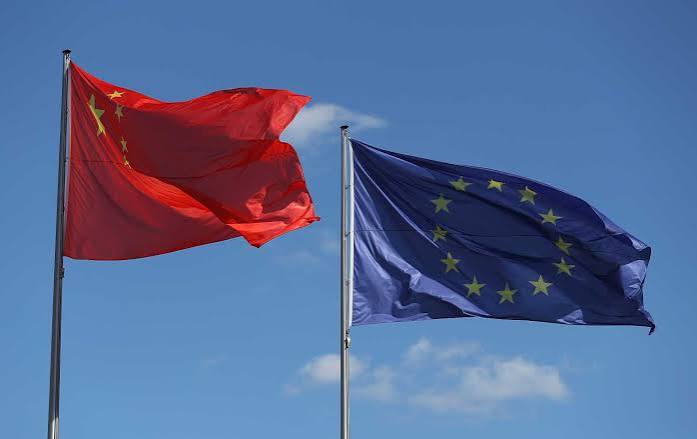
An intense wave of Chinese industrial overcapacity and export expansion, often termed “China Shock 2.0”, presents a severe existential threat to European manufacturing and economic stability. Driven by massive state subsidies, strategy-led industrial policies, and domestic underconsumption, China is flooding international markets with subsidized, high-tech exports. As protective trade barriers rise in the United States, these Chinese goods are increasingly directed toward open European markets. Also, dramatically accelerating deindustrialization, triggering widespread job losses, and rapidly expanding Europe’s trade deficit with Beijing.
Europe’s vulnerability stems from a historical over-reliance on Chinese market growth, alongside an initial belief that economic interdependence would integrate Beijing into the global rules-based order. Today, European industries, most notably Germany’s manufacturing core, are suffering structural erosion, losing thousands of jobs monthly. This while struggling against subsidized competitors in critical sectors like electric vehicles, green technology, and advanced machinery. Confronting this challenge is complicated by internal political divisions within the European Union. Along with persistent regulatory hurdles, rising domestic populist movements, and the geopolitical pressures of managing relations with both a revisionist Russia and a protectionist United States.
In conclusion, Europe faces a critical juncture were failing to enact decisive counter-measures risks permanent industrial decay. Survival requires a coordinated European response. Ultimately, hat combines robust trade defenses, targeted industrial support, and strategic diversification to defend core industries without triggering a mutually destructive economic fallout.
Reference
Constanze Stelzenmüller, Czin, J. A., Heerman, K., & Hass, R. (2026, August 5). Can Europe survive China Shock 2.0? Brookings. https://www.brookings.edu/articles/can-europe-survive-china-shock-2-0/