
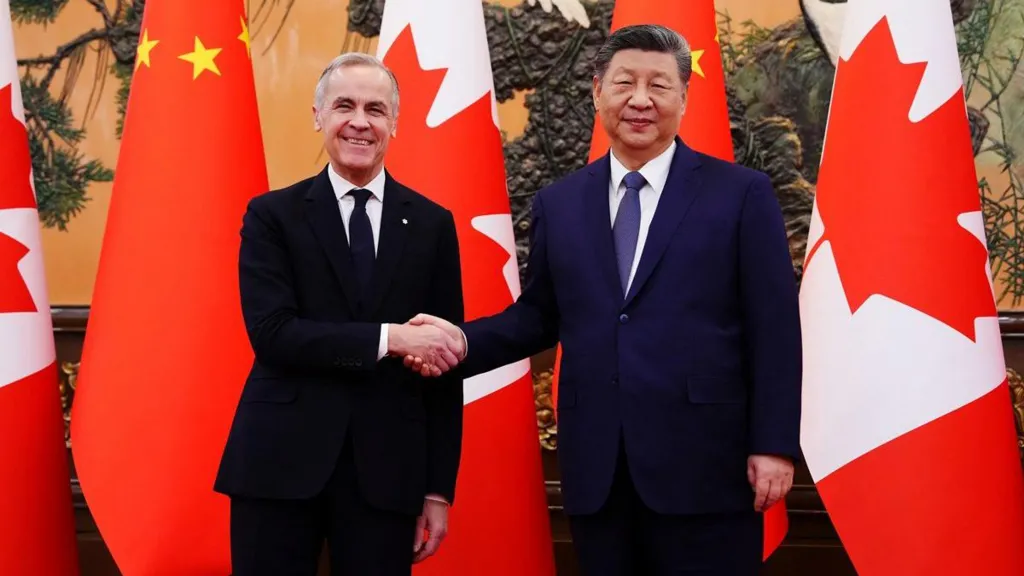
China and Canada have agreed to ease trade tensions, marking a significant reset in a relationship strained for years by tariffs and political disputes. After a high-level meeting in Beijing, President Xi Jinping and Prime Minister Mark Carney announced reciprocal tariff reductions. This includes a sharp cut in Chinese duties on Canadian canola oil and lower Canadian tariffs on Chinese electric vehicles. The move reflects Carney’s push to diversify Canada’s trade away from heavy reliance on the US, especially amid uncertainty created by U.S. tariff policies. For Beijing, the agreement reinforces its effort to project stability and pragmatism as a global trading partner.
The deal also signals a broader geopolitical shift. Canada appears more willing to engage economically with China while maintaining clear “red lines” on issues such as human rights, election interference, and national security. Carney framed the talks as realistic and respectful, acknowledging deep differences while emphasizing the need to work within a changing global order. Observers see the visit as a possible model for other countries navigating the fallout from U.S. protectionism, as China courts partners with promises of predictability and “win-win” cooperation.
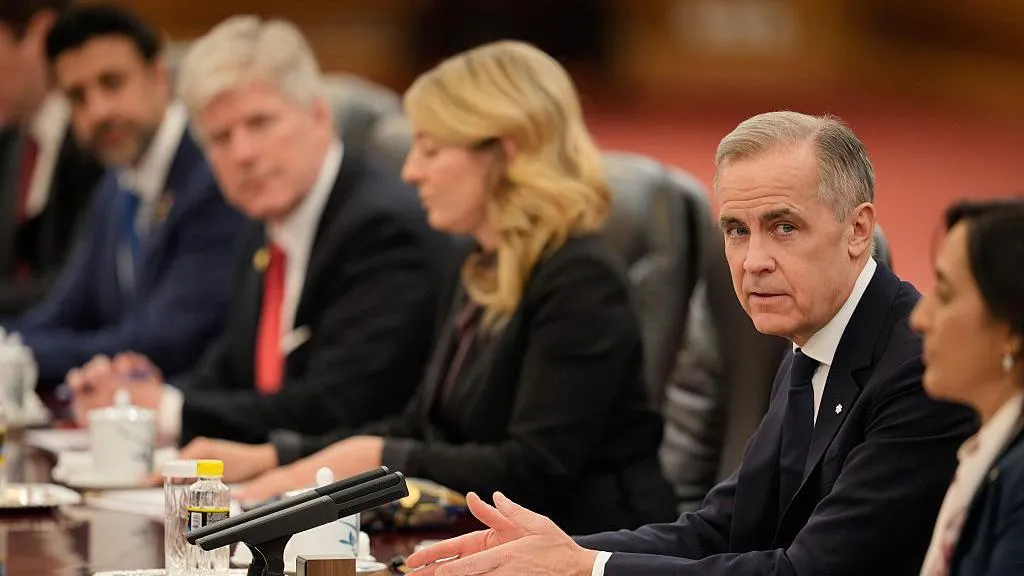
A trade reset
Tariffs have long been the core source of friction between the two countries. Canada’s decision in 2024 to impose steep tariffs on Chinese electric vehicles triggered swift retaliation from Beijing against Canadian agricultural exports, sharply reducing trade flows. The new agreement rolls back many of those measures. It’s offering relief to Canadian farmers and seafood exporters while limiting the number of Chinese EVs allowed into Canada to protect domestic automakers. Alongside the tariff changes, both sides signed cooperation agreements in energy and trade, and discussed the prospect of increased Chinese investment in Canada.
A frosty history
Relations deteriorated sharply after Canada arrested Huawei executive Meng Wanzhou in 2018 at the request of the United States. Event that was followed by China’s detention of two Canadian citizens on espionage charges. Although all were released in 2021, distrust lingered. Carney’s visit, the first by a prime minister in nearly a decade, sought to move beyond that impasse while avoiding illusions of a full rapprochement. He stressed disciplined engagement, direct dialogue, and limited cooperation shaped by the reality that Canada and China operate under very different political systems.
Reference
Bicker, L. (2026, January 16). China and Canada announce tariffs relief after a high-stakes meeting.BBC. https://www.bbc.com/news/articles/cy59pvkqvl5o