
Council on Foreign Relations. Expert take
The China clean energy strategy outlined in its latest Five-Year Plan highlights a long-term national commitment to dominate low-carbon technologies. In contrast, the United States has shifted toward fossil fuel reliance under recent policy changes. This divergence reflects fundamentally different approaches to climate policy, industrial planning, and global leadership in energy systems.
China Clean Energy Strategy and Long-Term Planning
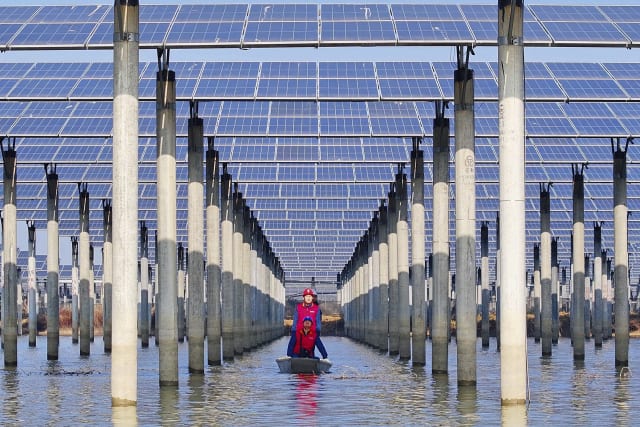
China’s clean energy strategy builds on more than two decades of targeted industrial policy. At the annual National People’s Congress, policymakers reinforced their intention to expand leadership in sectors such as solar panels, electric vehicles, and wind turbines, while also investing in emerging technologies like hydrogen and fusion energy. According to the Intergovernmental Panel on Climate Change, global temperatures could rise by nearly 3°C by the end of the century, which underscores the urgency of these investments.
Moreover, China’s Five-Year Plans function as coordination tools that align public and private sectors around long-term goals. This approach has produced measurable outcomes. Solar capacity quadrupled between 2021 and 2025, while electric vehicle adoption rose from 6 percent to over 50 percent of total car sales. Although inefficiencies persist, competition among regions and firms has accelerated industrial expansion.
U.S. Energy Policy and Short-Term Focus
In contrast, U.S. policy reflects a shorter planning horizon. Under Donald Trump, the federal government has withdrawn from international climate commitments and reduced support for renewable energy development. Instead, it has prioritized fossil fuel production and imposed unpredictable tariffs that complicate long-term industrial planning.
This shift has weakened sectors initially pioneered in the United States. For instance, solar technology and electric vehicles originated domestically, yet inconsistent policy support has limited their large-scale development. As a result, the United States risks falling behind in what analysts describe as complex technological systems requiring decades of sustained investment.
Climate Adaptation and Global Leadership
The divergence extends beyond energy production to climate adaptation. China has incorporated risk reduction into its long-term planning through its National Climate Adaptation Strategy 2035, emphasizing infrastructure resilience, disaster response, and early warning systems. These measures reflect growing economic losses from extreme weather, including over $30 billion in damages in 2025.
Meanwhile, the United States has abandoned efforts to develop a comprehensive national adaptation strategy. Federal agencies have reduced climate-related programs, despite evidence that preparedness investments yield significant economic returns. Consequently, large areas remain vulnerable to climate-related risks.
Limits of China’s Climate Leadership
Despite its progress, China’s role as a global climate leader remains uncertain. While its domestic investments in clean energy are substantial, its behavior in international negotiations has been more cautious. At recent climate summits, China resisted stronger emissions commitments and opposed efforts to phase out fossil fuels.
This position reflects a broader foreign policy approach that prioritizes domestic flexibility over coordinated global action. Therefore, although China dominates clean energy technologies, its leadership in international climate governance may be more limited than some observers expect.
Reference
Hart, D. M., Hill, A. C., & Iversen, L. (2026). China Is Planning Decades Ahead on Clean Energy. The U.S. Has Other Priorities. Council on Foreign Relations. https://www.cfr.org/articles/china-is-planning-decades-ahead-on-clean-energy-the-u-s-has-other-priorities