
Brookings Institution China Is Running Multiple AI Races
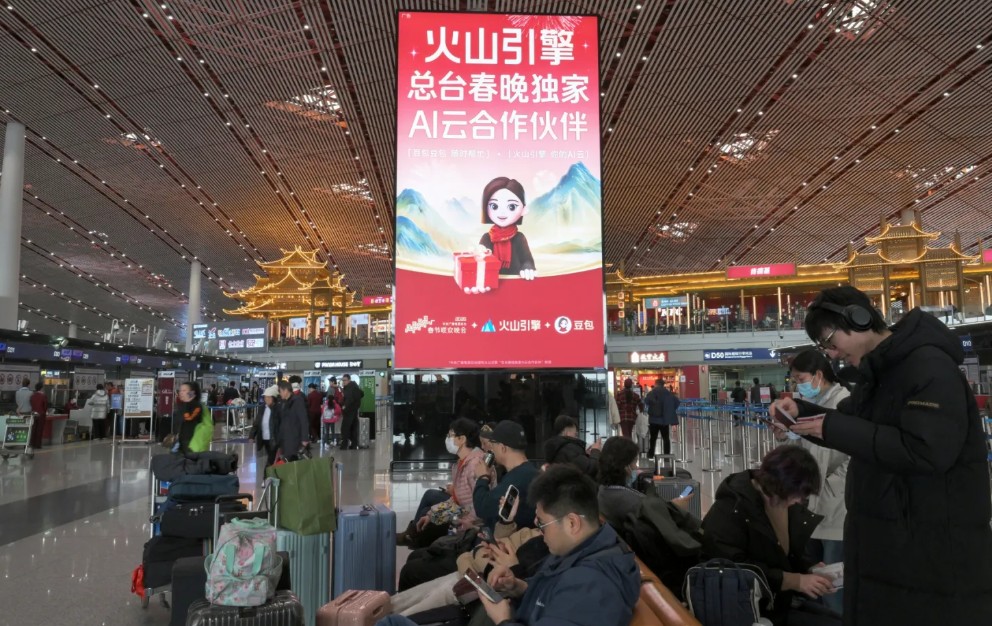
Published on March 9, 2026, this commentary by Kyle Chan — Fellow at the John L. Thornton China Center at Brookings — challenges the dominant narrative of a single US-China “AI race.” While American tech companies pour hundreds of billions of dollars into data centers in pursuit of artificial general intelligence (AGI), China’s AI firms are racing along different axes: efficiency, adoption, and physical integration. Taken together, Chan argues, China’s approach represents a fundamentally different bet on how AI will shape the future.
The Efficiency Race
Rather than competing on raw computing power, Chinese AI firms have focused on doing more with less. Innovations in algorithmic architecture, such as mixture-of-experts models and efficient attention mechanisms, have allowed firms like MiniMax and Moonshot to produce world-class AI models while drastically cutting compute costs. For instance, DeepSeek’s V3.2 model uses a novel sparse attention mechanism to nearly match leading American models on complex reasoning tasks. In addition, Chinese firms are advancing quantization techniques — using lower-precision formats to run models on less memory. Alibaba’s Qwen models can halve GPU memory usage without sacrificing performance. These gains enable deployment outside large data centers, potentially even on personal devices.
The Adoption Race
Chinese firms are also gaining ground globally through open-source strategies. Most of China’s leading AI models are open-source, allowing them to be freely downloaded, customized, and deployed across various platforms. In contrast, most top U.S. AI models are proprietary and closed-source, requiring paid subscriptions. The results are significant. Chinese AI models have overtaken U.S. models in cumulative downloads on platforms like Hugging Face, and Alibaba’s Qwen series has eclipsed Meta’s Llama models in popularity. Notably, Airbnb’s CEO disclosed that his company’s customer service agent relies heavily on Alibaba’s Qwen model.
The Physical Integration Race
Beyond software, China is also moving quickly to embed AI into the physical world. Chinese electric car makers such as Nio, XPeng, and BYD have integrated voice-powered AI assistants and smart driving capabilities into their vehicles. Multiple Chinese companies have also launched AI-powered wearable devices, including smart glasses. Furthermore, China is advancing rapidly in “embodied AI.” Robotaxi services from WeRide, Baidu’s Apollo Go, and Pony.ai are expanding across global cities, and robotics firms like Unitree and AgiBot are racing to mass-produce humanoid robots by the thousands. China’s overlapping hardware ecosystems and manufacturing scale give it a structural advantage in these areas.
Reference
Chan, K. (2026, March 9). China is running multiple AI races. Brookings Institution. https://www.brookings.edu/articles/china-is-running-multiple-ai-races/