
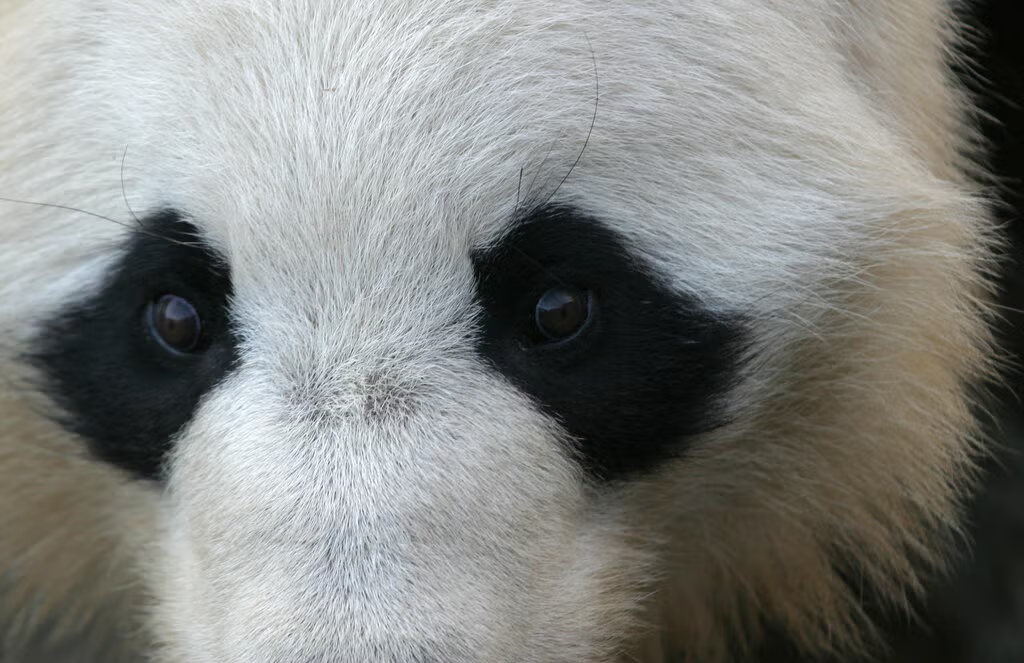
Two Giant Pandas Return to Zoo Atlanta
Two giant pandas from China arrived at Zoo Atlanta on September 27 as part of a new conservation agreement between the zoo and the China Wildlife Conservation Association. Ping Ping and Fu Shuang, both born in 2020, traveled from Chengdu aboard a dedicated FedEx aircraft.
Specifically, their arrival restores a longstanding presence of giant pandas in Atlanta after the zoo’s previous four pandas returned to China in October 2024. The new agreement places the two pandas in Atlanta for a 10-year period, while they remain under a cooperative conservation and research framework.
Xi Jinping Announces the Agreement During U.S. Visit
Moreover, Chinese President Xi Jinping announced the pandas’ imminent arrival during his September 24 meeting with U.S. President Donald Trump in Washington. Xi described the giant panda program as an expression of friendship between the Chinese and American peoples.
However, the announcement came during a broader summit addressing significant disagreements between Washington and Beijing. The panda agreement was one of the concrete outcomes associated with the leaders’ meeting, while major differences involving trade, technology, Taiwan and other strategic issues remained.
Panda Diplomacy as an Instrument of International Relations
Consequently, the transfer highlights the role of cultural diplomacy in U.S.-China relations. China has used giant panda loan programs internationally for decades, with agreements supporting conservation research while also providing a visible form of diplomatic engagement with host countries.
Furthermore, Zoo Atlanta’s new agreement continues a 25-year institutional relationship with Chinese conservation organizations. The previous partnership produced seven panda offspring and facilitated exchanges involving animal care, research and conservation before the original agreement ended in 2024.
International Relevance
This news has high international relevance because it illustrates how cultural and scientific cooperation can operate alongside broader strategic disagreements between two major global powers. The arrival of the pandas provides a highly visible channel for bilateral engagement while Washington and Beijing continue addressing economic, technological and geopolitical issues.
For the OGU, the case is relevant to the analysis of U.S.-China relations, soft power, cultural diplomacy, international cooperation and conservation diplomacy. It also demonstrates how nontraditional diplomatic instruments can contribute to bilateral relations and create institutional links between countries even during periods of strategic tension.
Source: The New York Times, September 27, 2026. “Panda…” https://www.nytimes.com/2026/09/27/us/panda-zoo-atlanta-china-xi.html?