
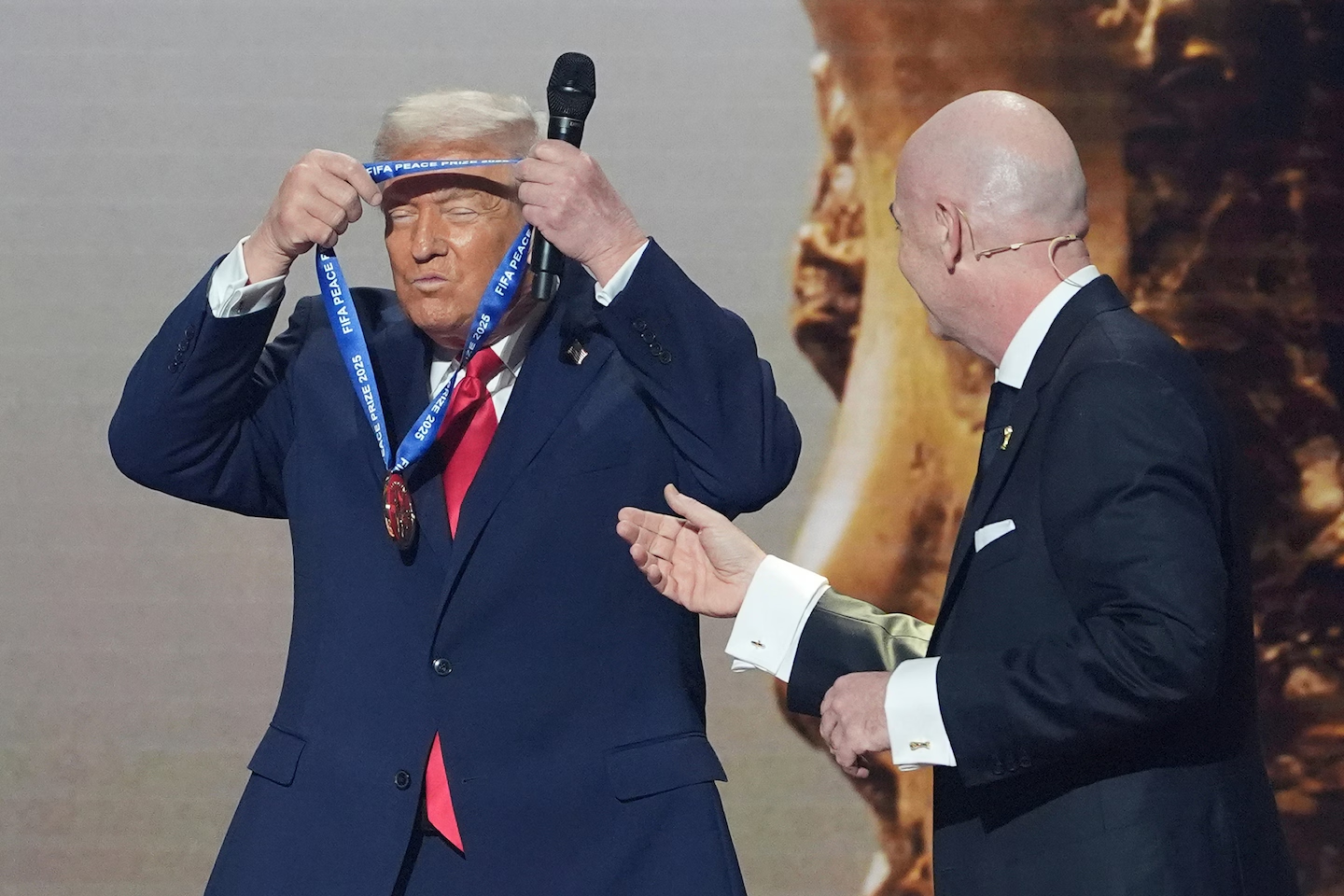
The upcoming World Cup has become deeply entangled with Donald Trump’s presidency. Turning what is meant to be a global sporting celebration into a political lightning rod. Trump has repeatedly framed the tournament, hosted across the United States, Canada, and Mexico, as part of his personal legacy. A narrative reinforced by FIFA president Gianni Infantino’s overt praise and symbolic gestures. That closeness has caused unease among fans, players, and officials, who view the tournament as overshadowed by U.S. politics rather than defined by sport.
Concerns extend well beyond optics. Foreign fans worry about prohibitively expensive tickets, restrictive visa policies, and aggressive surveillance measures, including social media vetting. These anxieties intensified after Trump’s recent foreign policy provocations and domestic crackdowns, which many Europeans see as incompatible with the values associated with international sport. As a result, calls for a boycott have gained traction in parts of Europe, with petitions, parliamentary motions, and public statements framing participation as tacit approval of U.S. policies.
Politicians, commentators, and football figures in countries such as the Netherlands, France, Britain, and Germany have floated boycotts or withdrawals as symbolic pressure on Washington. Some have drawn historical parallels to Cold War-era sports boycotts, arguing that current geopolitical risks justify similar action. Yet enthusiasm for such measures remains limited at the highest levels of sport and government, where officials emphasize precedent. The recent World Cups in Russia and Qatar proceeded despite serious controversies, and financial, logistical, and cultural forces usually outweigh moral objections.
Between Football and Politics
FIFA’s leadership continues to project confidence that the tournament will succeed regardless of political turbulence. Infantino has dismissed criticism over pricing and host-country politics, predicting sold-out matches and major profits, particularly for U.S. ticket resellers. Still, discomfort inside FIFA reportedly grows over the organization’s visible alignment with Trump and other powerful political actors. Action that is raising questions about governance, credibility, and independence.

People walk past the 2022 World Cup countdown clock installed along the waterfront on a foggy day in Doha, Qatar, on Jan. 15. (Karim Jaafar/AFP/Getty Images)
Critics argue that the United States lacks the welcoming atmosphere expected of a World Cup host, especially for fans and participants from countries affected by visa restrictions. While assurances exist about special visa arrangements, skepticism remains widespread. Some former FIFA officials and governance experts openly urge fans to stay away. Warning them that heavy-handed law enforcement and political polarization could turn travel into a risk rather than a celebration.
Overall, the debate reveals how the World Cup now sits at the intersection of sport, power, and politics. Love for football may ultimately prevail, as it often has, but the tournament already reflects a broader global anxiety. Whether the world’s biggest sporting event can truly rise above the controversies of its most politically charged host.
Reference
Tharoor, I. (2026e, January 28). Clamor is growing in Europe to boycott Trump’s World Cup. The Washington Post. https://www.washingtonpost.com/world/2026/01/28/trump-world-cup-boycott-europe/