
Education in the Age of AI
First, global education systems are rapidly adapting to artificial intelligence, raising a central question: how policies can strengthen locally relevant teaching while advancing equity and quality.
Education House Doha Collaboration
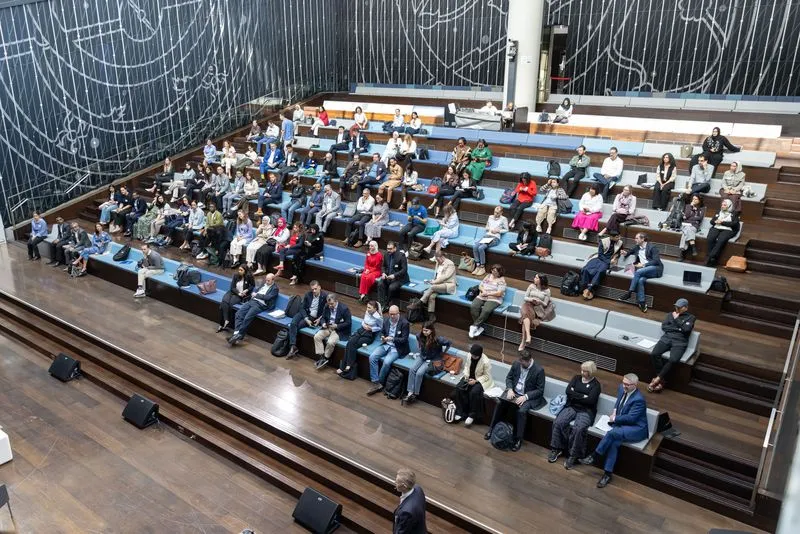
Next, a collaborative event gathered educators, youth, policymakers, researchers, and civil society actors to explore how education can support human flourishing in an AI-driven world.
Furthermore, discussions occurred alongside a global education summit in Doha, bringing diverse perspectives on transforming learning systems and advancing sustainable development goals.
Human Flourishing as a Central Goal
Importantly, participants emphasized that education should promote human flourishing, understood as lifelong well-being including happiness, meaningful relationships, purpose, and achievement.
However, translating human flourishing into concrete education policies remains difficult because well-being and social development are complex and difficult to measure.
Collaborative Policy Exploration
Meanwhile, more than 150 participants worked in thematic groups using collaborative methods to analyze tensions, trade-offs, and policy challenges emerging from AI integration.
Additionally, discussions explored issues such as curriculum reform, teacher workload, equitable access to technology, and responsible adoption of artificial intelligence.
Systemic Barriers to Educational Transformation
Subsequently, conversations revealed several systemic barriers preventing education systems from fully supporting equitable learning in the AI era.
For example, policy frameworks often emphasize standardized academic outcomes, leaving little room for relational learning, creativity, and social-emotional development.
Moreover, national strategies sometimes simplify complex educational goals into short-term programs or measurable indicators that overlook cultural and ethical dimensions of learning.
Entry Point for Policy Change
Finally, collaborative discussions identified practical entry points for policymakers to redesign education systems that integrate AI while strengthening local teaching practices.
Consequently, education reforms should prioritize equity, context-specific learning, and human-centered approaches to ensure technology enhances rather than replaces meaningful educational relationships.
Source:
Brookings Institution. (2025). Collaborative insights from Education House Doha. https://www.brookings.edu/articles/collaborative-insights-from-education-house-doha/