
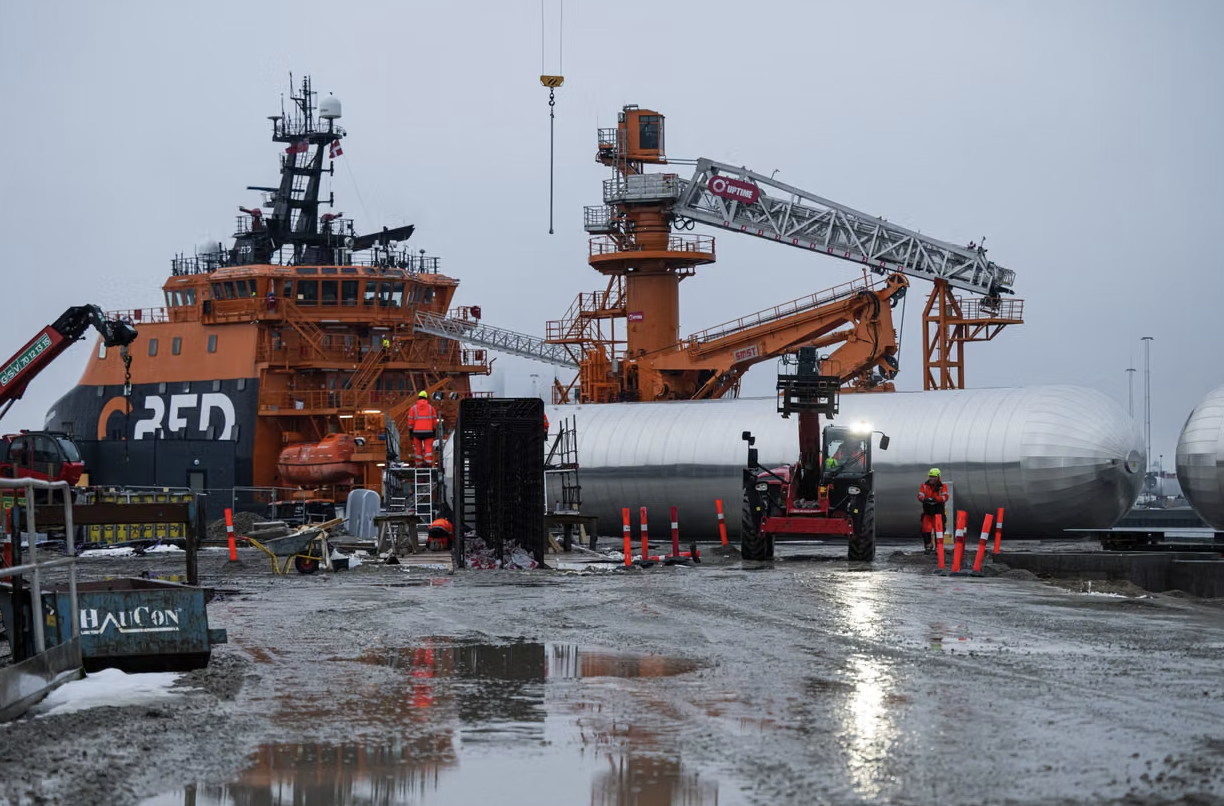
The Greensand project has begun storing carbon dioxide under a former oil platform in the North Sea. Energy group Ineos announced the launch on Friday. Its CEO called Greensand the EU’s first large-scale CO2 storage site and a foundation for future carbon capture projects across Europe.
Carbon capture and storage is seen as key to fighting global warming, helping hard-to-decarbonize industries like cement and steel. But it is costly and lacks a solid business model. The EU’s energy commissioner said the launch proves carbon storage is real and charts a path for European industry to go low-carbon while keeping jobs and production.
The Greensand reservoir sits 250 kilometers off Denmark’s coast, beneath the Nini West platform. In its first phase, it will store 400,000 tonnes of CO2 per year. Ineos plans to inject 4 to 8 million tonnes annually by 2030. The CO2 comes mostly from Danish biomethane plants, liquefied and shipped from the Esbjerg terminal.
Under the EU’s Net-Zero Industry Act, the bloc must reach at least 50 million tonnes of yearly storage by 2030. In Norway, the first commercial CO2 cemetery opened in summer 2025. Called Northern Lights, it is mostly state-funded and stores 1.5 million tonnes per year, with plans to reach 5 million by 2030.
Reference
Le Monde, “Le Danemark inaugure l’un des premiers sites de stockage de CO₂ ‘à grande échelle’ en Europe,” published September 18, 2026. https://www.lemonde.fr/planete/article/2026/09/18/le-danemark-inaugure-l-un-des-premiers-sites-de-stockage-europeen-de-co_6776757_3244.html