
Trump is dismantling climate rules. Industry is worried.
The Endangerment Finding repeal announced by the Trump administration marks one of the most consequential rollbacks of federal climate authority in U.S. history. By eliminating the 2009 determination that greenhouse gases endanger public health and welfare, the administration seeks to dismantle the legal foundation for regulating emissions under the Clean Air Act.
Although the move aligns with the administration’s deregulatory agenda, its effects extend far beyond environmental policy. In practice, the Endangerment Finding repeal may create regulatory instability that undermines investment certainty across multiple industries.
Legal Foundations and the Clean Air Act
The 2009 Endangerment Finding followed the Supreme Court’s 2007 decision in Massachusetts v. EPA, which held that greenhouse gases qualify as pollutants under the Clean Air Act. As a result, the Environmental Protection Agency (EPA) was required to assess whether such emissions endangered public health.
Once EPA concluded that they did, regulation of vehicle emissions became mandatory under Section 202 of the Act. Over time, this determination also enabled regulation of power plants and methane emissions from oil and gas operations under Section 111.
Consequently, the Endangerment Finding repeal removes the statutory trigger underpinning all federal greenhouse gas regulation, not just vehicle standards.
The Administration’s Legal Strategy
To justify its position, the administration advances two primary arguments. First, it invokes recent Supreme Court decisions—West Virginia v. EPA (2022) and Loper Bright Enterprises v. Raimondo (2024)—to argue that Congress did not explicitly authorize regulation of greenhouse gases. In doing so, it relies on the “major questions doctrine,” which requires clear congressional authorization for rules with broad economic significance.
Second, officials contend that emissions from the U.S. vehicle fleet are too small to justify federal intervention. However, critics argue that this “de minimis” logic ignores the cumulative nature of climate change and contradicts prior Supreme Court reasoning that incremental regulation is legitimate and often necessary.
Notably, the administration avoids directly challenging climate science. Instead, it relies on statutory interpretation, anticipating that the issue will ultimately return to the Supreme Court.
Regulatory Vacuum and Industry Risk
Paradoxically, industries that might benefit from deregulation have expressed concern. Eliminating federal climate standards does not remove regulation altogether; rather, it creates uncertainty.
Without a federal framework, states may attempt to impose their own standards. In addition, lawsuits are likely to proliferate. Public nuisance claims in federal courts could reemerge if Clean Air Act preemption disappears. Together, these developments may complicate long-term capital investment decisions, particularly in automotive manufacturing, electricity generation and LNG exports.
Major firms such as Ford and American Honda have warned that instability—not regulation itself—threatens competitiveness. Moreover, energy trade relationships, especially with the European Union, could face strain as methane standards tighten abroad.
Deregulation as Political Signal
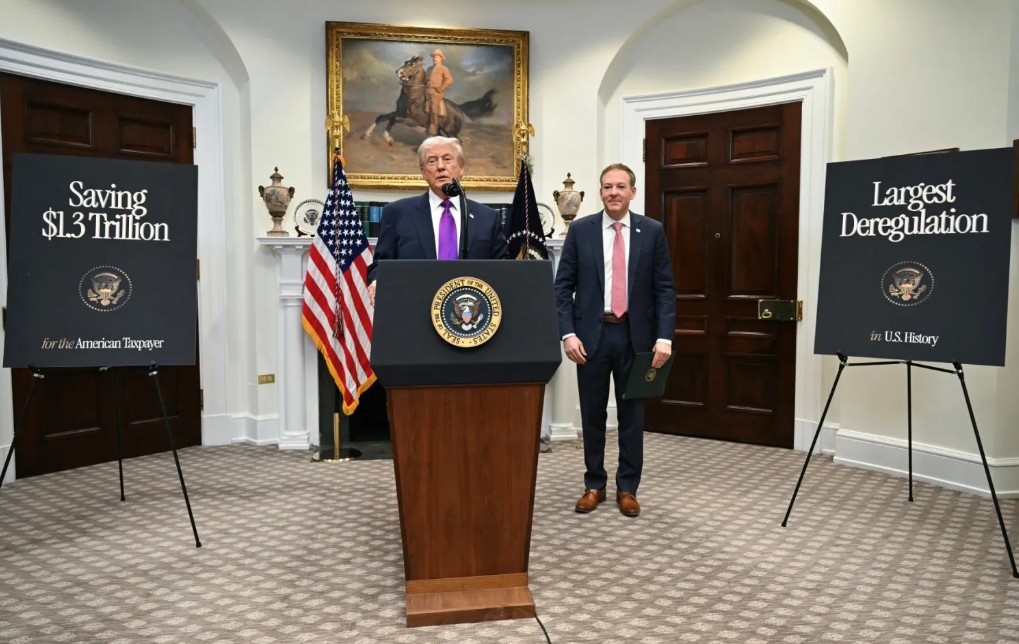
More broadly, the Endangerment Finding repeal fits within a larger deregulatory campaign, including rollbacks of power plant rules, methane standards, Clean Water Act protections and renewable energy incentives.
Nevertheless, regulation is not inherently anti-growth. In fact, stable and predictable environmental rules can support innovation and long-term investment planning. The deeper issue, therefore, is policy volatility. Repeated reversals between administrations have created legal uncertainty that discourages investment and weakens U.S. alignment with international partners.
Reference
Gross, S., & Beane, R. (2026, February 26). Trump is dismantling climate rules. Industry is worried. Brookings Institution. https://www.brookings.edu/articles/trump-is-dismantling-climate-rules-industry-is-worried/