
Strategic Fallout of Operation Epic Fury
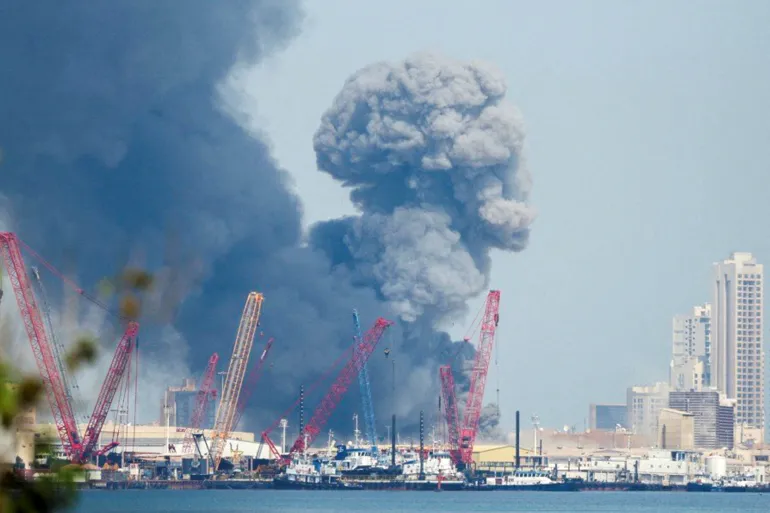
On February 28, 2026, the Middle East witnessed a massive escalation as the Islamic Republic of Iran launched coordinated missile and drone strikes against multiple Gulf Arab states hosting United States military assets. This retaliation followed a joint US-Israeli preemptive strike, labeled “Operation Epic Fury,” which targeted high-level leadership and nuclear infrastructure within Iran. Consequently, nations like Qatar, the United Arab Emirates (UAE), Bahrain, and Kuwait found themselves directly in the crossfire of a brewing regional war. The strikes represent a definitive shift in Iranian doctrine, moving from the use of regional proxies to direct state-on-state kinetic action against sovereign Arab territories that facilitate American military posture.
Regional Escalation and the Failure of Deterrence
Originally, the presence of US bases such as Al Udeid in Qatar and Al Dhafra in the UAE was intended to serve as a deterrent against Iranian expansionism. However, the events of early 2026 suggest that this deterrent has been compromised, as Tehran now views these host nations as legitimate military targets due to their logistical support for US operations. The Al Jazeera report indicates that the origin of this specific retaliatory wave lies in Iran’s “Truthful Promise 4” operation, which seeks to impose a high cost on any nation harboring “aggressor forces.” Furthermore, the activation of air defense systems across Riyadh, Abu Dhabi, and Manama highlights the geographic breadth of the conflict, transforming the entire Persian Gulf into an active combat zone for the first time in decades.
Intervention Outcomes and Civilian Impact
The structure of the Iranian response was organized to overwhelm regional missile defense umbrellas through the simultaneous launch of ballistic missiles and loitering munitions. Specifically, the UAE Ministry of Defense confirmed that while several projectiles were intercepted, falling debris resulted in civilian casualties in residential areas of Abu Dhabi, marking a grim milestone in the conflict. Moreover, the targeting of the US Fifth Fleet headquarters in Bahrain and Al Salem Air Base in Kuwait has forced these host governments to grapple with the immediate physical risks of their strategic alliances. This structured aggression is intended to pressure Gulf capitals into denying the US further use of their airspace and facilities, effectively attempting to decouple the Arab states from their Western security guarantees.
Synthesis of Sovereign Risk and Diplomatic Realignment
The successful navigation of this crisis relies on a complex synergy between Gulf Arab diplomacy and collective defense mechanisms. This objective is essential for states like Qatar and the UAE, which have long attempted to balance a “hedging” strategy between Washington and Tehran, but now find that middle ground disappearing. Simultaneously, there is a clear intent among regional leaders to demand greater control over how US assets on their soil are utilized, fearing that unilateral American actions could lead to their national destruction. Ultimately, the February 2026 strikes provide a volatile roadmap for a potential regional realignment, signaling that the era of “low-risk hosting” has ended and that the cost of the US security umbrella has risen to an existential level.
Reference
Al Jazeera. (2026, February 28). Multiple Gulf Arab states that host US assets targeted in Iran retaliation. Al Jazeera News. https://www.aljazeera.com/news/2026/2/28/multiple-gulf-arab-states-that-host-us-assets-targeted-in-iran-retaliation