
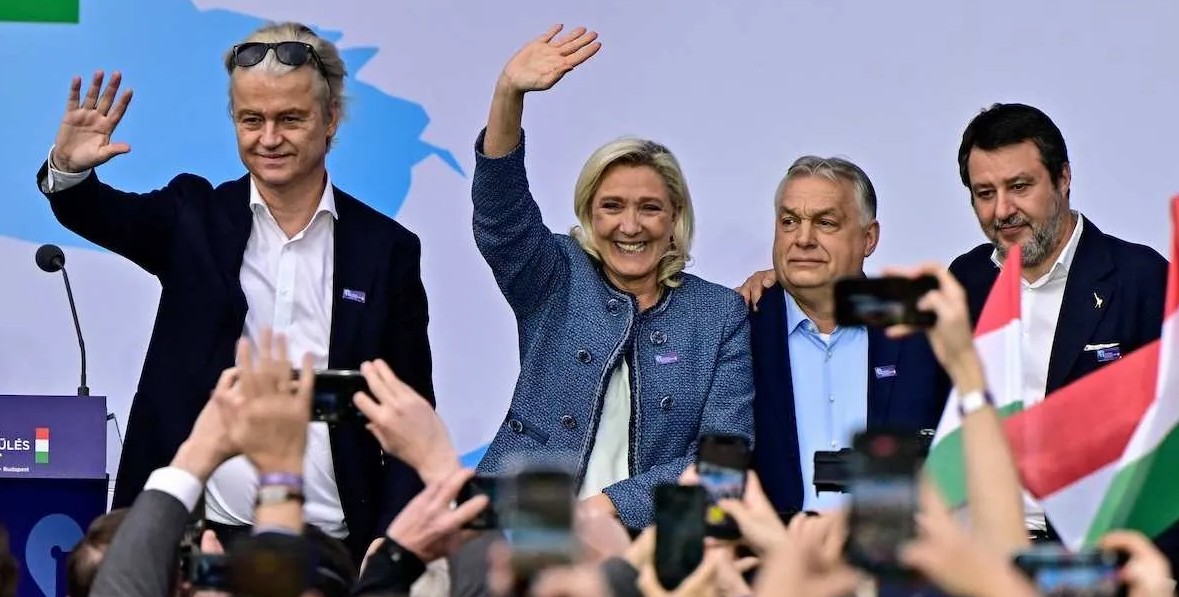
Far-right populism in Europe has been a defining political force over the past decade, reshaping elections and public discourse across multiple countries. However, recent electoral outcomes and shifting political dynamics suggest that this momentum may be slowing. The question now is whether far-right populism has reached its peak or is simply entering a new phase.
Far-Right Populism in Europe and Electoral Setbacks
Recent elections indicate that far-right populism in Europe may be facing meaningful setbacks. In Hungary, Viktor Orbán lost power after sixteen years, marking a significant shift away from the populist model he helped establish. His defeat by a center-right challenger signals voter fatigue with long-standing leadership and populist governance.
Similarly, in Poland, the nationalist Law and Justice Party lost its governing majority despite remaining electorally competitive. In France, Marine Le Pen has expanded her party’s influence but continues to face strong opposition coalitions that prevent full control of government. These outcomes suggest that while populist movements remain influential, their ability to consolidate power is increasingly constrained.
Changing Strategies Among Populist Leaders
As electoral pressures mount, some populist leaders have adjusted their strategies. In Italy, Giorgia Meloni has shifted focus from traditional populist themes, such as anti-migrant rhetoric, toward economic and institutional issues. However, policy setbacks, including failed judicial reforms, have weakened perceptions of political strength.
These shifts indicate that populist leaders may be attempting to broaden their appeal beyond core ideological positions. Nevertheless, such adaptations can dilute their original message, potentially reducing their distinctiveness in the political landscape.
Factors Driving Declining Support
Several factors help explain the apparent slowdown of far-right populism in Europe. Economic performance plays a central role. When populist governments fail to improve living standards, public support tends to erode. In Hungary, economic dissatisfaction and allegations of corruption contributed to declining voter confidence.
External influences have also mattered. The association with figures such as Donald Trump appears to have reduced the appeal of nationalist populism in some European countries. In addition, long-term incumbency has weakened the outsider image that many populist leaders rely on, making them more vulnerable to political turnover.
Future Outlook for European Politics
Despite recent setbacks, far-right populism in Europe remains a significant force. Upcoming elections in major countries will test whether these movements can regain momentum. Moreover, external shocks—such as economic downturns linked to geopolitical conflicts—could reignite anti-establishment sentiment.
Analysts suggest that while the perception of a rising populist wave has diminished, underlying conditions that fueled its growth persist. Therefore, far-right populism may not have disappeared but instead entered a period of recalibration.
Reference
Kheiriddin, T. (2026). Has far-right populism peaked in Europe? GZERO Media. https://www.gzeromedia.com/news/analysis/has-far-right-populism-peaked-in-europe