
A natural disaster challenges China’s regional influence
A catastrophic flood and mudslide along the China-Nepal border is testing Beijing’s growing influence in South Asia. The disaster has caused extensive human and economic losses on both sides of the Himalayas.
Specifically, at least 1,114 people have died in Nepal, while China has reported 21 deaths. Thousands of people remain missing as rescue and recovery operations continue across difficult mountainous terrain.
Meanwhile, the disaster has damaged important transportation infrastructure connecting Nepal with China. The destruction of the Gyirong border port is particularly significant because it serves as an important trade connection between the two countries.
Therefore, the emergency has developed beyond a humanitarian crisis. It has also become a test of China’s ability to provide effective support to a neighboring country where Beijing has expanded its political and economic presence.
China’s relationship with Nepal comes under scrutiny
China has spent years strengthening its relationship with Nepal through infrastructure investment, trade and development projects. Nepal formally joined China’s Belt and Road Initiative in 2017, creating a framework for expanded economic cooperation.
However, the disaster has raised questions about whether existing infrastructure projects sufficiently account for environmental and geological risks. Some Chinese-backed projects in Nepal have experienced delays and governance concerns, increasing scrutiny of Beijing’s development model.
Furthermore, the emergency has generated demands for stronger real-time information sharing between China and Nepal. Critics have questioned whether earlier warnings could have reduced the human impact of the disaster, while Chinese authorities have rejected claims that Beijing failed to provide appropriate information.
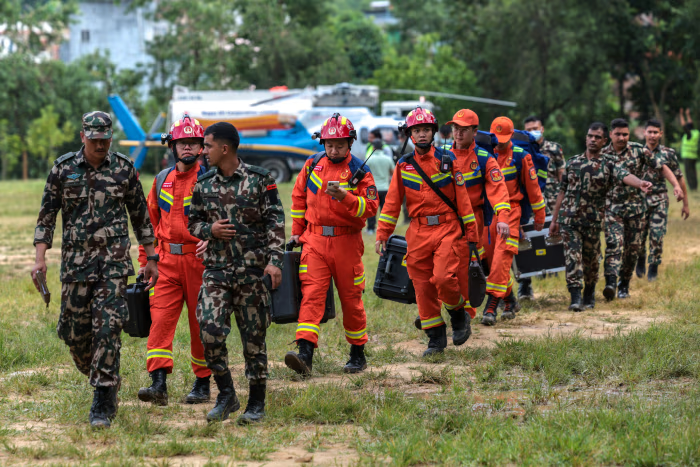
Nevertheless, China has provided emergency assistance and rescue personnel. The response demonstrates Beijing’s capacity to mobilize resources, although the absence of stronger formal cross-border disaster coordination has highlighted limitations in regional emergency management.
Infrastructure, climate risks and regional competition
The destruction of the Gyirong border crossing demonstrates the vulnerability of infrastructure located in high-risk Himalayan environments. Consequently, future transportation, energy and connectivity projects may require stronger environmental assessments and disaster-resilience mechanisms.
Moreover, the disaster has implications for China’s broader regional strategy. Beijing has promoted infrastructure connectivity as a central component of its engagement with developing countries, particularly through the Belt and Road Initiative. A major infrastructure failure therefore creates questions about how development projects should incorporate climate and geological risks.
At the same time, the crisis could create opportunities for greater cooperation between China, Nepal and India. All three countries face interconnected environmental risks originating in the Himalayan region, including floods, glacier instability and water-security challenges.
Consequently, Beijing’s response may influence perceptions of China’s role as a regional provider of infrastructure, economic assistance and emergency support. Its ability to coordinate effectively with Nepal could strengthen its regional credibility, while weaknesses in the response could reinforce concerns about the limits of its regional leadership.
International Relevance
The news has a high international relevance because it connects a major humanitarian disaster with China’s expanding political and economic influence in South Asia. The crisis demonstrates that regional leadership involves more than infrastructure investment and economic partnerships; it also requires effective disaster management, information sharing and cross-border cooperation.
For the OGU, the note is particularly relevant because it allows analysis of the relationship between geopolitics, regional leadership, infrastructure investment, climate risks and international cooperation. China’s relationship with Nepal provides an important case for examining the broader impact of the Belt and Road Initiative and the expectations placed on Beijing as its regional influence expands. Furthermore, the destruction of strategic infrastructure and the need for coordinated disaster response demonstrate how environmental risks can increasingly affect trade, connectivity and geopolitical relations across Asia.
Reference / Referencia: The Wall Street Journal. (2026, September 2). Himalayan Disaster Tests China’s Clout as Regional Leader. https://www.wsj.com/world/asia/himalayan-disaster-tests-chinas-clout-as-regional-leader-d7aebada?st=ZD6dah.