
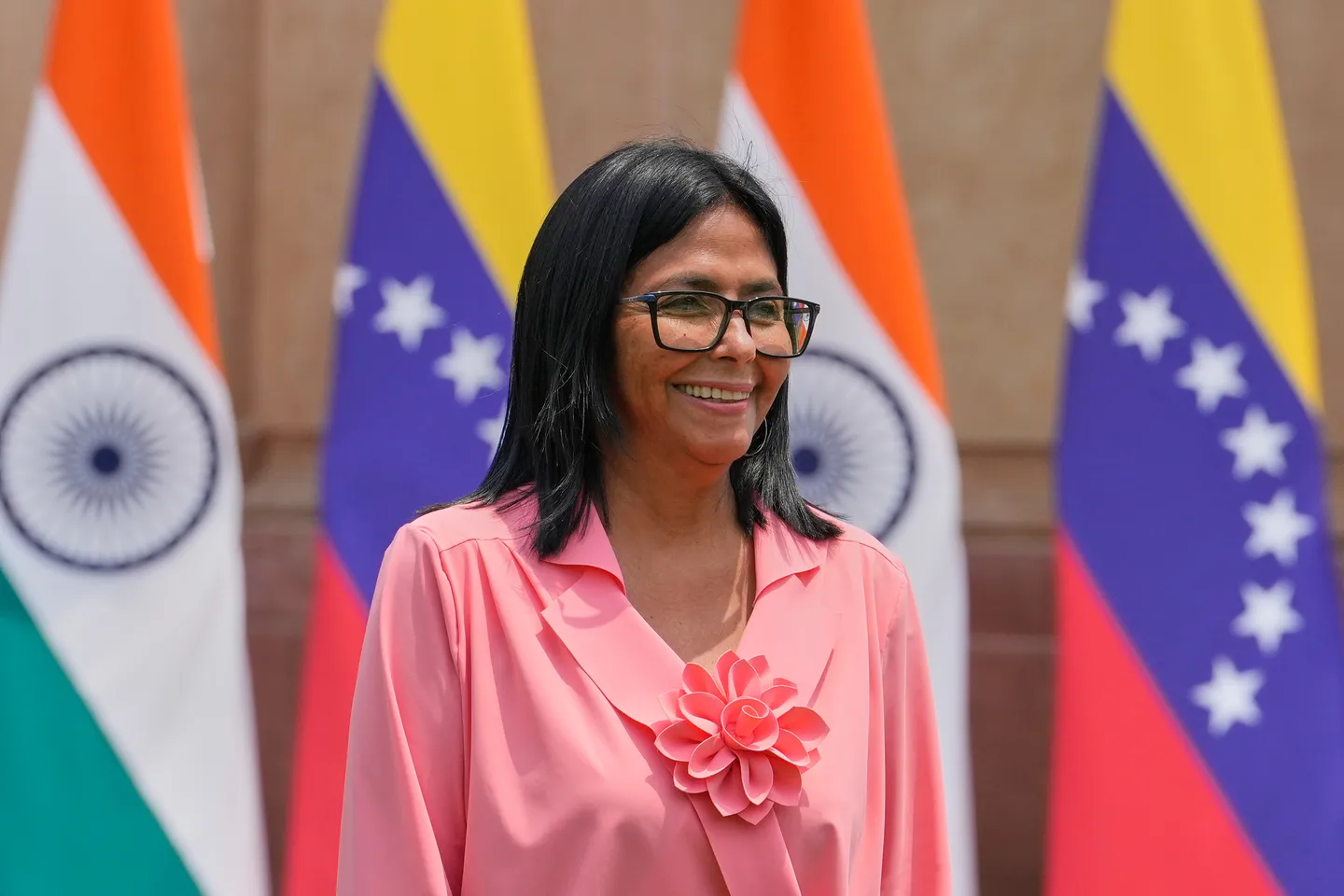
Rodríguez has managed to keep Venezuela’s ruling coalition together by avoiding immediate, destabilizing purges. According to Manuela Jiménez of Control Risks, elite defections and internal power struggles have been limited by a shared interest in retaining power and the fragmentation of the opposition. In fact, while she has strategically removed some Maduro-era figures to strengthen her own position, she has generally preferred to manage rather than expel hardline rivals like Diosdado Cabello.
Moreover, maintaining this internal cohesion requires delicate maneuvering. Consequently, the strength of Delcy Rodriguez’s hold on power heavily depends on satisfying the political and economic expectations of the remaining Chavista elite. As a result, her administration prioritizes near-term governability and economic stabilization over sweeping democratic reforms that could jeopardize her coalition.
US Leverage and economic priorities
On the other hand, her position is overwhelmingly sustained by her ability to deliver on the economic priorities set by the United States. For example, Julia Buxton points out that Rodríguez is maintained in power largely due to U.S. calculations of progress, specifically regarding the reopening of the Venezuelan economy. Furthermore, Rodríguez has taken steps to placate Washington by opening up the petroleum sector and gradually releasing political prisoners.
Crucially, U.S. powerbrokers currently view her pragmatism and economic delivery as the primary benchmarks for stability. Secondly, while the Trump administration focuses on economic stabilization, the lack of an alternative contesting authority within the socialist party further cements her position.
The future of the transition
Additionally, the long-term viability of the government remains deeply tied to how she manages future political demands. Surprisingly, traditional metrics like public popularity are currently considered secondary to her ability to facilitate U.S. economic interests.
Conversely, many investors remain cautious due to weak legal protections and the risk of policy reversals. For instance, Washington’s ability to tighten or ease sanctions remains a powerful tool depending on Rodríguez’s compliance.
In conclusion, Delcy Rodriguez’s hold on power is characterized by a precarious but functional balance between appeasing external US economic demands and managing internal regime survival.
Reference: Inter-American Dialogue. (2026). How Strong Is Delcy Rodríguez’s Hold on Power? https://thedialogue.org/analysis/how-strong-is-delcy-rodriguezs-hold-on-power